How to Plan Your European Christmas Market Adventure

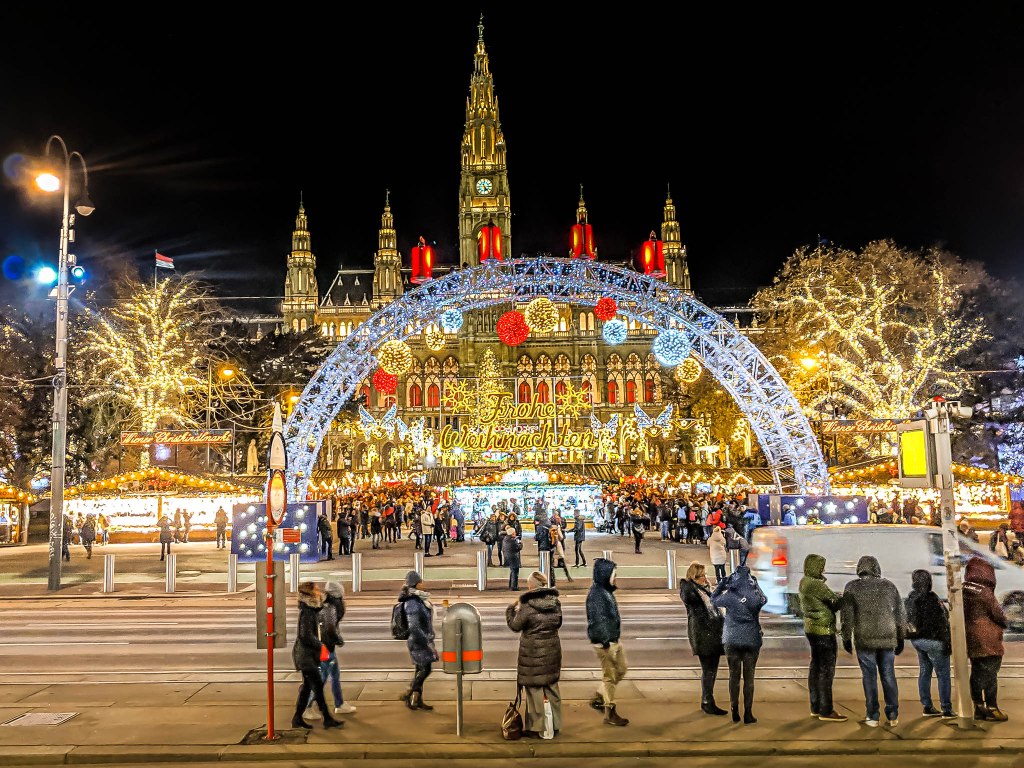
Vienna’s grand Rathausplatz transforms into a glowing Christmas wonderland each December.

Planning the Trip of a Lifetime

Planning a European Christmas Market trip is almost as much fun as the journey itself. With markets stretching from France to Austria — and from grand capitals like Vienna to small, cozy towns like Erfurt or Colmar — there’s something for everyone. Whether you prefer the simplicity of a river cruise, the convenience of a guided tour, or the independence of planning your own adventure, early planning is key.

Festive Main Square in Zagreb Croatia

When to Start Planning

If there’s one lesson we’ve learned over the years, it’s this: start early. I recommend beginning your planning no later than the summer of the year you want to go. For river cruises and popular organized tours, you may need to reserve a year or more in advance — many sell out quickly. If you’re planning your own independent trip, research early and build your itinerary around confirmed market dates. Most Christmas Markets begin with Advent (late November) and run until Christmas Eve, though a few extend into early January.

Google: “European Christmas Markets 2025”

Researching Destinations and Hotels

Start by thinking about the cities you most want to experience — perhaps the storybook streets of Colmar, the grandeur of Vienna, or the riverside charm of Cologne. Then use Google to find each city’s official Christmas Market website to confirm opening dates and event details.

Most markets are centered around a cathedral square or main plaza, so use Google Maps to explore the area. Switch to the Hotels view to find accommodations within walking distance of the markets.

When selecting a hotel, I always look for these features:
• Proximity to the market (walking distance saves time and adds convenience)
• Breakfast included — a nice way to start a winter morning
• Good reviews and holiday atmosphere

We’ve booked many of our hotels through Booking.com and have been very satisfied with the service and reliability.

Choosing Your Travel Style

Over the years, we’ve experienced all three travel styles — and each offers something unique:

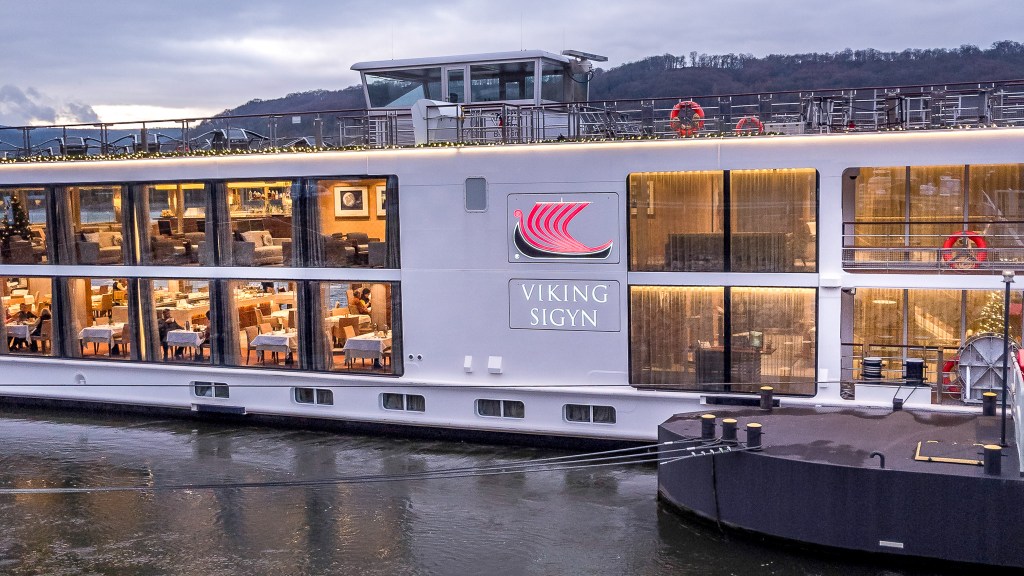
• River Cruises – Our 2021 Viking Rhine Getaway (#myvikingstory) made visiting markets effortless. You unpack once, explore a new city each day, and let the ship serve as your floating hotel. It’s perfect for first-timers, though you may miss some nighttime market scenes. Add extra days before or after your cruise to enjoy markets after dark.

• Guided Group Tours – We took a Collette Christmas Markets tour through Salzburg, Innsbruck, and Munich in 2016 and loved the experience. If you prefer small groups and a single-hotel base, choose a tour that visits nearby markets each day. Other reputable companies include Globus, Trafalgar, Insight Vacations, and Tauck.

• Independent Travel – Most of our market trips are self-planned. Europe’s trains, trams, and buses make it easy to connect markets. Independent travel gives you full flexibility to linger and explore.
Packing for the Season

Winter in Central Europe can be cold and damp, so dress accordingly:
• Warm, waterproof winter coat (with hood)
• Waterproof walking shoes or boots
• Gloves, hat, and layers
• Small daypack for essentials
• Reusable tote or bubble wrap sleeves for ornaments.

Budgeting and Money Tips

The main currency in most countries is the Euro, but in Prague the Czech Koruna is official. Many vendors accept Euros, though change is often in Koruna.

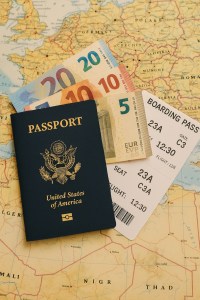
We use AAA’s currency service to order Euros before travel. Exchange over $200 and there’s no fee — plus you can request small denominations (5s, 10s, 20s). Small bills are essential since many market vendors can’t change large notes.

Many markets are cash-only, so plan ahead. ATMs are plentiful, but avoid airport exchange counters.
Essentials You Shouldn’t Forget

Europe uses 220V power with Type C or F plugs. Bring adapters for phones and laptops, and only use appliances labeled dual-voltage. Heating devices like hair dryers can be damaged even with an adapter if they aren’t dual-voltage. You will find most hotels have hair dryers and irons.

Do Your Research Ahead of Time

Before traveling, look up official Christmas Market websites to confirm dates, maps, and special events. • Major markets open daily for several weeks.
• Smaller towns may only operate on weekends.
• Some markets close early on Christmas Eve or stay open into New Year’s.

When researching, check event schedules for concerts or performances — many cities host choir concerts, plays, or community shows. If something catches your eye, book early; we’ve attended wonderful Christmas concerts and musical plays, and they’ve become favorite memories.

Traditional Croatian Folk Music at Zagreb Christmas Market

Getting Around Europe

Trains are the easiest way to travel between markets. They’re punctual, scenic, and relaxing.
• Look into Eurail or Deutsche Bahn passes.
• Within cities, trams and metros are efficient.
• Rideshare apps like Uber and Bolt operate in larger cities.
• If driving, check winter tire requirements and limited parking near markets.

Zagreb Christmas Tram

Stay Alert and Travel Smart

Christmas Markets are welcoming, but always stay aware. Pickpockets can target crowded areas, especially at night. Use a cross-body bag or money belt, and don’t keep all cash in one place. Stay mindful when taking photos or shopping in busy stalls.

Choosing the Right Lodging

Whenever possible, stay within walking distance of the market. It’s convenient to take breaks or drop off packages. We love boutique hotels or apartments — many decorate beautifully for the holidays. On river cruises, your hotel travels with you — a unique way to experience the markets.

The lobby of the elegant, but affordable Palace Hotel in Zagreb.

Don’t Forget Travel Insurance

Always carry travel insurance with emergency medical and evacuation coverage. We use an annual Allianz plan that covers every trip we take. Even for occasional travelers, a single-trip policy offers peace of mind during busy holiday seasons.

Embrace the Spirit of the Season

Don’t overplan. The real magic of Christmas Markets happens when you slow down and simply enjoy the moment — a choir singing ‘Silent Night,’ the scent of roasted chestnuts, or the sparkle of lights reflected on cobblestones.

Kathie adding to our Gluhwein cup collection, Vienna Christmas Market 2018

Closing Thought

Go once, and you’ll want to go again. Whether your first Christmas Market is in Germany, Austria, or aboard a Viking cruise, the lights and memories will stay with you long after you return home.
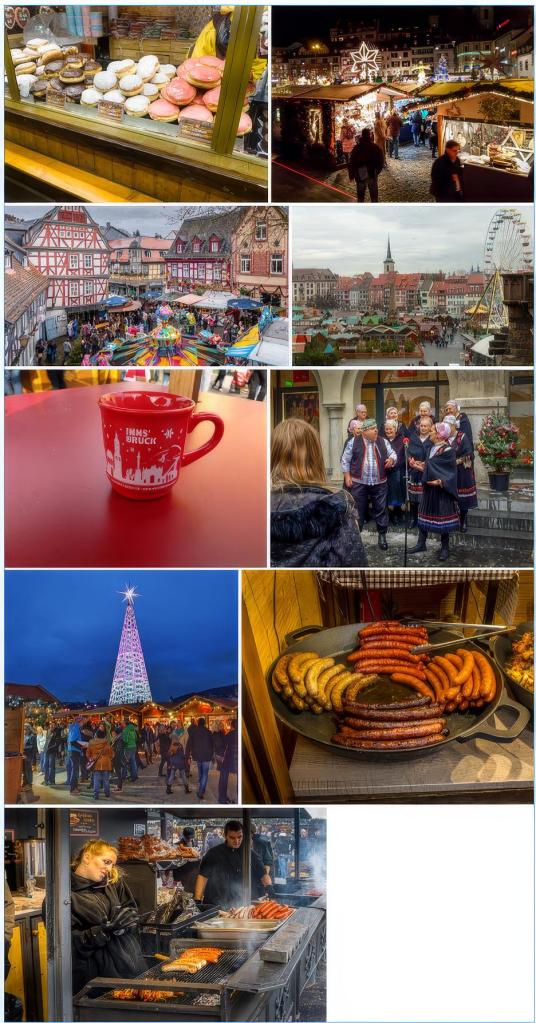
A decade of Christmas Market memories — and we’re not done yet.

Welcome to the World of European Christmas Markets

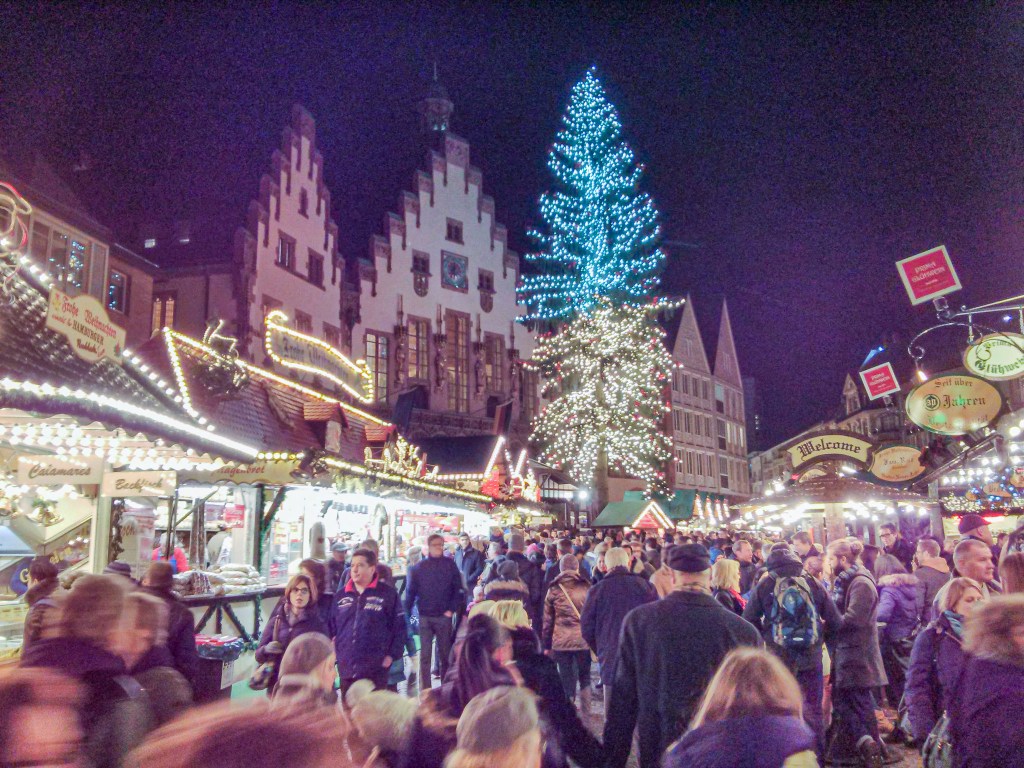
Frankfurt’s Römerberg glows under the lights of its towering Christmas tree and historic guild houses.

Frankfurt’s Römerberg glows under the lights of its towering Christmas tree and historic guild houses.

A Season of Lights, Music, and Tradition

There’s something magical about Europe at Christmastime. From late November through December, centuries-old squares transform into glowing holiday villages. Wooden stalls trimmed with evergreens line cobblestone streets, the air fills with the scent of roasted nuts and spiced wine, and music drifts through the crisp night air.

For travelers, it’s a sensory experience like no other — part festival, part cultural tradition, and all wrapped in the charm of old-world Europe.
Our first introduction to this festive world came in 2013, when our daughter, then working in Frankfurt, invited us to visit during the holiday season. What began as a family visit soon became the start of a long love affair with Europe’s Christmas Markets.
Our First Christmas Market Journey – Germany and France, 2013

We based ourselves in Frankfurt, exploring the city’s famous Römerberg Christmas Market, one of Germany’s oldest. The historic square, framed by half-timbered buildings and a towering Christmas tree, set the perfect stage for our introduction to the season.

From there, we ventured further afield — to Dresden, Erfurt, and Idstein, each with its own charm.
• Dresden’s Striezelmarkt, dating back to 1434, dazzled with its giant wooden pyramid and the aroma of freshly baked stollen.
• Erfurt’s market spread beneath the twin spires of its grand cathedral, glowing with color and tradition.
• And Idstein, a quiet gem along Germany’s half-timbered road, offered a cozy, small-town market that felt like stepping into a storybook.

Dresden Striezelmarkt – “Germany’s oldest Christmas Market glowing under winter skies.”
Erfurt Market – “Colorful stalls beneath Erfurt Cathedral’s illuminated towers.”
Frankfurt – “A festive gathering place in the heart of old Frankfurt.”
Idstein - "A cozy, small-town market that felt like stepping into a storybook."
Idstein – “A cozy, small-town market that felt like stepping into a storybook.”

Strasbourg – The Heart of Christmas

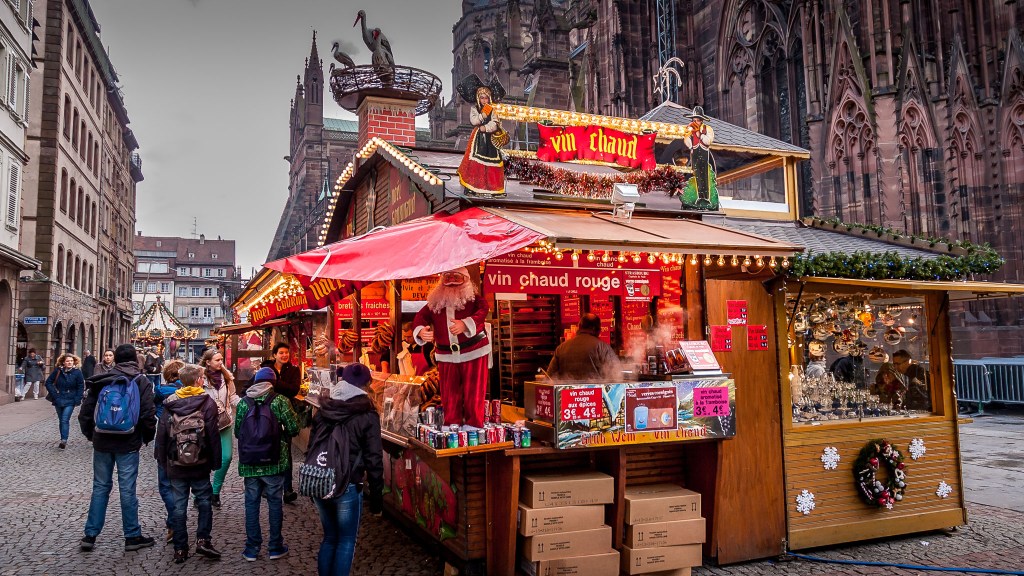
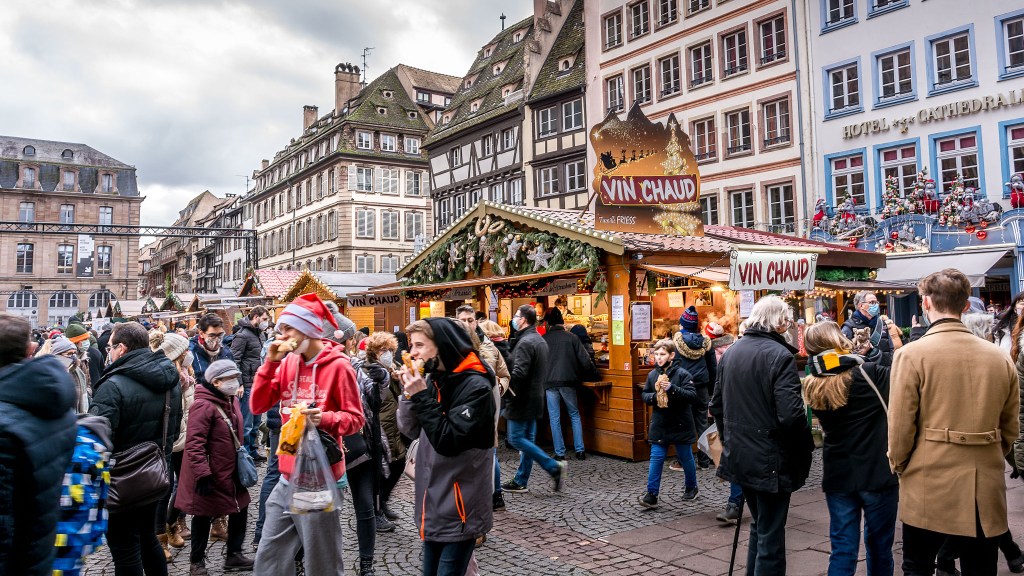
Of all the places we visited on that first trip, Strasbourg, France, stole our hearts. Known as ‘The Capital of Christmas,’ Strasbourg’s market dates back to 1570 and fills the old city with light, music, and warmth.

Each evening, the Place Kléber came alive with a spectacular light and sound show, while the scent of spiced wine and Alsatian pastries drifted through the streets. Strasbourg’s blend of French and German influences made it unforgettable — elegant, welcoming, and filled with joy.

We stayed at the Maison Rouge Strasbourg Hotel, perfectly located within walking distance of all the markets — ideal for late-night strolls among the lights.

Strasbourg Christmas Market – “The Alsatian capital shines with timeless Christmas spirit.”

Tastes of the Season

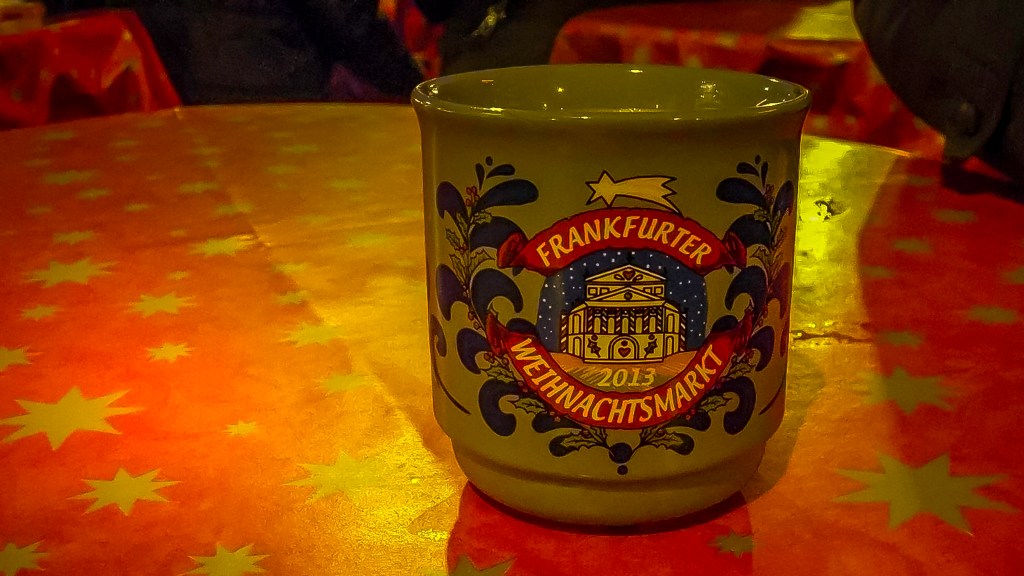
No matter where you go, one thing remains constant — glühwein, the warm, spiced wine served in collectible mugs unique to each market. Over the years, we’ve built quite the collection of mugs, each one a memory of a place and moment shared.

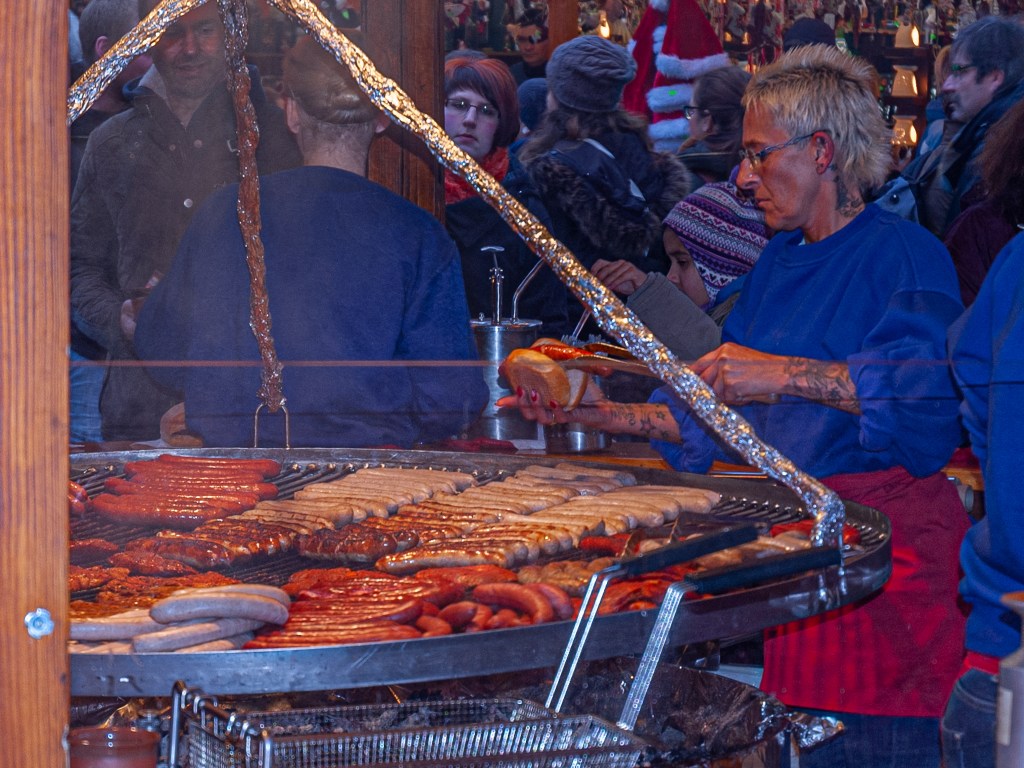
And then there’s the food — from German sausages and brats to Alsatian spaetzle, and of course, a wide array of sweets that no traveler can resist. Each market offers its own flavors, and half the fun is tasting them all.

Getting There and Getting Around

Our 11-day adventure began with a nonstop Lufthansa flight from Boston to Frankfurt. From there, we explored by train, tram, and car — efficient, comfortable, and easy even in winter weather. We drove five hours to Dresden (through sleet and freezing rain — quite the Thanksgiving adventure!), stopped for lunch in Erfurt, and later took the fast train to Strasbourg.

It was on that trip that we discovered how seamlessly European rail travel connects major Christmas Market cities — perfect for those who want to see several destinations in one journey.

The Start of a Traveling Tradition

That first journey in 2013 sparked something that has become one of our favorite holiday traditions. Since then, we’ve returned to Europe again and again — exploring markets in Austria, Switzerland, France, Croatia, the Czech Republic, and Belgium, as well as along the Rhine River aboard Viking Cruises.

Each trip adds new memories — and new glühwein mugs — to our growing collection.

This winter, we’ll continue the story with a pre-cruise stay in Madrid before sailing on a Viking Ocean Cruise from Barcelona to San Juan, Puerto Rico. We’re already researching Madrid’s Christmas Markets and can’t wait to see how Spain celebrates the season.

Coming Up in This Series

Over the next several weeks, we’ll share highlights from our favorite Christmas Market destinations — complete with photos, travel tips, and firsthand experiences to help you plan your own holiday adventure.

Here’s what’s ahead:
• How to Plan Your European Christmas Market Adventure
• Frankfurt, Dresden & Erfurt – Our First Taste of Christmas in Germany
• Colmar & the Alsace Region – A Storybook Christmas
• Salzburg, Innsbruck & Munich – A Festive Austrian Tour
• Vienna, Bratislava & Zagreb – Christmas Across Central Europe
• Brussels – Winter Wonders at the Grand-Place
• Viking Rhine Getaway – A Christmas Market River Cruise
• Prague – One City, Endless Christmas Charm
• Madrid Christmas Markets – A New Holiday Chapter
• Why We Keep Coming Back to Europe at Christmastime

Closing Thought

Whether it’s sipping glühwein beneath a cathedral spire, browsing handcrafted ornaments, or simply walking hand-in-hand through a glowing market square, there’s no better way to experience the spirit of the season than in Europe’s Christmas Markets.

We hope you’ll join us as we revisit the markets, the memories, and the magic that keep bringing us back year after year.

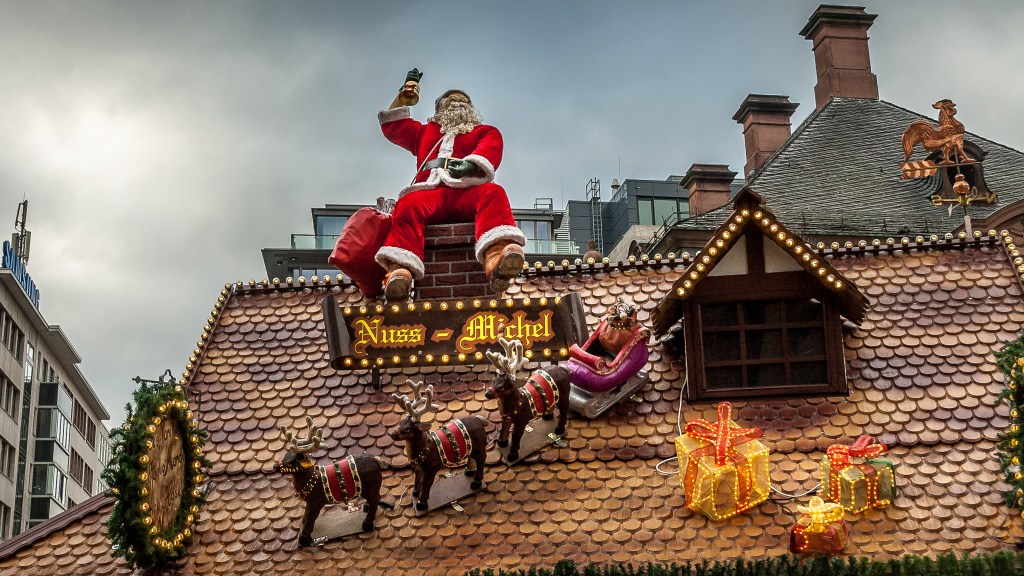
Friendly Santa - "Frankfurt Christmas Market"
Friendly Santa – “Frankfurt Christmas Market”

Looking Back at Favorite Trips

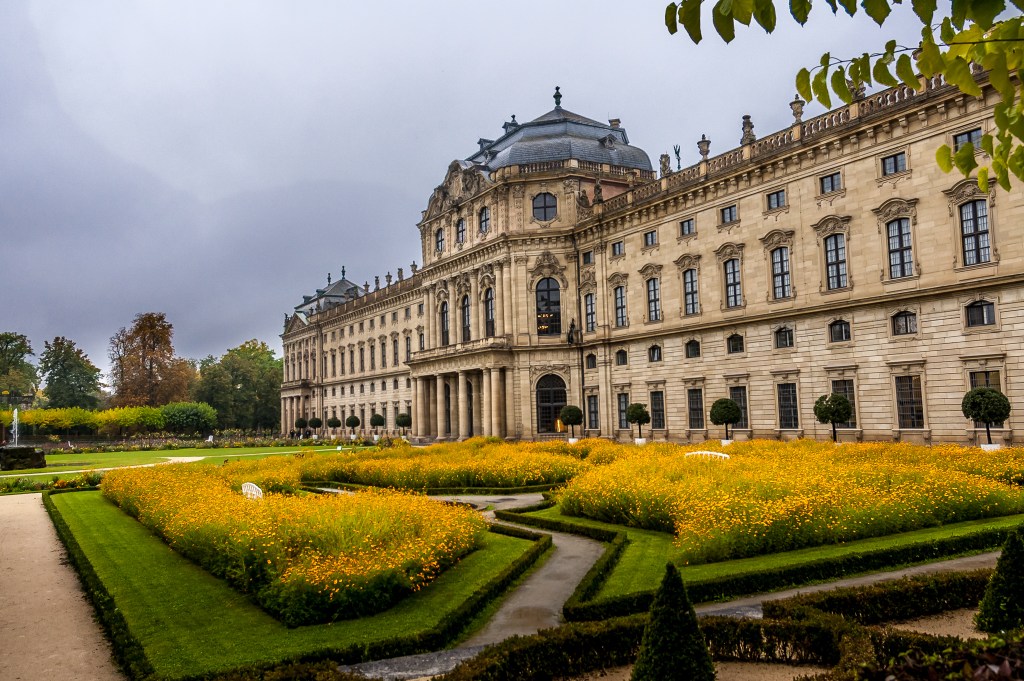
Würzburg Residence Court Garden: Embracing Autumn’s Warmth

Looking back at our October 1st, 2020, stop in Würzburg Germany on our first Viking River Cruise.

Autumn has a way of turning every landscape into a work of art, and the Würzburg Court Garden in Germany are no exception. While we had the pleasure of visiting this enchanting destination during the fall season, the experience was nothing short of magical.

A Palette of Earth Tones

As we strolled through the gardens, the crunch of leaves beneath my feet created a soothing symphony. The palace, an architectural masterpiece, stood gracefully amidst a sea of warm earth tones. The vibrant reds and oranges of early autumn may have faded, but what remained was equally captivating—a gentle transition to deep golds and rustic browns.

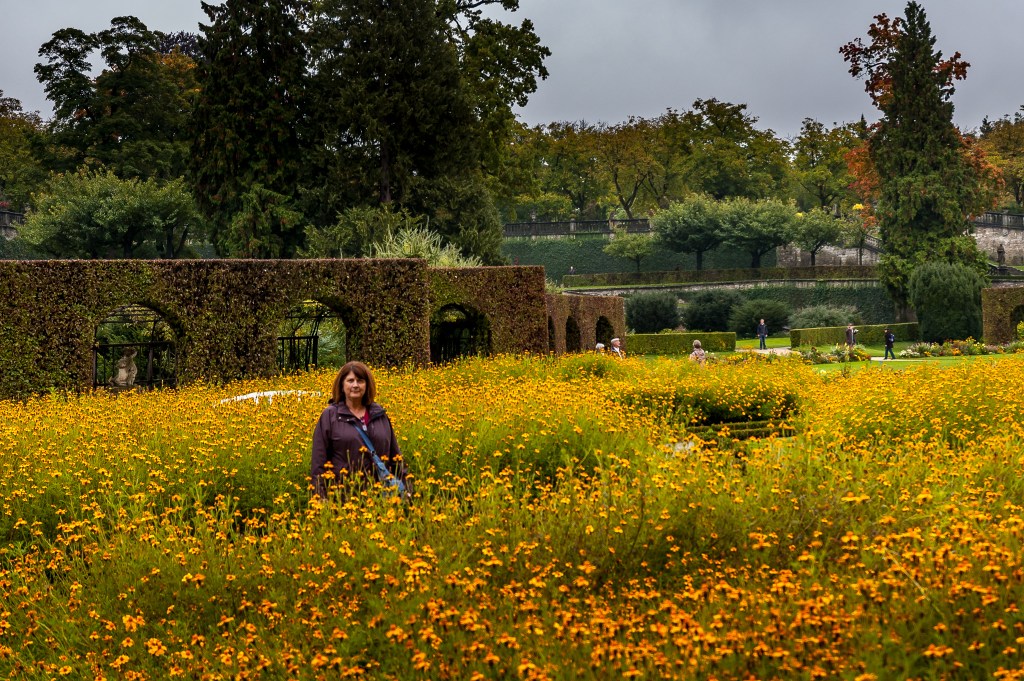
One element that caught our eye was the beds of bright yellow flowers, scattered throughout the gardens. Their cheerful hue was a welcome contrast to the muted tones of the season, adding a touch of vibrancy to the scene.

Exploring the Palace’s Rich History

The Würzburg Residence is an 18th Century baroque style palace, since 1981, it has been a UNESCO World Heritage Site in recognition of its outstanding Baroque art, design, and architecture.

A visit to Würzburg Residence is incomplete without delving into its rich history. The guided tour of the palace’s opulent interiors was a fascinating journey back in time. From intricately designed rooms to awe-inspiring architecture, every corner of the palace offered a glimpse into the grandeur of a bygone era.

In Conclusion

Würzburg Court Garden in the fall offers a harmonious blend of history and nature. While our pictures may not have captured every aspect of this enchanting destination, the memories created during this journey will remain etched in our heart. The warm earth tones, the yellow flowers, and the cozy ambiance of autumn made this visit truly special.
So, if you’re looking for a place to embrace the warmth of autumn, don’t miss the Würzburg Court Garden. Whether you’re a history enthusiast, a nature lover, or simply seeking a tranquil escape, this destination promises an unforgettable experience amidst the changing colors of fall.

Plan your visit and let the beauty of autumn unfold before your eyes at this hidden gem in the heart of Germany.

Information websites

2022 Prague Christmas Market Trip – Arrival Day

We arrived in Prague on November 26th after a long overnight flight from Boston (via Munich). This would be our eighth Christmas Market trip since 2013. We visited Prague back in the Spring of 2019 at the end of a Viking Elbe River cruise and loved this beautiful, old European city. At that time, we thought it might be a good Christmas Market destination. Early this past Fall we decided to do another Christmas Market trip, and after some Internet research, we saw that Prague had high Christmas Market ratings, so the choice was made!

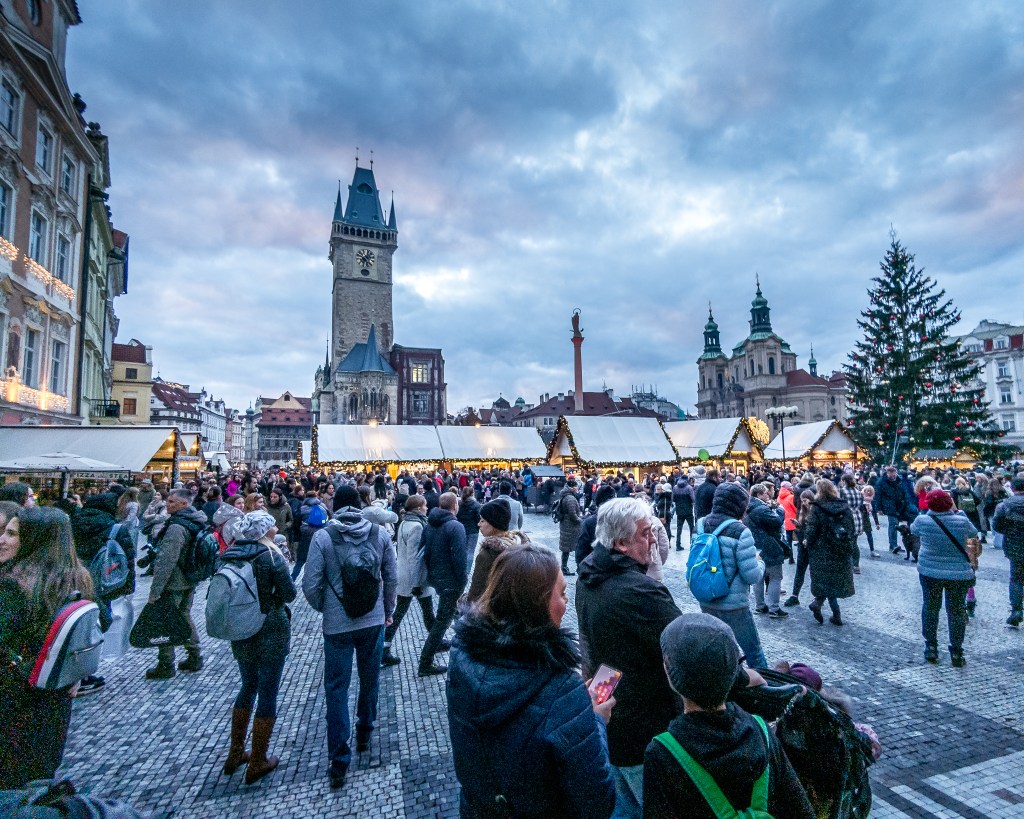
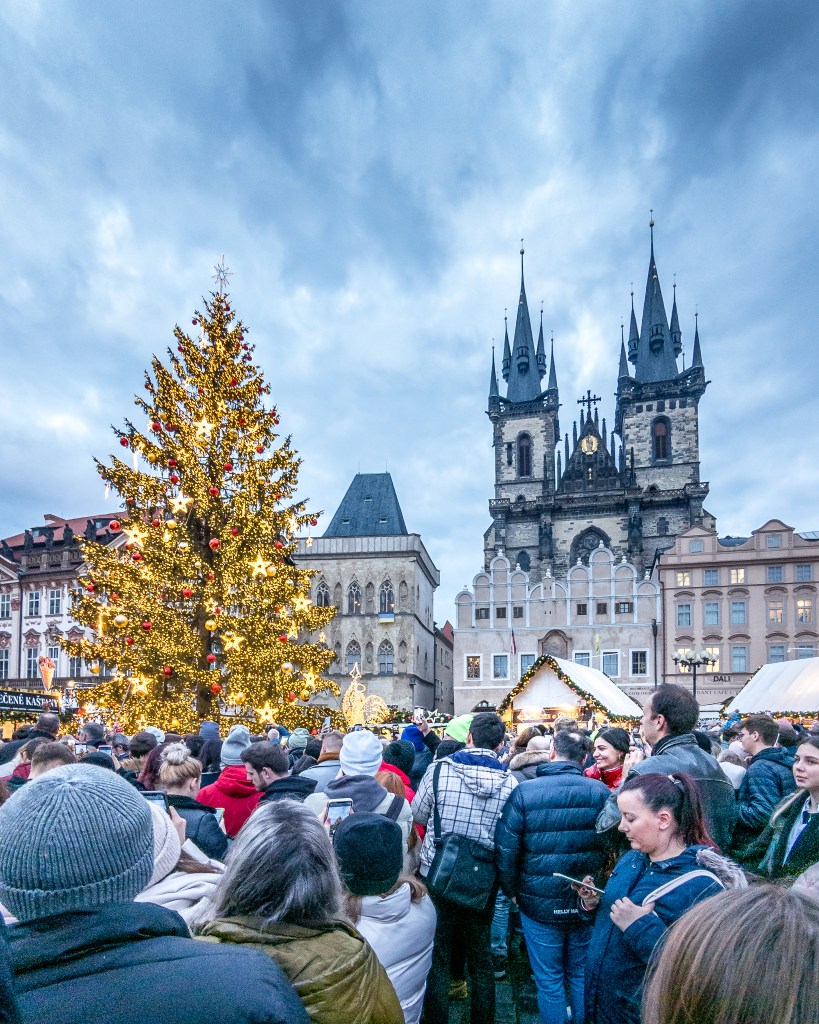
We arrived at out hotel mid-afternoon on Nov 26th, the opening day for the Old Town Square Christmas Market. Our hotel, the Ventana, was perfectly located near the Old Town Square and from our room we could see the square and the famous clock tower. Resting for a bit, we ventured out to the square to watch the lighting of the Christmas Tree at 4:30pm.

Wow, the crowd was huge, it was difficult trying to move around or get a decent spot to view the tree lighting. We attempted to walk around the Christmas Market but it was near impossible to get close to any vendor stalls for food, drink or crafts. We decided to find a proper restaurant for dinner and after checking out many crowded restaurants, we settled for one away from the square but not far from our hotel. All the restaurants were crowded, especially ones with large screen TV’s, you see, the World Cup was going on and we were in a soccer loving country!

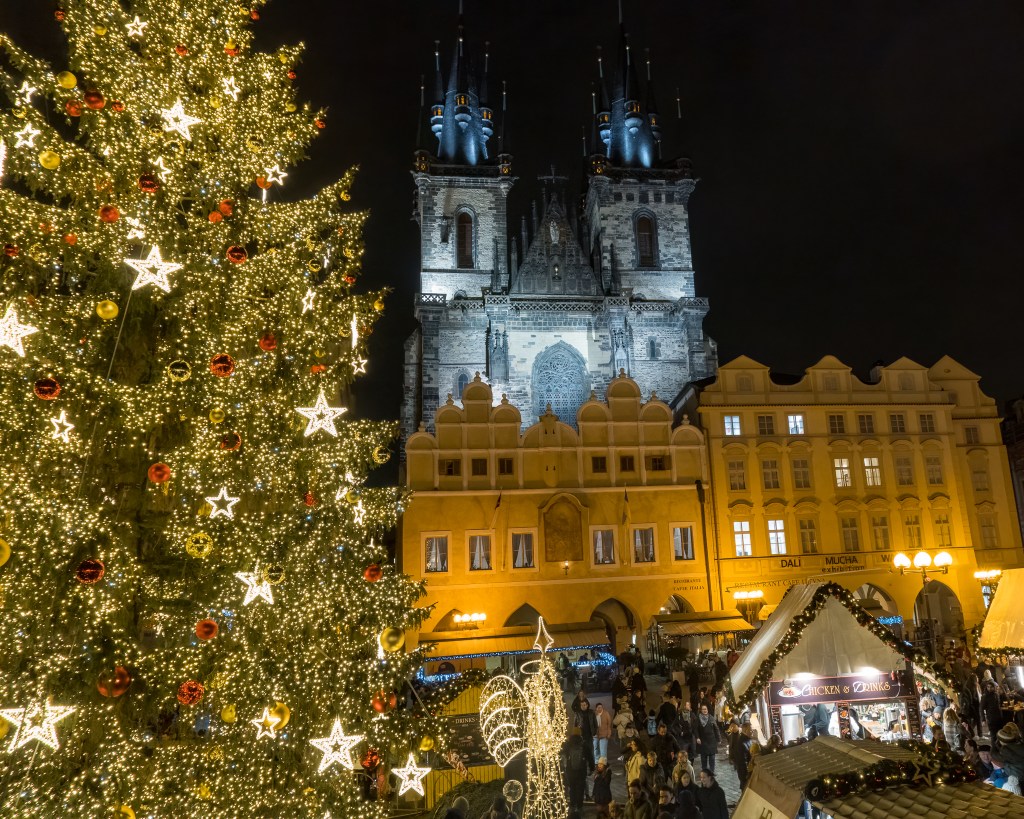
The next days and nights the Christmas Markets would be crowded, but much easier to get around. At night the lights created such a magical experience. Christmas Markets at night are the best!

Stay tuned for more blogs on our Prague trip:

  • Visit to Prague Castle
  • Checking out other Christmas Markets around the city
  • Christmas Market foods
  • Tour some of the beautiful Prague Churches

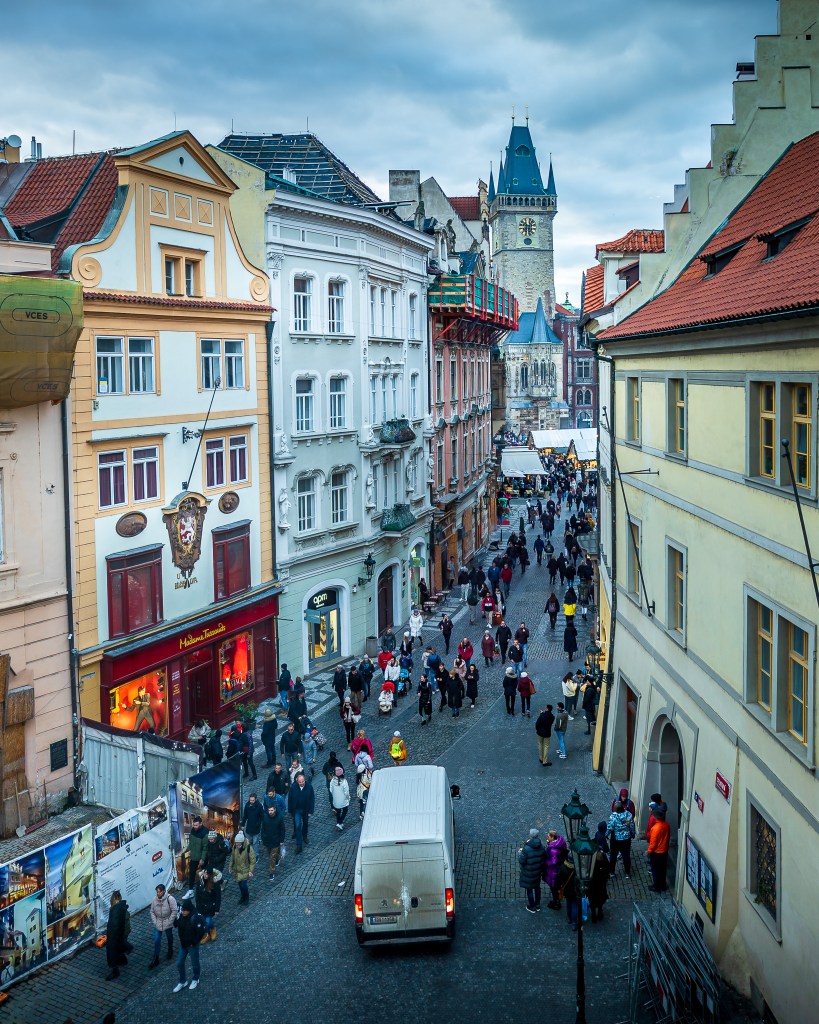
Here are some images from the Old Town Square Christmas Market.

Our video tour of Old Town Christmas Market

November 11, 1918 – My Grandfather’s Recollection from the Western Front

The Pandemic has taken a toll on our travel blog. Nothing to report since our last article in early March about our final days in Buenos Aires.

I thought it would be appropriate on this Veteran’s Day/Remembrance Day to share some of my grandfather’s writings about his experiences in World War One. I am fortunate to have inherited a treasure trove of his typewritten, hand illustrated stories.

ARMISTICE NOVEMBER 11, 1918

The following stories were written by my Grandfather, David Lee Wetmore who served in the Royal Canadian Dragoons cavalry regiment during World War One. He enlisted in Canada at war’s outbreak in August 1914 and served in France and Belgium fighting in battles that included Somme, Ypres, and Cambria. He returned to Canada in 1919 with his war bride (my Grandmother) he met in England.

The stories that follow were from typewritten pages, illustrated with his hand drawn sketches. He wrote these (and many more) during the 1940’s and 1950’s from his recollections. While these stories were not dated, they are obviously written about the events surrounding the Armistice while he was in an unnamed Belgian village. The French phrases in each story are my grandfather’s attempt at written French.

I was fortunate to find the daily war diaries of the Royal Canadian Dragoons on the Library and Archives of Canada website and can now provide the historical context of my grandfather’s stories. From these diaries, here is the timeline of the days leading up to 11 November 1918.

Nov 7…. Left Baralle (France) at 07:30 arrived at Cuincy (France) at 13:00 very dull day – men billeted in ruins of village – horse in open 

Nov 8-9…. Left Cuincy at 06:00 arrived Martinsart (Belgium) 10:00 – men in buildings and horses in open 

Nov 10…. Left Martinsart at 09:30 arrived at Peronnes (Belgium) at 20:00 – Belgians very pleased to see us 

Nov 11… Left Peronnes at 08:00 – “A” Squadron left Flank Guard to the Division – Regiment leading with ??? – Brigade halted at Tourpes (Belgium) at 10:40 – Cease Fire sounded at 11:00 – Everyone overjoyed but rather sorry not to be actually in touch with the Bosche at the time – returned Westward and spent the night at Haut-Trieux.

David Lee Wetmore 1884-1975
Served with the Royal Canadian Dragoons 1914-1919

In My Grandfather’s Words

OU FAIRE VOUS MESS’URE? We were following up the German retreat. The vaunted power of the Kaiser’s army was badly diminished, and a corporal and four men had been known to bring in a whole regiment of German prisoners. 

An old soldier by this time, I knew enough to carry an extra blanket rolled in my greatcoat, as the army’s slogan “one man, one blanket” was proving badly inadequate on these chilly nights. My right hand mate had crawled under the blankets with me and we had spent the night fairly comfortably, then getting up and underway again with the dawn in the morning.

But as we began to pass through the villages, more and more we were asked the question “Ou Faire vous Mes’sure. Le guerre finis”. About noon we were off saddled in a field while the officers attended a ‘pow-wow’. Idly we lay around, caught up on our sleep or played cards, expecting any moment to get the order to saddle up and move. After having been asked the question several times that morning, the liaison officer passes us and I asked him whether he had heard anything of what the villagers were talking about. He replied that there was a rumor to that effect, but that it was, as yet, unconfirmed.

TRUMPETER We were sitting around waiting for orders when the Colonel came rushing out of a gang of officers who had been ‘pow-wowing’ all the time we were in there, at a telephone station, roaring for a trumpeter. Thinking that we were about to move out we all started scrambling around for our gear, when the trumpeter instead of the ‘Boots and saddles’ that we had expected, sounded ‘Cease fire’.

We were all so fed up and disgusted that for a moment, nothing happened. Le guerre, indeed, was finis. But just for the moment, it didn’t register, there was no outbreak of cheering, no demonstration of any sort. We were just so eternally disgusted with everything that nothing mattered any more.

YOU HAVE DONE ENOUGH FOR BELGIUM  When we stabled the horses that night the civilians came rushing into the stables. They would not allow us to do anything. “You have done enough for Belgium” they said “Belgium now does for you”. They seized the brushes, pails or whatever we might have in our hands as we were doing the necessary work of seeing our mounts taken care of, out of our hands. “Merci Dieu vive le Canadien” they said, and we were forced, much to the sergeant’s disgust to stand with our hands in our pockets while the civvies took care of our horses.

DANCING IN THE STREETS There was dancing in the streets of the Belgian village that night. We had scarcely eaten our supper when the local beauties, arrayed in their best, dragged us out “Allez: Allez le dance” they said. And we danced in the streets, where huge blazing fires had been lighted, until early dawn. Even the good priest had attended, though I don’t remember that he danced.

We could scarcely find it in our hearts to blame them. They had had their faces ground into the dirt by the arrogant German Soldiers for too many years now to let anything interfere with their pleasure. And they were a pleasure-loving people.

All night long, as we danced to the music of a local fiddler, doing his best, the village rang with cries of the villagers “Vive le Canadien” “Merci Dieu”. With a girl on each arm, dressed in the finest she had, we kept the celebration going until early morning, nor were the girls loath to stay as long as we would. 

EVERY DAY IS WASHDAY The Belgian villagers just couldn’t do enough for us. Having a small washing I wanted done one morning, I approached the good lady of the house asking if I could get it done. “Oui, Mess’ure: she responded cheerfully. “When can I get it?” I asked “Tonight, mess’ure” she answered “But” I said “This is not washday” “Every day is washday, mess’ure” she said “If you have washing to be done”.

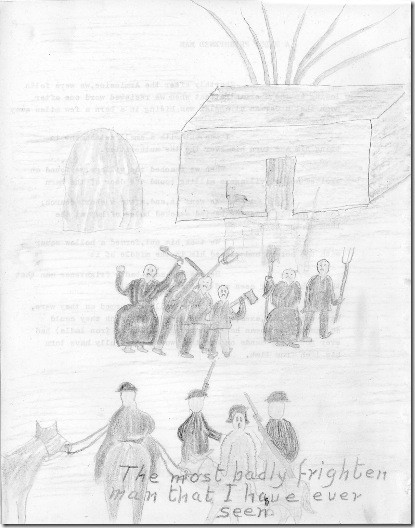
A Badly Frightened Man Shortly after the Armistice, we were following up the German retreat when we received word one afternoon that a German straggler was hiding in a barn a few miles away.

I was sent with a small detachment to bring him in and turn him over to the authorities.

When we reached the village, we found an excited mob of villagers milling around the door of a barn.

We went in and after a short search, found the man cowering behind stacked bales of hay at the back of the barn.

We took him out, formed a hollow square with the horses and placed him in the middle of it. He was the most badly frightened man that I have ever seen and well he might be. If those villagers, armed as they were, with pitchforks, axes, clubs, any weapon with which they could do damage (one woman had even brought along an iron ladle) had they ever got their hands on him, they would cheerfully have torn him limb from limb.

South America – Buenos Aires

Our South America Trip Comes to an end in Buenos Aires

After nearly a month on our South American trip, we arrived in Buenos Aires from Colonia Uruguay early evening Monday February 17th. The ferry ride from Colonia was less than 2 hours, when we arrived at the ferry terminal it was pouring rain and we joined a long line of people waiting for taxis. We waited about 1.5 hours before we got a cab to our hotel, apparently getting a taxi in Buenos Aires on a rainy evening is very challenging.

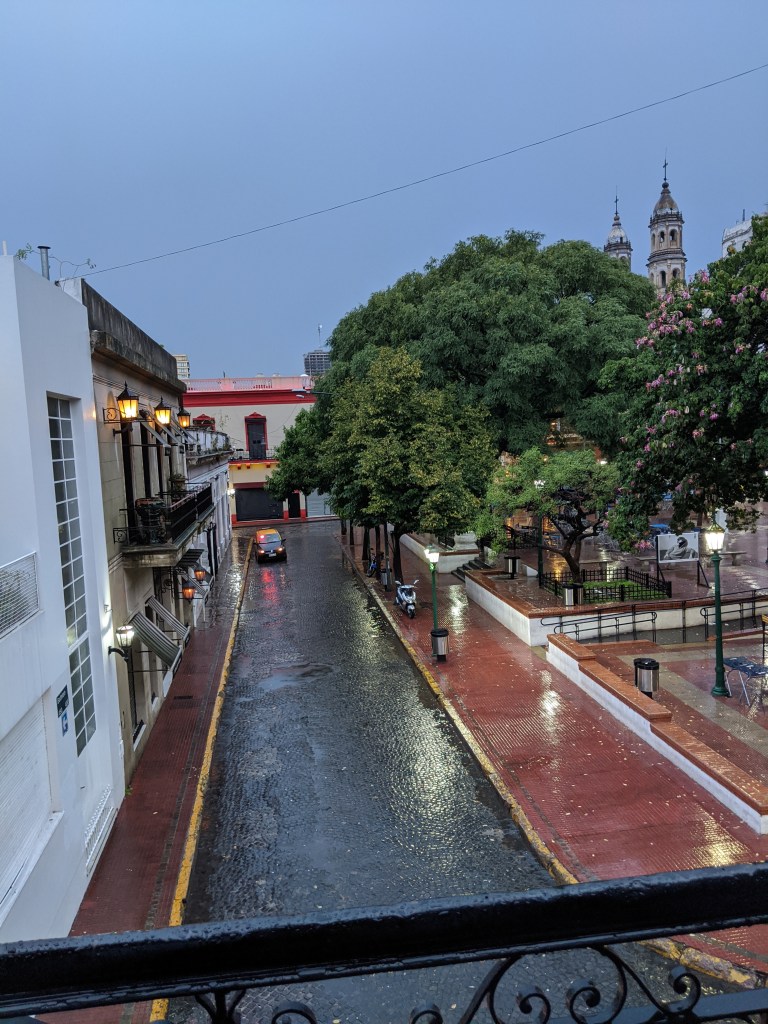
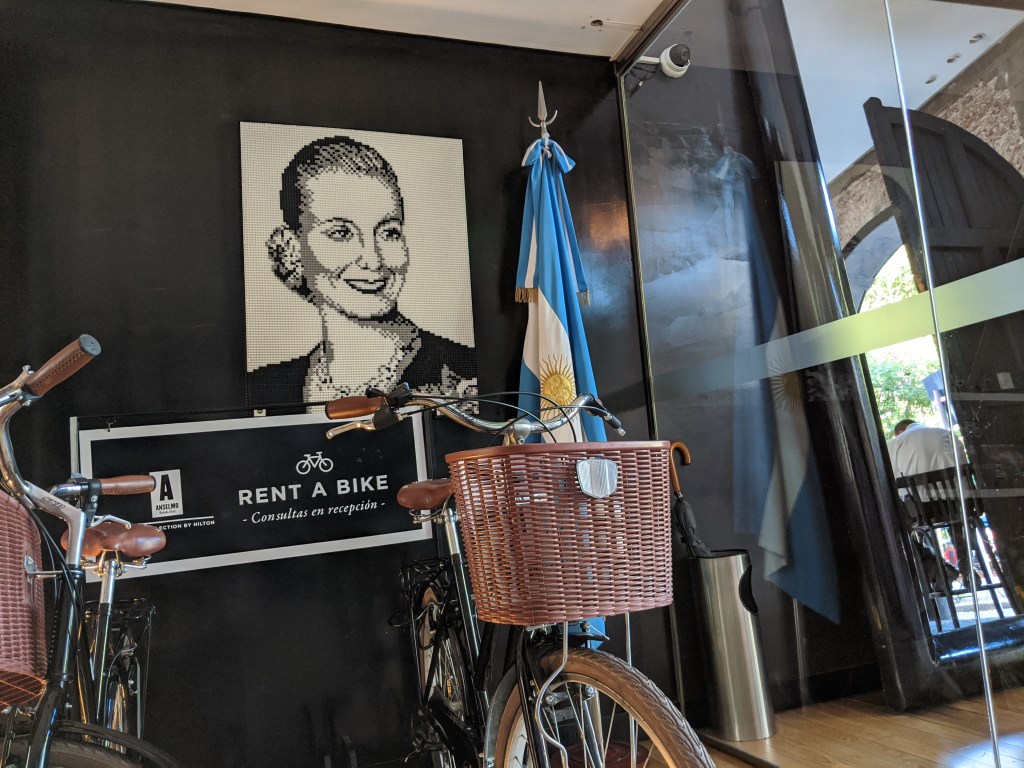
We stayed at the Anselmo Buenos Aires, a Hilton Curio Collection hotel. This is a lovely property and we had a balcony room overlooking Plaza Dorrego. Plaza Dorrego is a very popular square in the San Telmo neighborhood, a quaint area with 19th Century buildings. The square is surrounded by cafe’s, bars, restaurants, antique shops and Tango clubs.

Since it was raining on our arrival at the Anselmo Hotel, we decided to stay in and had a light dinner at the hotel’s wine bar which feature Tapas style selections and, of course, good Malbec wine.


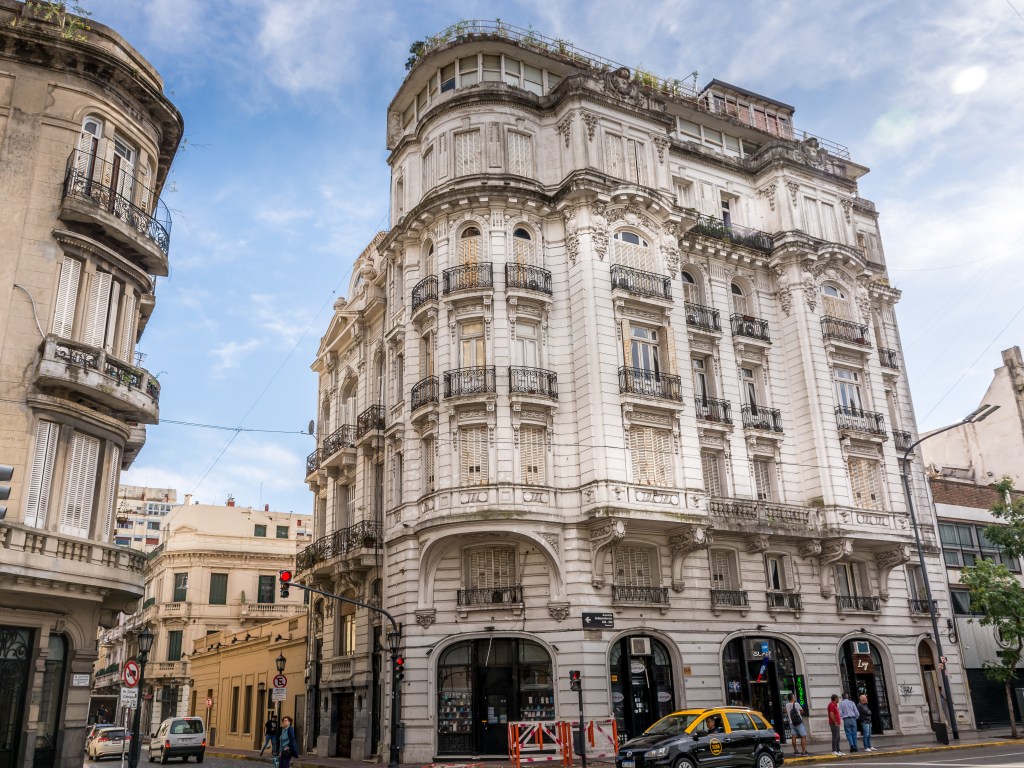
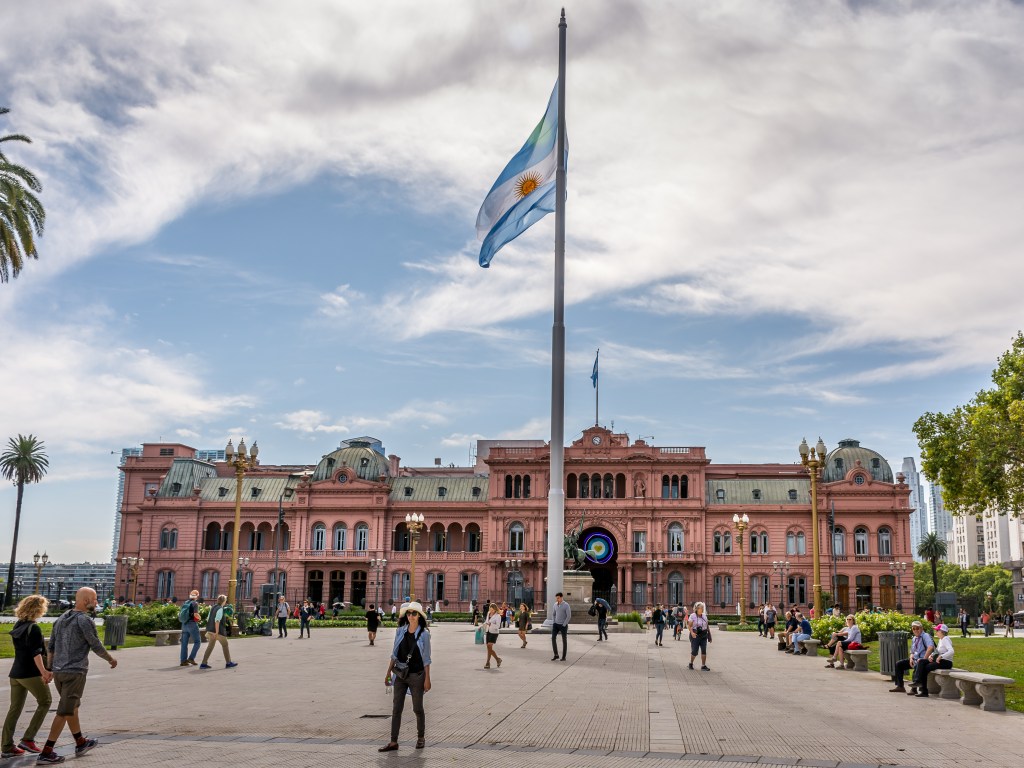
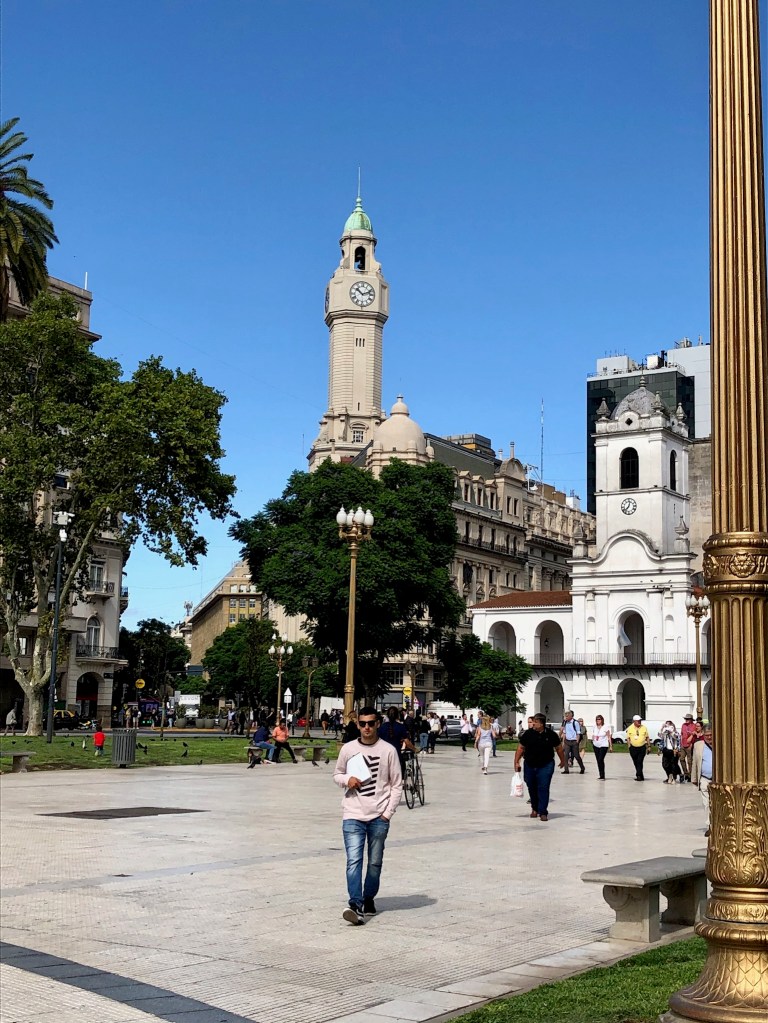
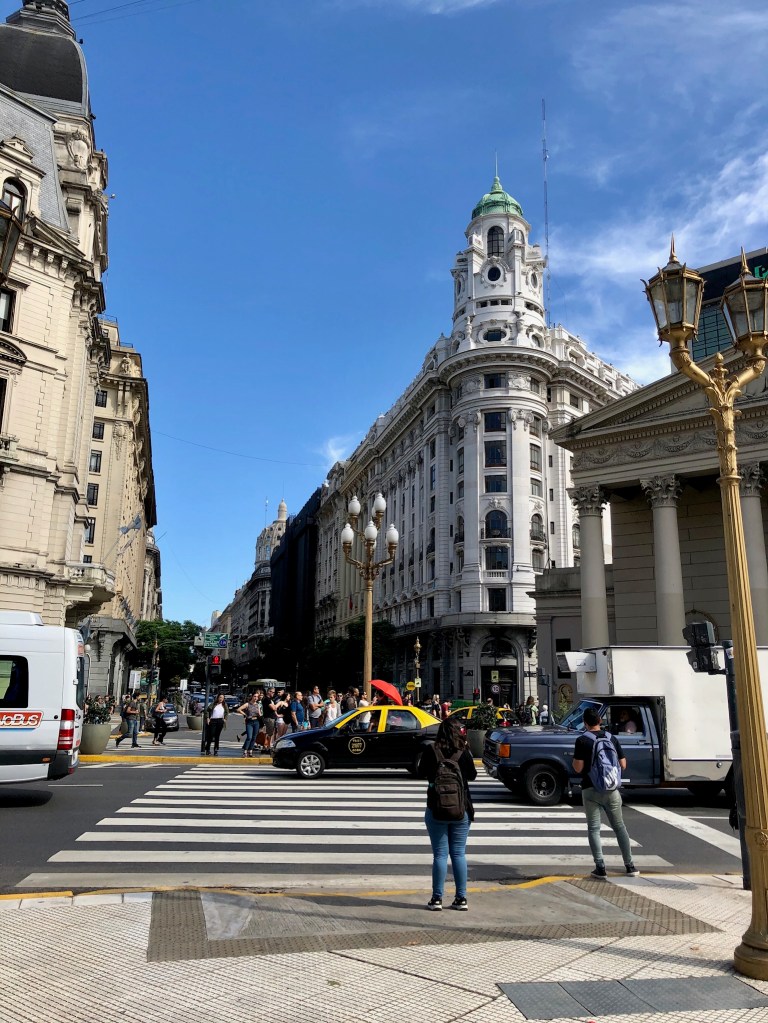
Tuesday morning was sunny and the forecast was for a warm, clear day. We walked from the hotel to the Plaza de Mayo, a little less than a mile. Along the way, we were taking in the splendid architecture of Buenos Aires. This city with its wide boulevards and neoclassical buildings reminds one of Paris. At Plaza de Mayo we took our obligatory pictures of the presidential residence, Casa Rosado.

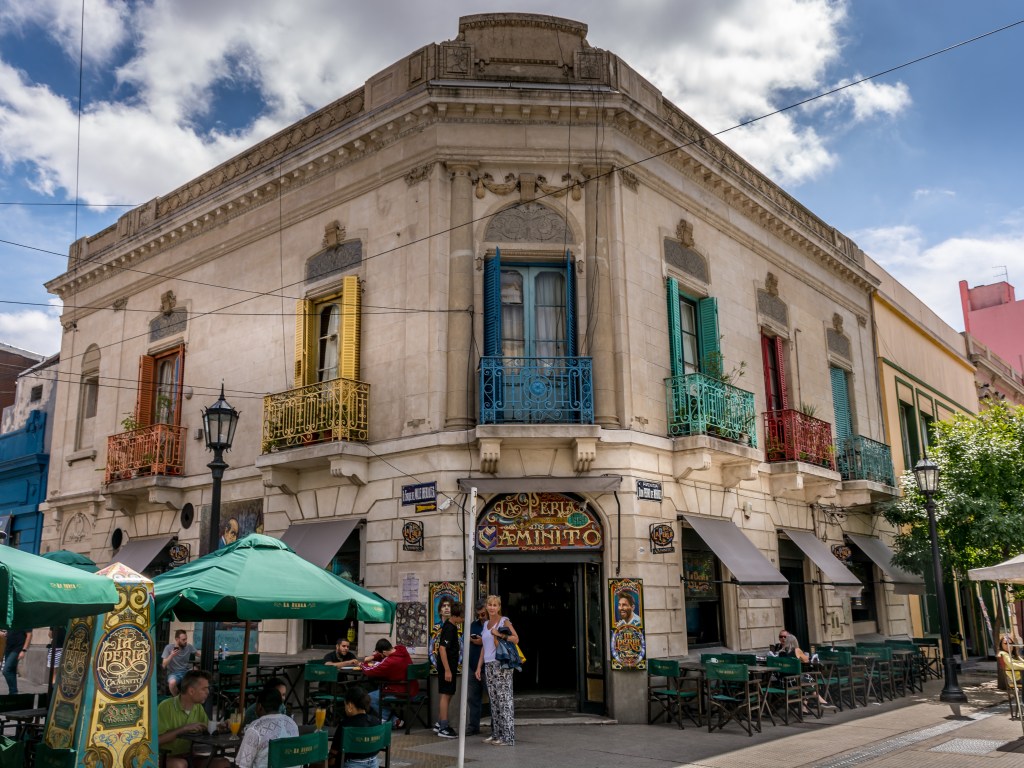
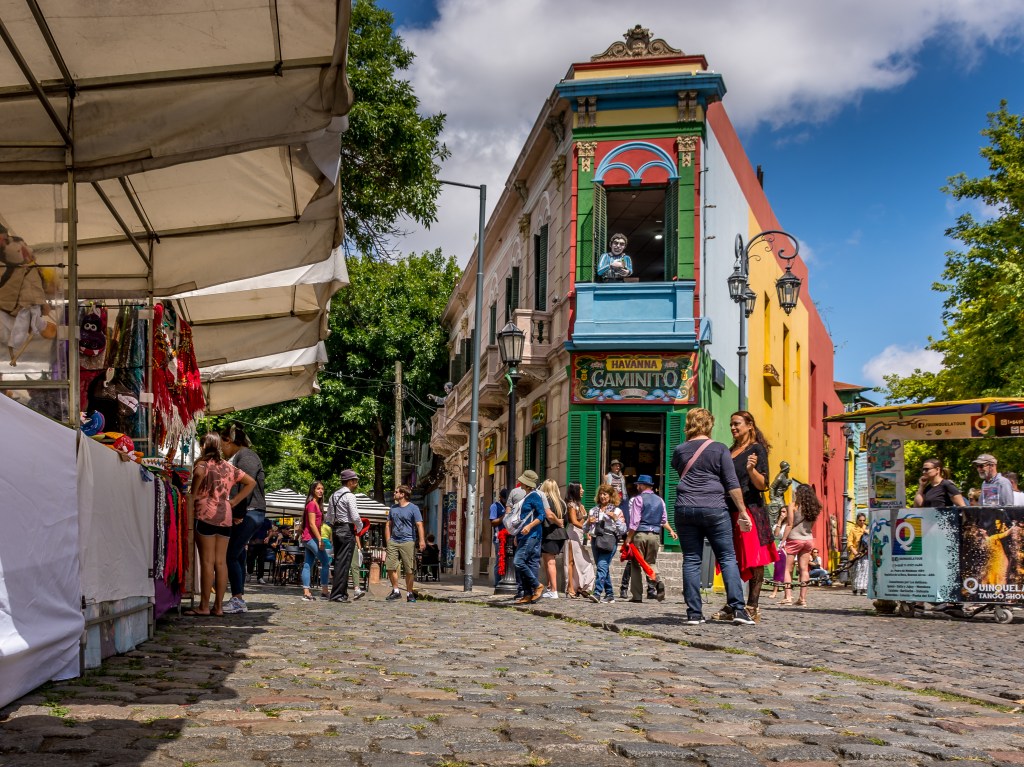
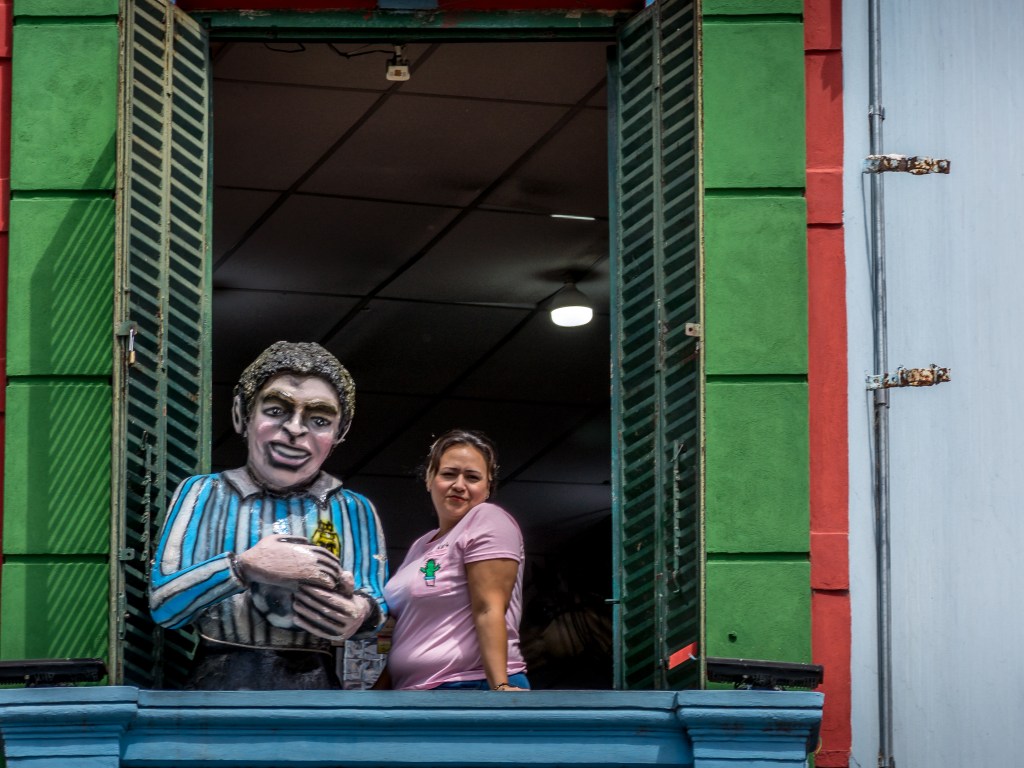
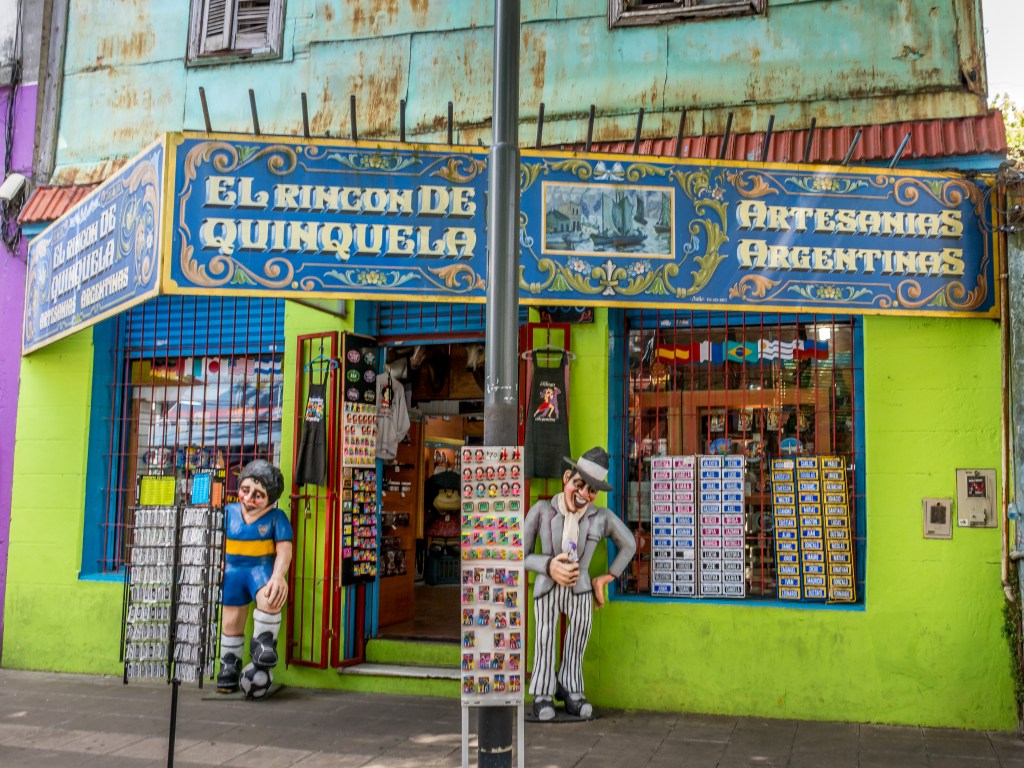
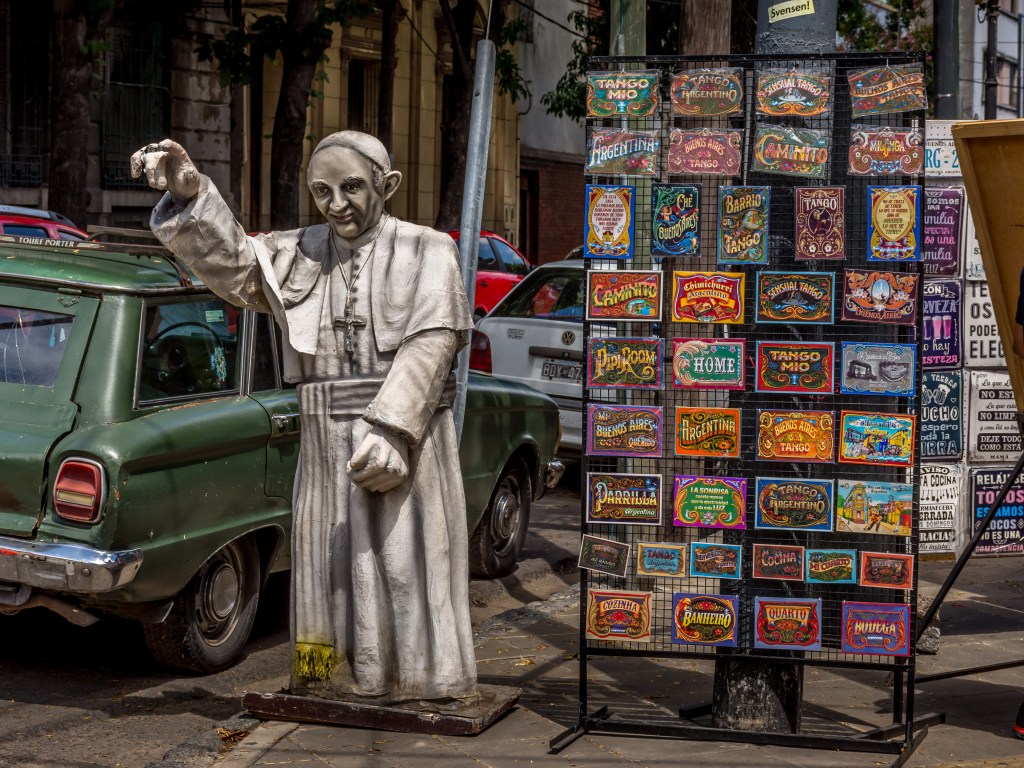
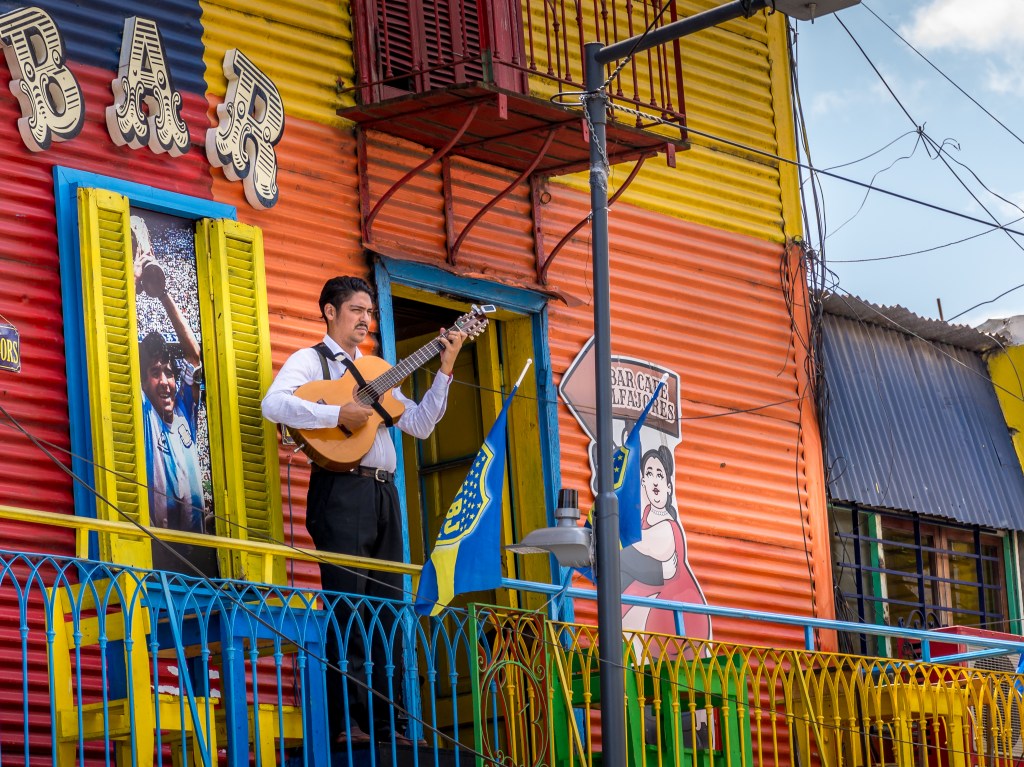
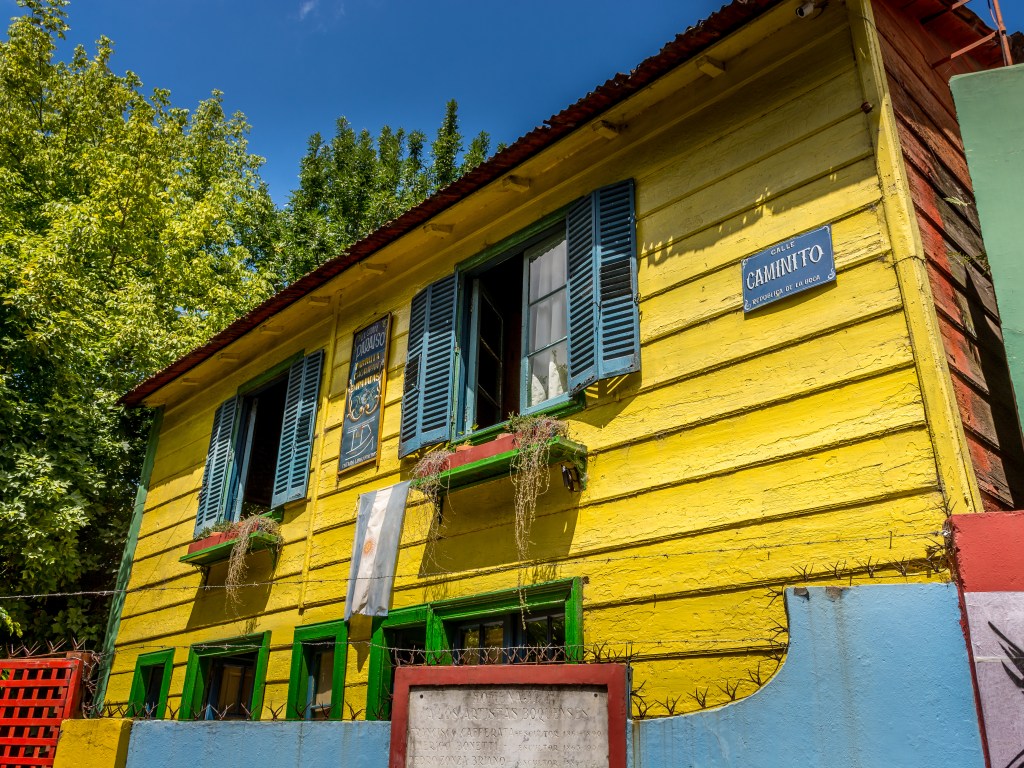
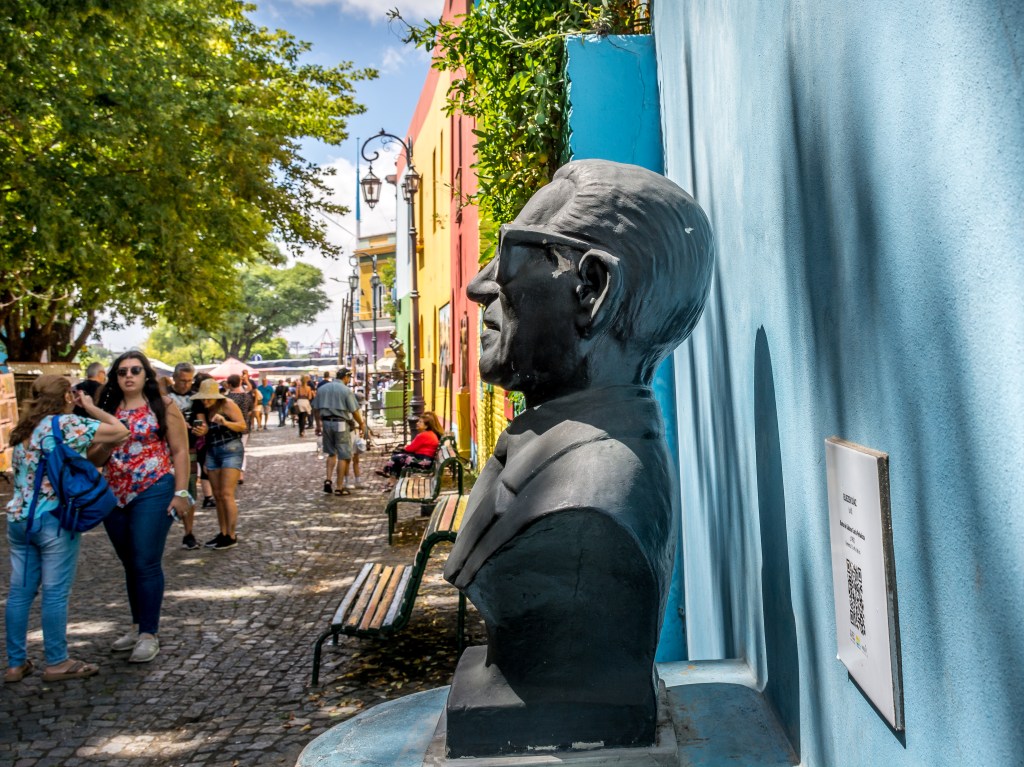
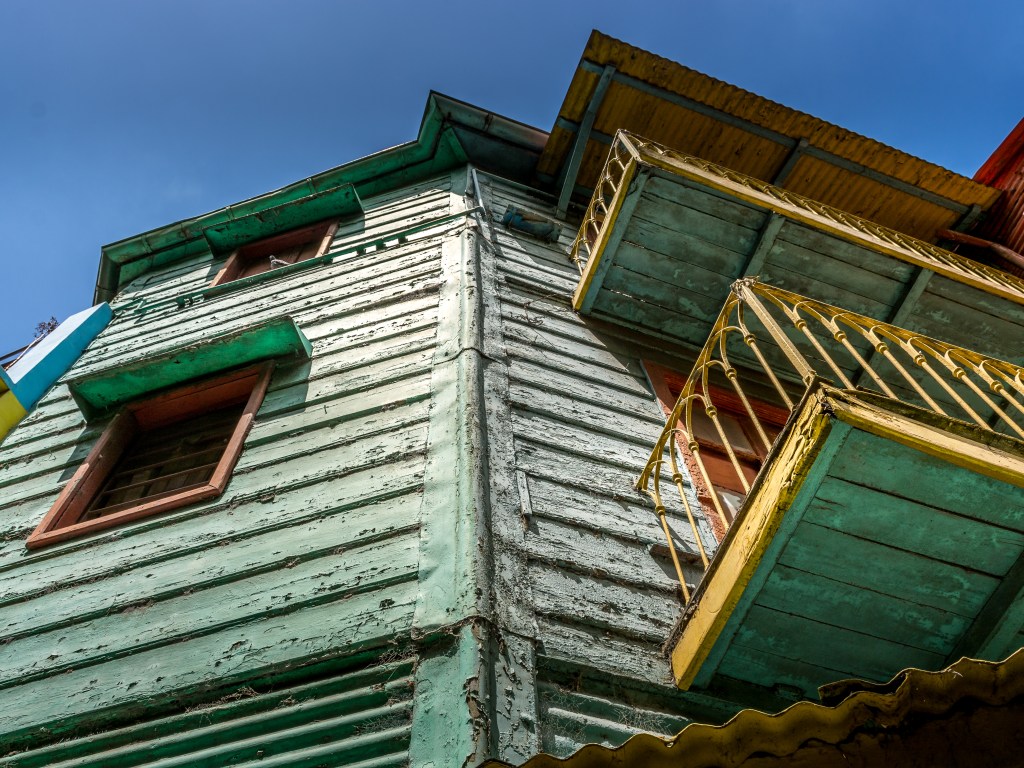
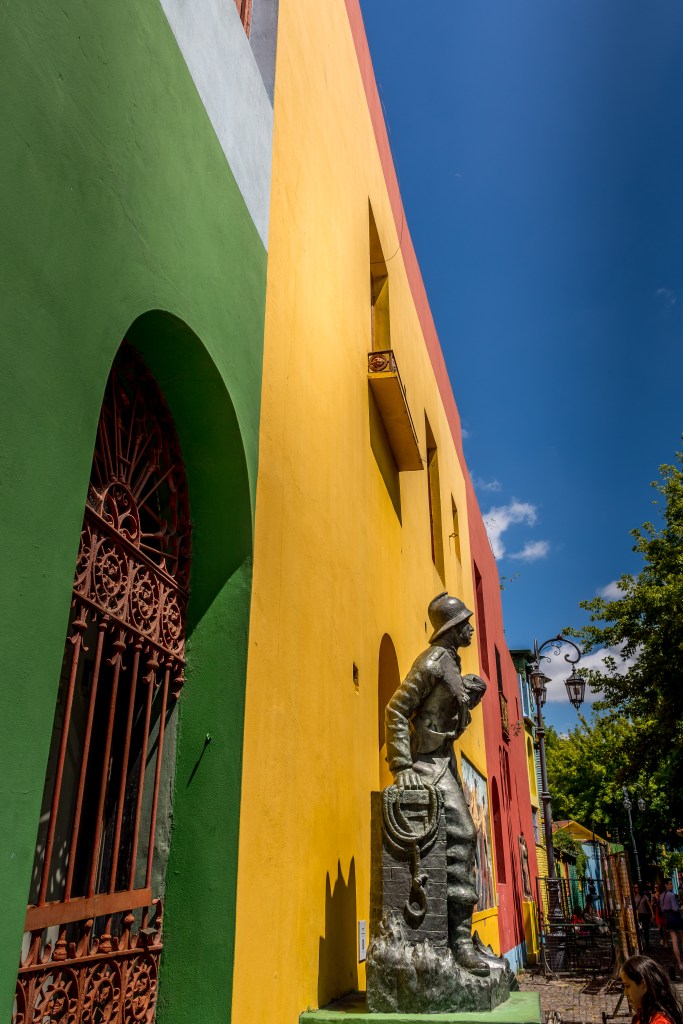
To get an overview look at the city, we found our way to the Hop-on, Hop-off tourist bus stop and did the 2.5 hour loop. We did get off at “La Boca” district and spent an hour walking around, stopping for latte at a cafe to watch some Tango dancers. The colorful La Boca district is a very popular tourist attraction. When we got there it was a bit early so the crowds were not bad, but it didn’t take long before the cruise ship tours started arriving and the place became elbow to elbow. That was when we had seen enough and moved on.

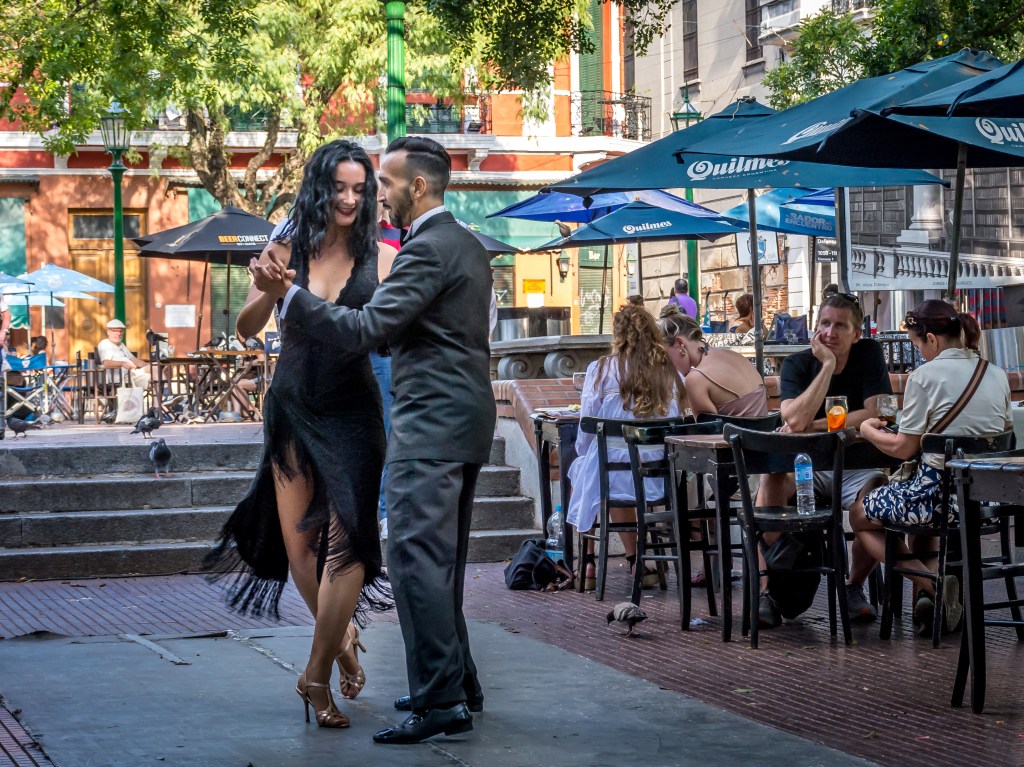
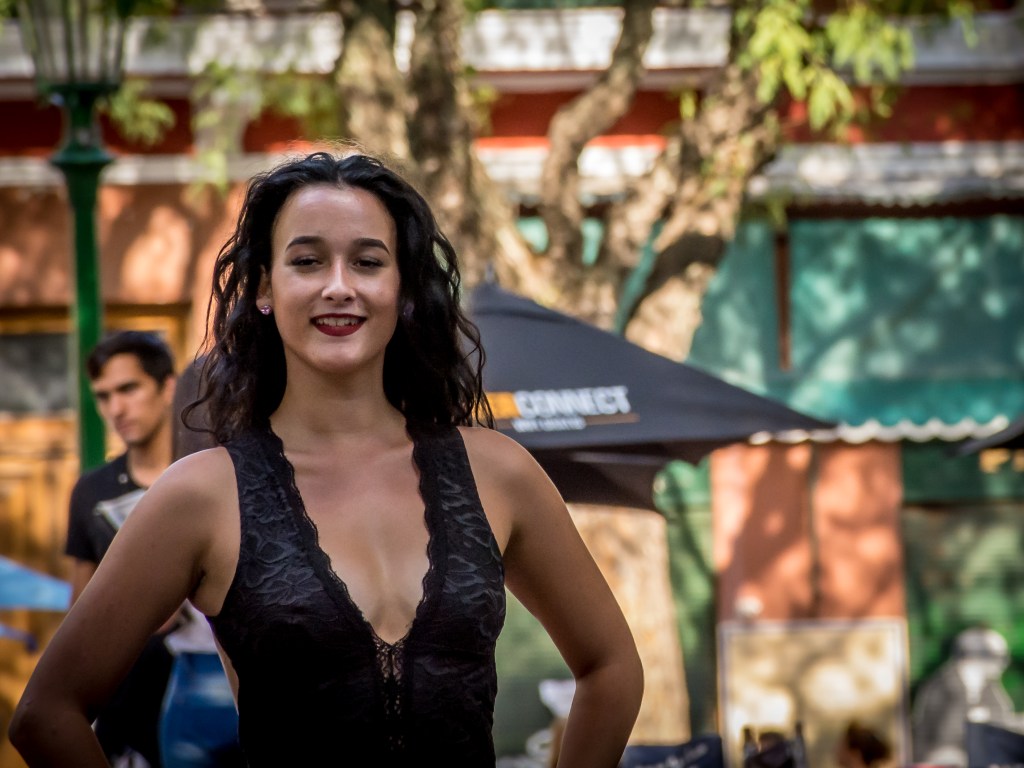
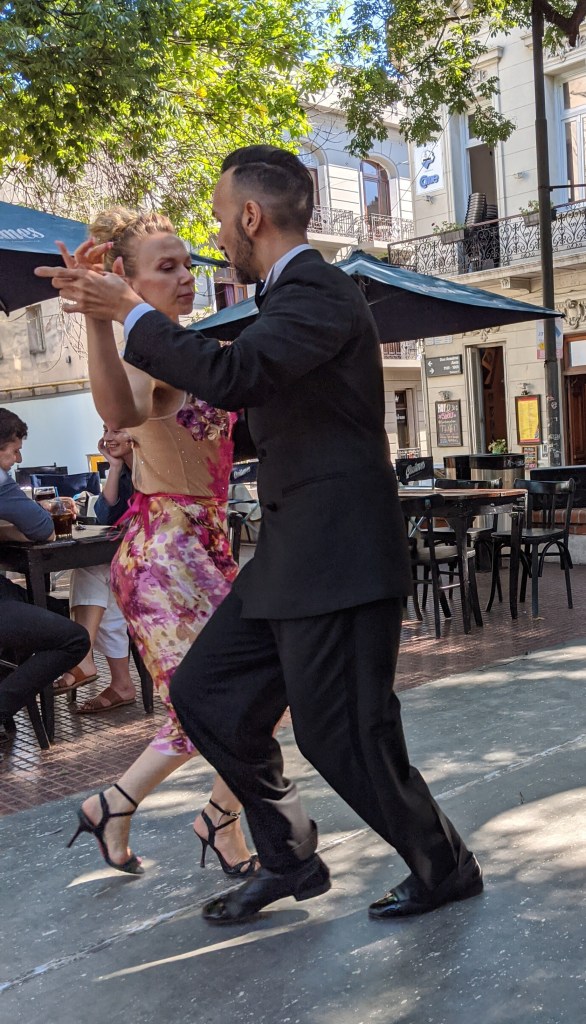
By mid-afternoon we headed back to the hotel. At Plaza Dorrego, the nearby restaurants had tables set up under the plaza trees so we decided to get some lunch. A good asado (steak) was in order along with some Malbec. Tango dancers from the nearby clubs were performing right next to our table, so we enjoyed a long lunch immersed in the Argentine Tango experience. Quiet a classy way to end our day.


Our Lunch Entertainment at Plaza Dorrego

Time to go home

Our fight home was Wednesday evening. The hotel checkout time was Noon, so we had lots of time to kill before heading to Buenos Aires Int’l airport. Fortunately, the hotel offered a special private lounge area for checked-out guests awaiting late flights. This was a nice amenity, the lounge had a TV, coffee, water and other refreshments as well as comfortable chairs and tables. Since most international flights (to North America and Europe) leave late at night, this amenity is a great idea.

We were taking a LATAM flight from Buenos Aires to Lima Peru to connect with our United flight to Houston. All flights were on-time and we had a long layover in Houston before our final Boston flight, which was a good thing since Kathie had an issue with Global Entry and ended up in a long immigration line. Since we traveled United Polaris Class (Business), we were able to use the Polaris Lounge at Houston during the long layover. This lounge offers both a large buffet or à la carte dining along with very comfortable seating in a quiet, relaxing environment.

Home at last, but still buzzing about our amazing journey.

Trip Statistics….

  • Days away from home… 28
  • Air Miles Traveled……. 18,994 miles
  • Sea Miles Traveled…… 4,696 miles
  • Land Miles Traveled… 774 miles
  • Number of Ports Visited…. 8
  • Number of Airports Visited… 8
  • Number of Days at Sea………… 18
  • Glasses of Malbec Wine….. ??

South America – Colonia del Sacramento Uruguay

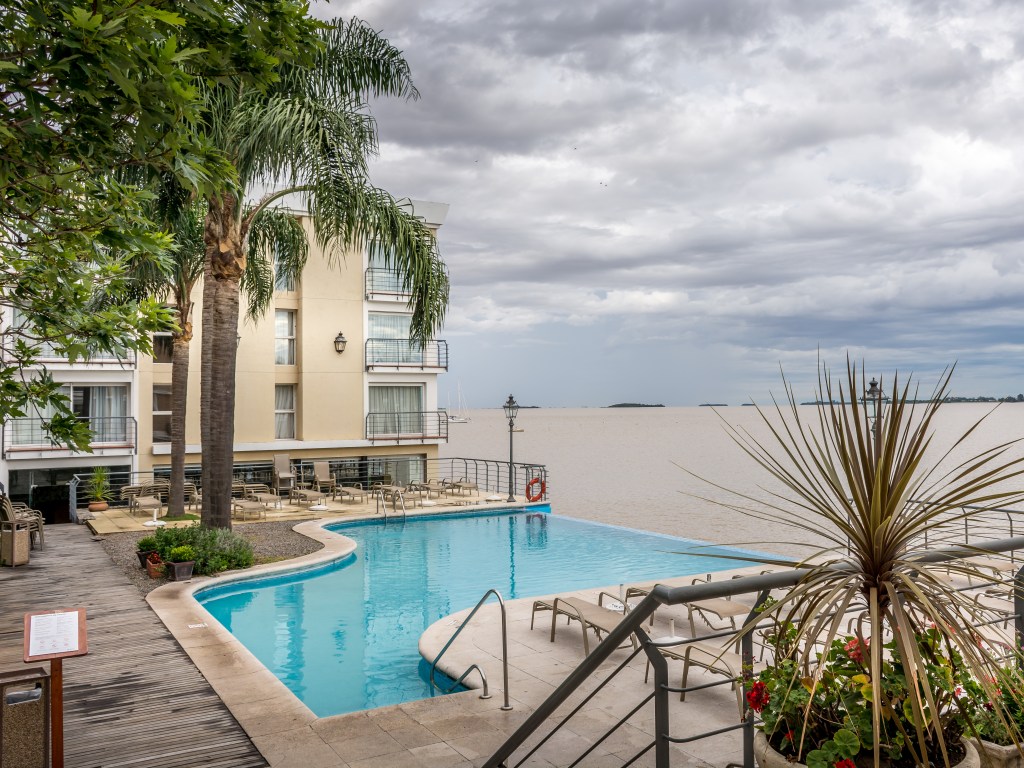
We got to Colonia around noon on Sunday February 16th after the 2.5 hour bus ride from Montevideo. It was a short cab ride from the bus terminal to our hotel, the Radisson and we were able to check-in right away. The Radisson is located on the water in the historic district and since this was a summer weekend in Uruguay, many families were staying at this hotel…. lots of kids!

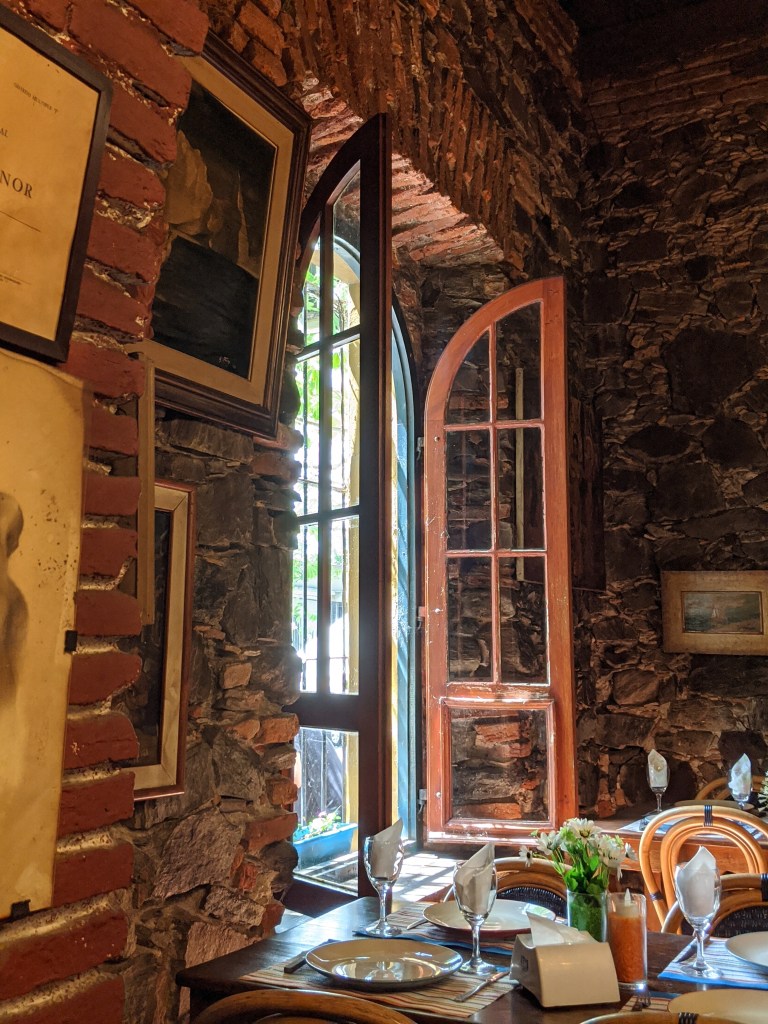
We were hungry so decide to walk down to the area near the marina where there were many restaurants. All the restaurants had outdoor seating, but it was so hot and humid, we chose a place that had indoor “air conditioned” seating. It turned out the A/C was not very helpful, it was quite hot inside, but we powered through and had our Chivitos.

Because of the heat, we went back to the hotel to cool off and rest after lunch. Our plan was to go out to the waterfront later to watch the sunset.


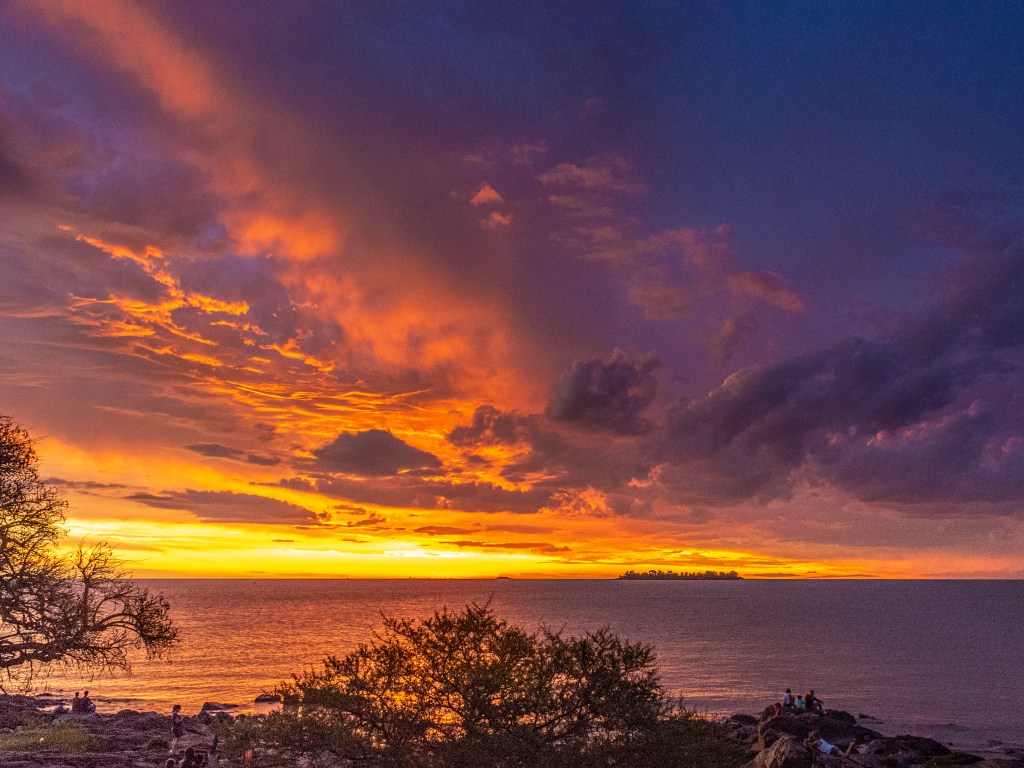
While doing some Google research about Colonia long before our trip, one attraction that is mentioned by many is the beautiful sunsets. So we wanted to make sure we caught the sunset on our one and only night in Colonia.

The weather forecasts indicated that thunderstorms were approaching from the northwest and late afternoon we could see the big clouds building on the horizon over the Rio de la Plata. This probably would make the sunset more dramatic.

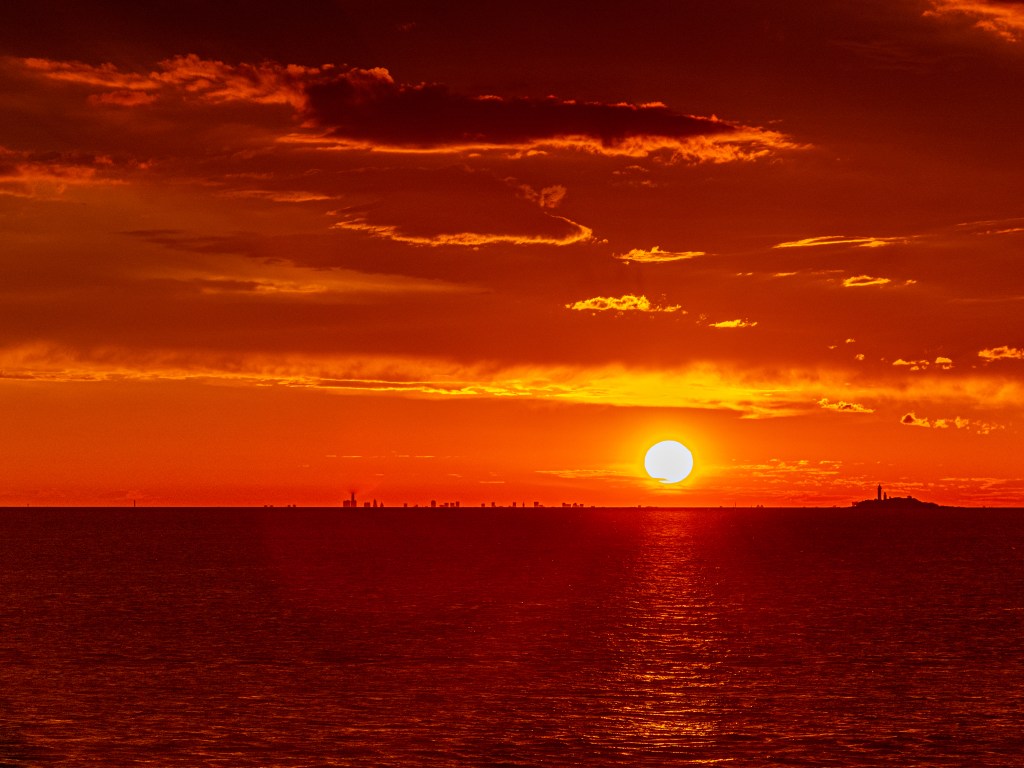
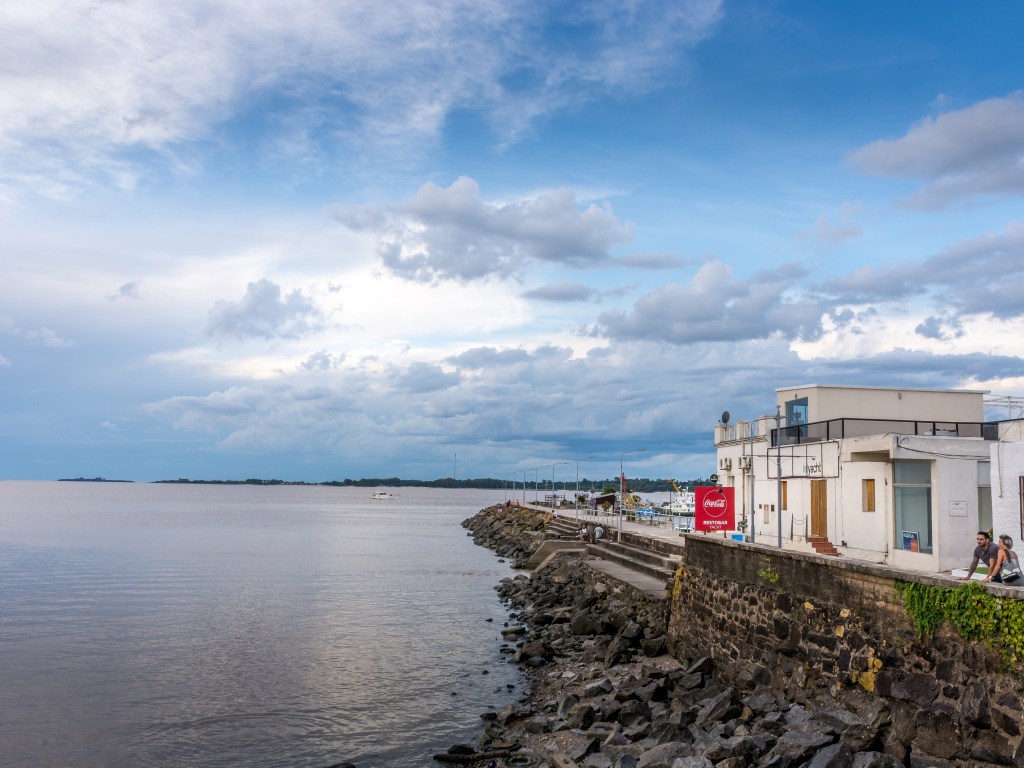
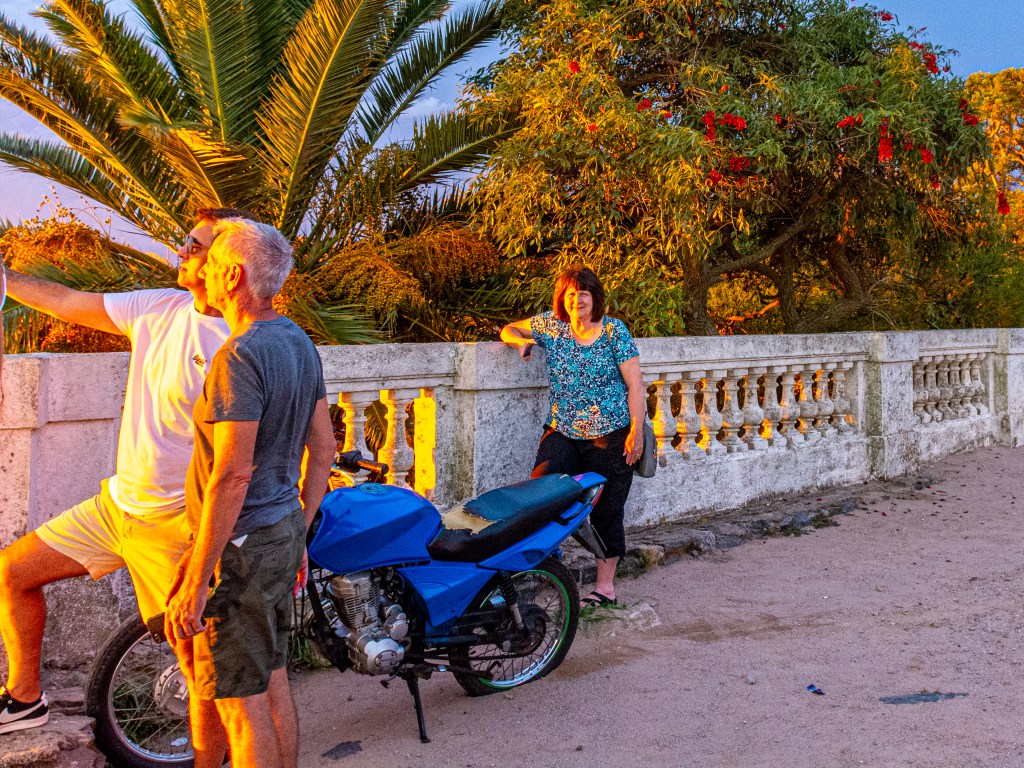
With camera and phones in hand, we headed to the riverfront and it seems that everyone else was doing the same thing. As it turned out, watching the sunset was a nightly ritual here in Colonia, and we were treated to a spectacular sight. The lighting was constantly changing as the sky started to glow a fiery red. The clouds enhanced the effect and the distant silhouette of Buenos Aires high-rises on the horizon added to the dramatic scene. At the point when the sun disappeared below the horizon, the onlookers broke out in applause. What a way to spend our last night in Uruguay!

Going
Going
Gone


Sunset audience


Morning Walk Around Colonia

After that beautiful sunset, the skies were filled with brilliant lightning as the thunderstorms moved into the area. We decided to get back to the hotel for dinner so we wouldn’t get caught in any downpours. That night some heavy T-storms passed through the area.

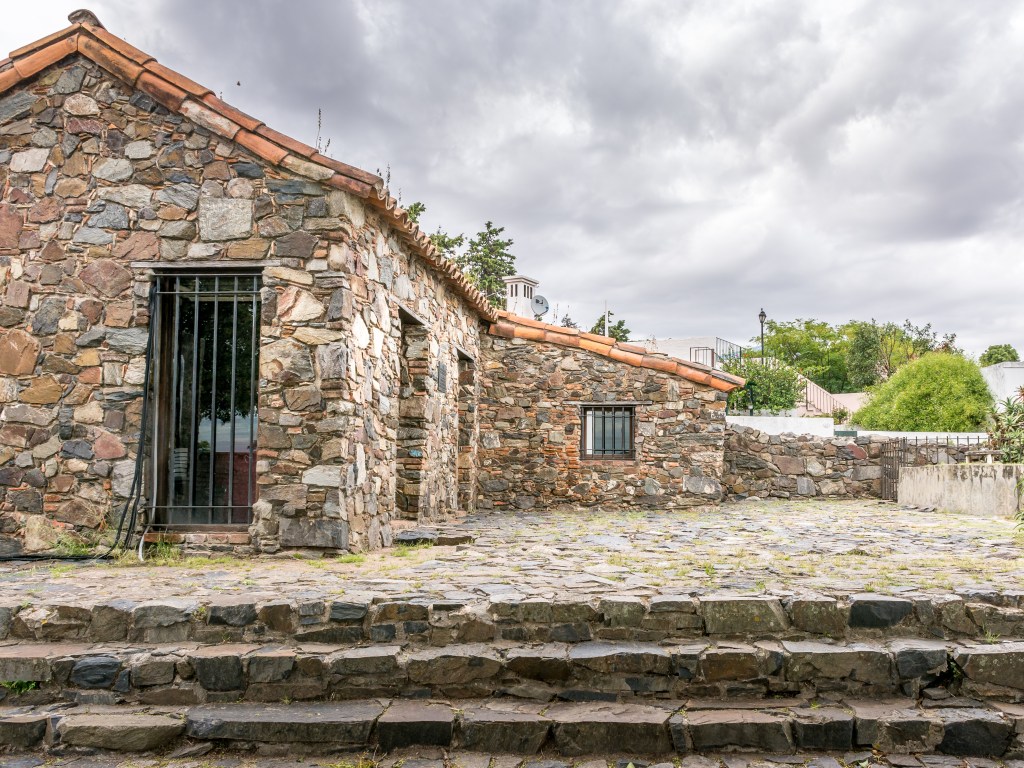
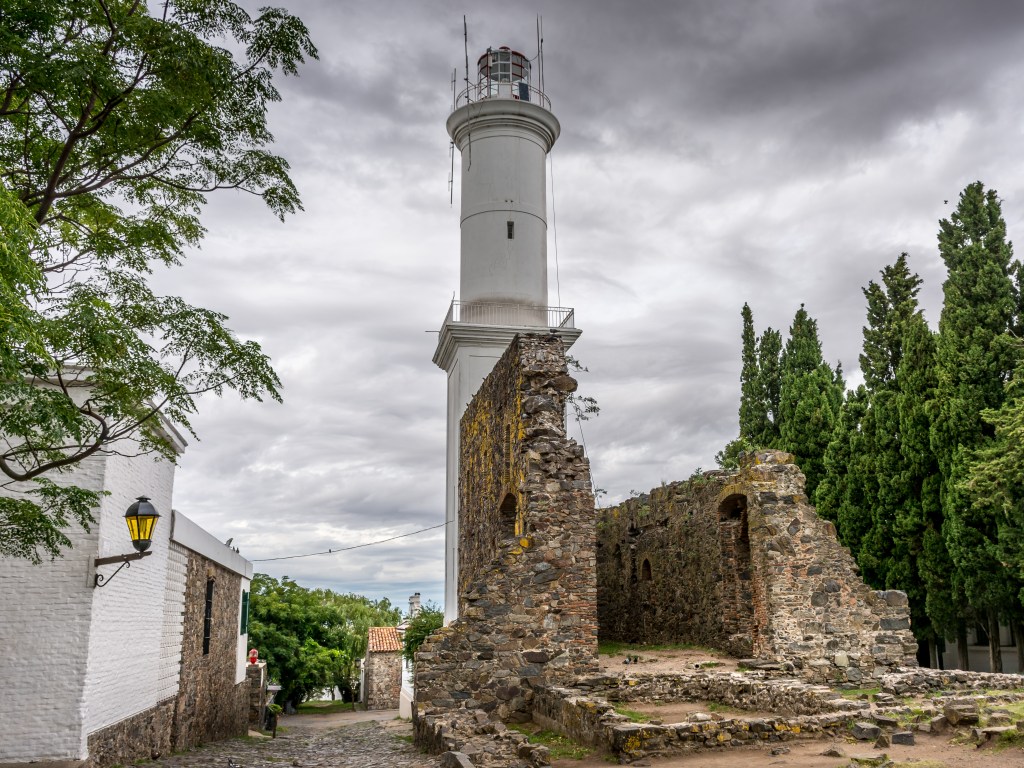
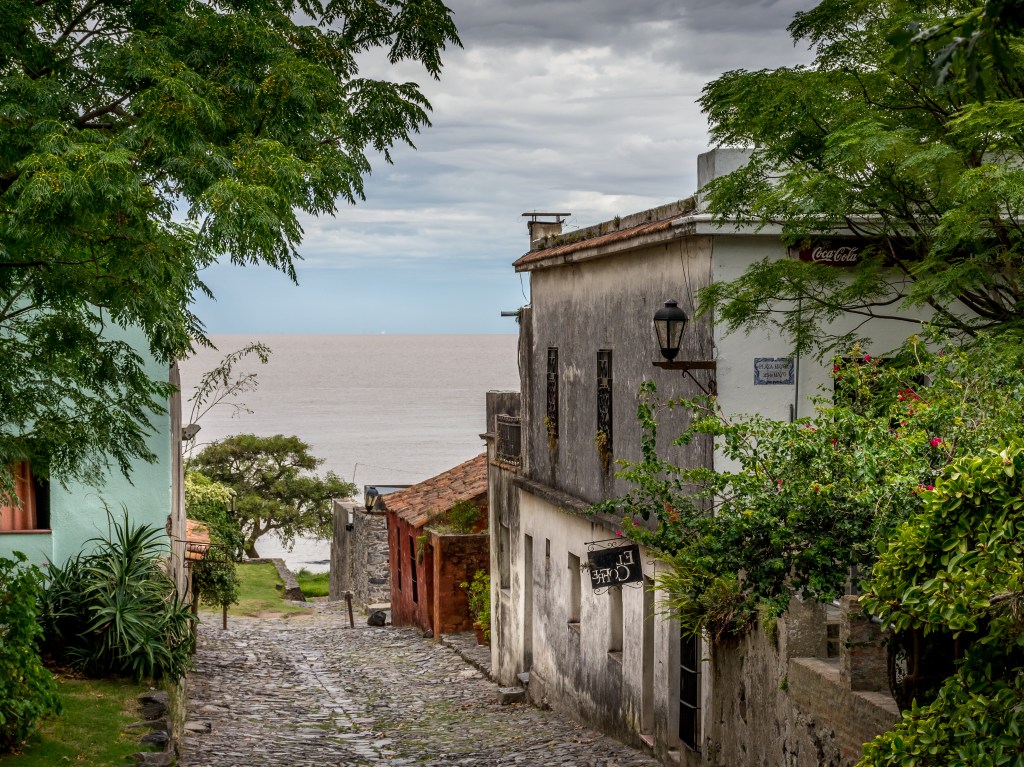
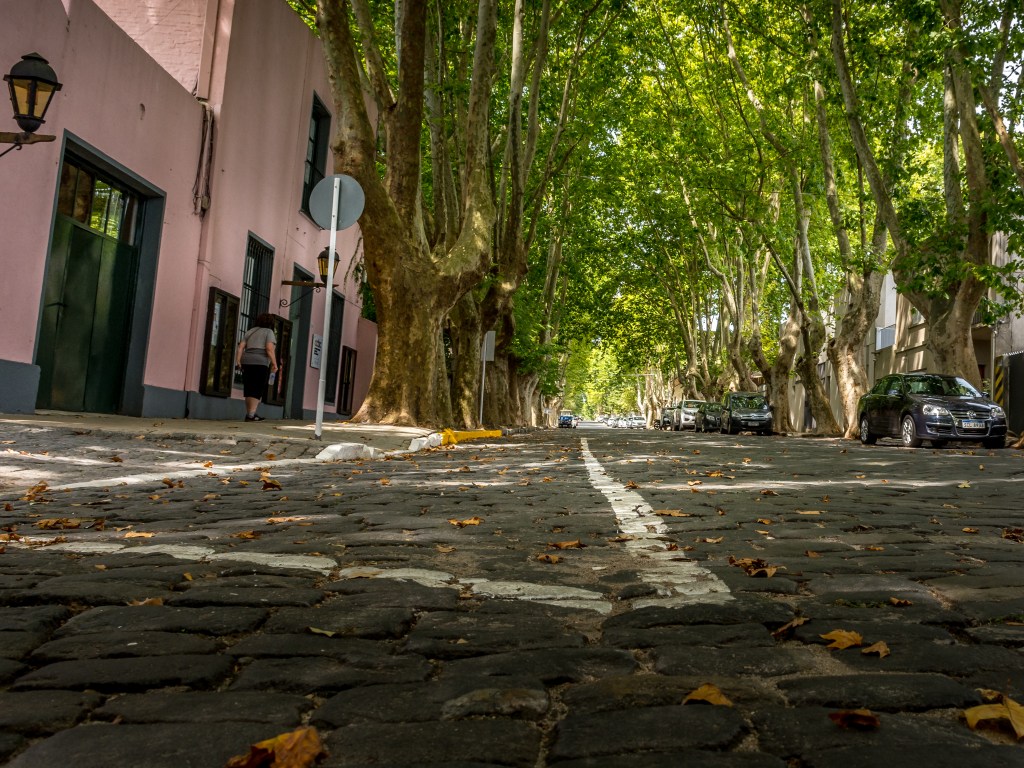
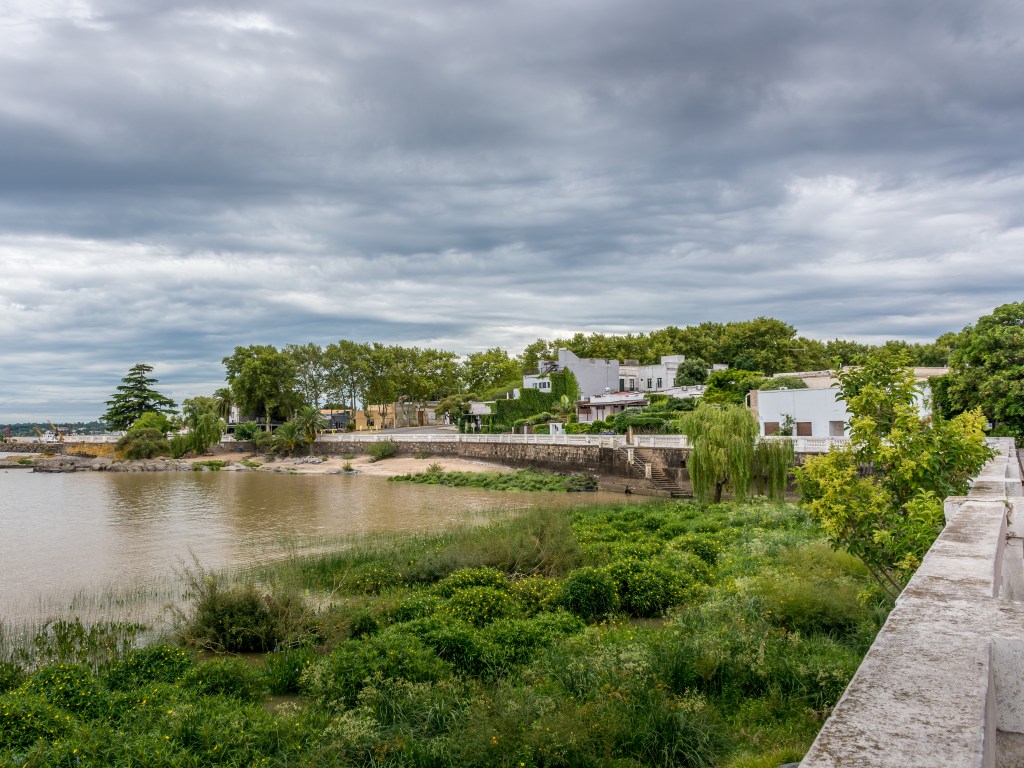
The next day we went out for an early morning walk around the old town. It was still cloudy but the rains had stopped and it was very quiet and tranquil around town, it seemed we were the only people out and about.

We had the morning to ourselves, then checked out of the hotel early afternoon to get to the ferry terminal for our ferry to Buenos Aires. We left Colonia to spend our last two days in Buenos Aires. Our long amazing trip is coming to an end, stay tuned for our final Buenos Aires blog coming soon.

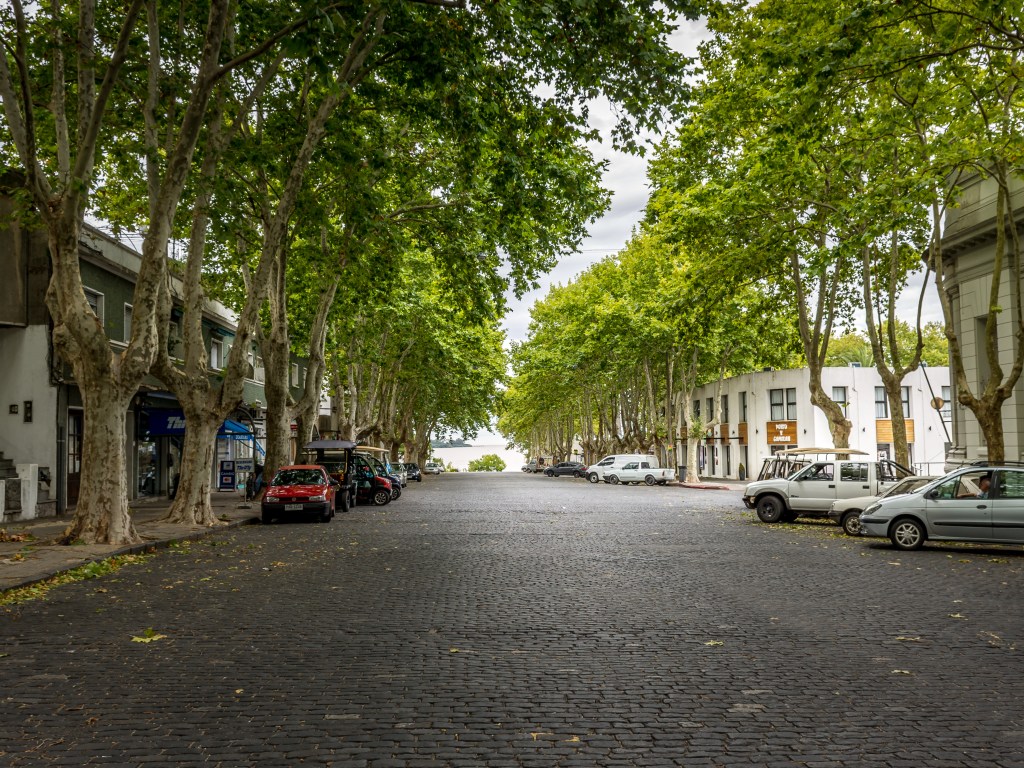
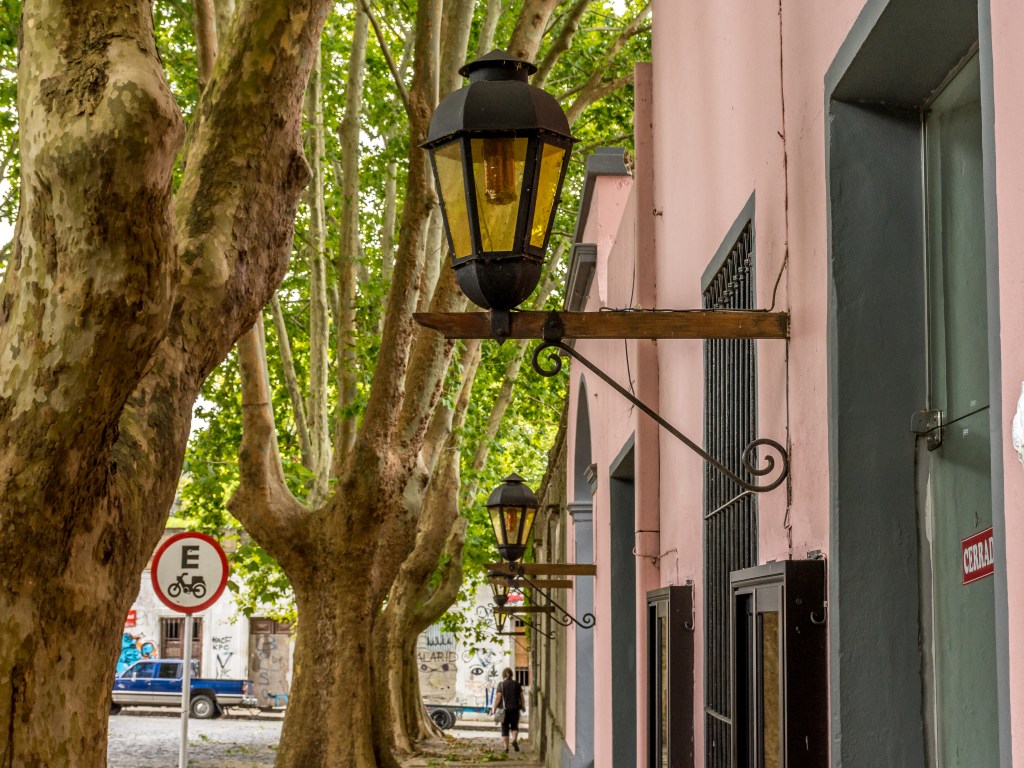
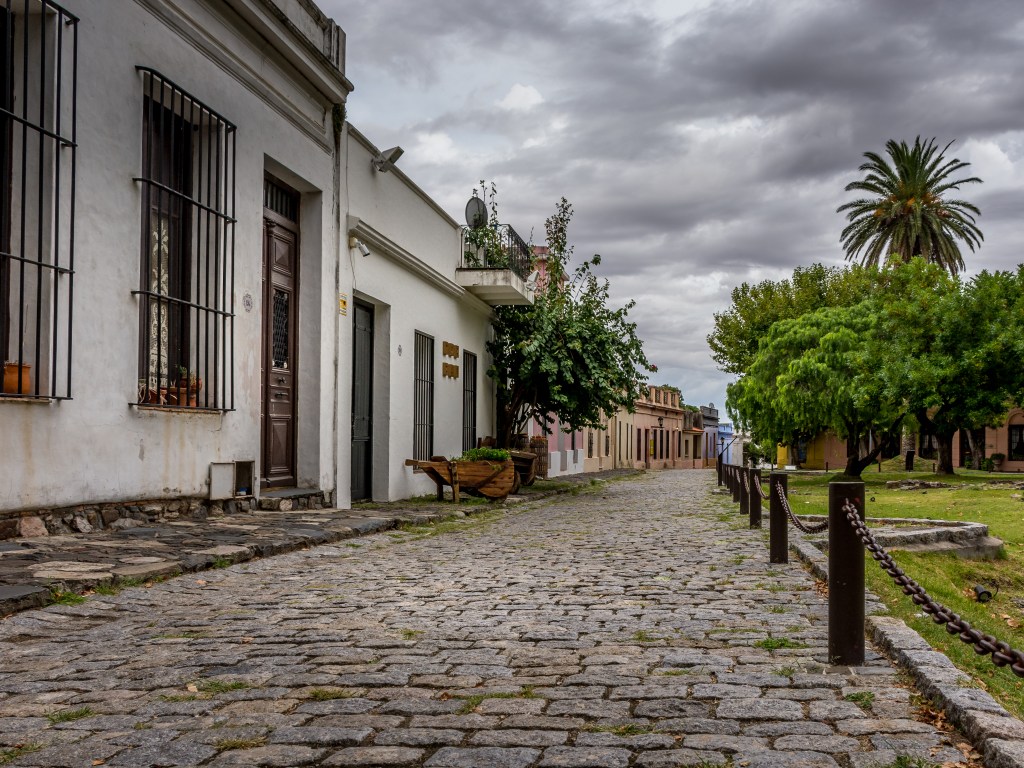
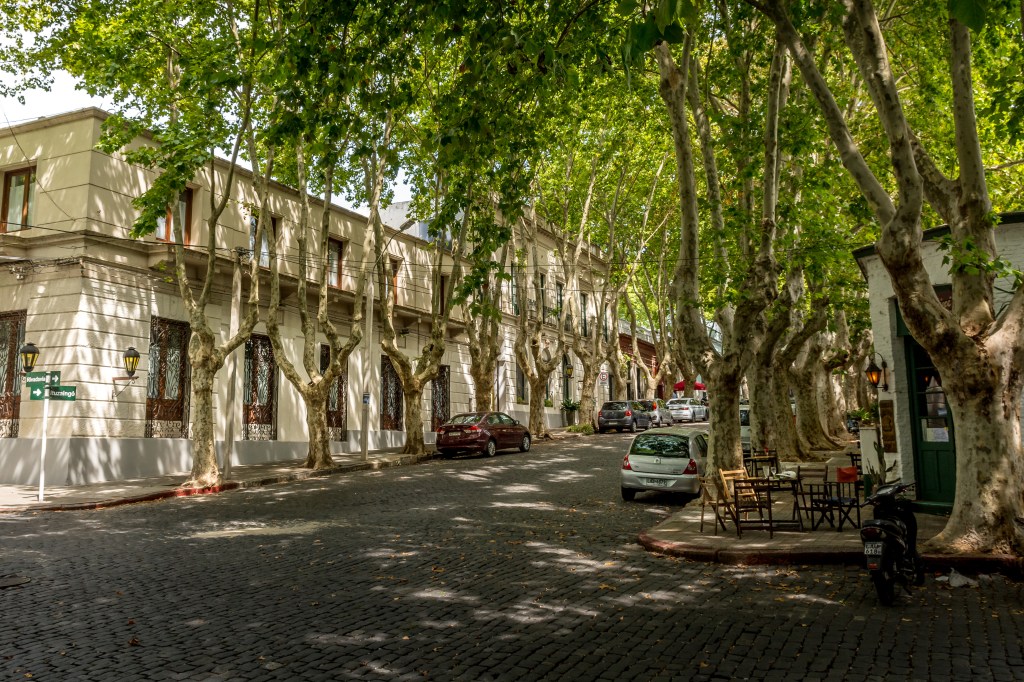
Peaceful Morning Walk Around Colonia

South America – Montevideo Uruguay

We arrived in Montevideo from Mendoza Argentina on February 13th, the 22nd day of our South American adventure. The first 21 days were with the Viking Ocean Cruise and Mendoza post-cruise extension, now we were “free-styling”, on our own for another week.

Why Montevideo? Back in the 1980’s Rick made many business trips to Uruguay and enjoyed the visits to Montevideo. The city had an interesting charm and culture and it’s fun to go back after all these years to see what changed and what stayed the same.

On our brief stop in Montevideo with the Viking Jupiter (our South America Cruise – Part 5 blog), we had a scheduled winery tour, so had very little free time to spend in Montevideo. Now we were on our own with several days to explore the city.

Then and Now


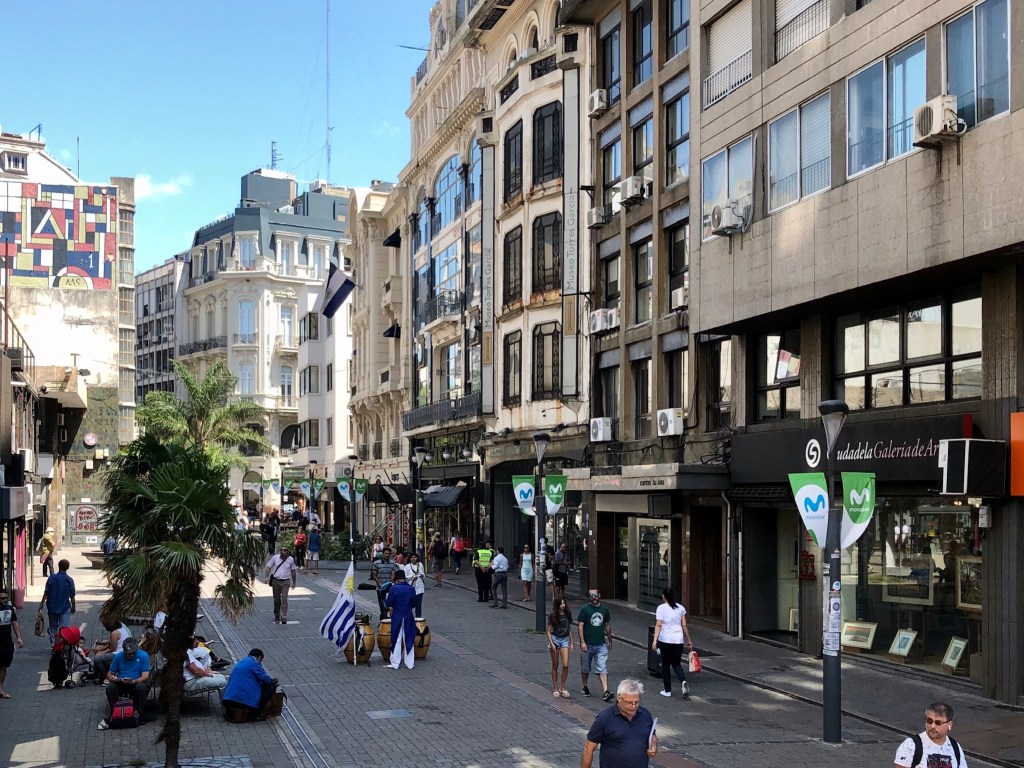
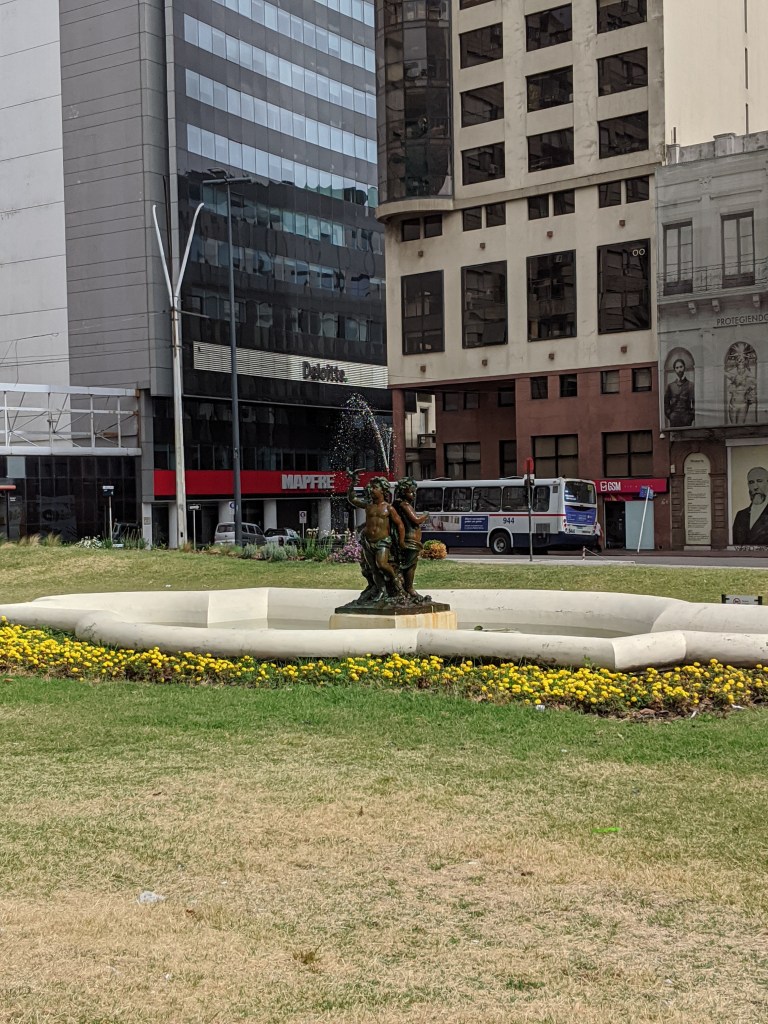
Montevideo has retained its charm and character. We stayed in the old town district, Ciudad Vieja, with its older colonial buildings as well as art deco architecture. This neighborhood, adjacent to the port, has several pedestrian-only streets that lead up to Plaza Independencia, the main square.

Most of the old town area hasn’t changed much since the last visit in the early 1980’s, but elsewhere there has certainly been big changes in Montevideo and Uruguay. Across the city, modern buildings can be seen and along the Rambla, a 13 mile long avenue that runs along the shoreline of the Rio e la Plate, high-rise apartments evoke a South Florida look.

Back in the 1980’s Uruguay was ruled by a military dictatorship. Anyone who spoke out against the government risked imprisonment or worse. Today Uruguay is a thriving democracy and Latin America’s most progressive country. Crime is very low, the standard of living is one of the best in South America. Uruguay has the highest literacy rate in Latin America, school is mandatory up to high school and the state run universities are free. Uruguay legalized the production, sale and consumption of cannabis.

Pot Shops are legal in Uruguay

Our hotel, the Don Boutique Hotel, located across the street from Mercado del Puerto or Port Market in the old town. This location was perfect as it was adjacent to one of the main pedestrian streets. We were able to walk to most old town attractions, restaurants and shops.

Our room was a front room on the second floor with a small balcony overlooking the street. Across the street was a small open air arena that was part of the Carnival Museum. Since this was in the middle of Carnival season (Mardi Gras), we had free (and loud) entertainment every night, so no early bedtime!

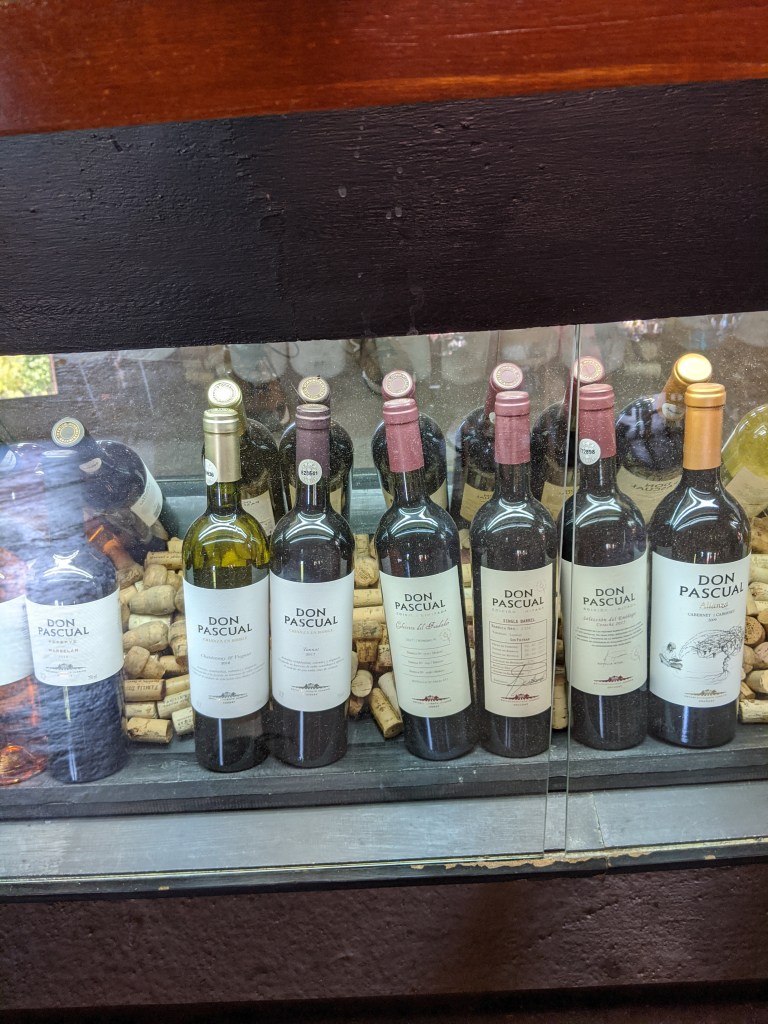
Apart from the late night entertainment, the Don Boutique Hotel was a nice place. The building is art-deco style, looks like it could be in South Beach. The roof-top bar was a great spot to enjoy a bottle of local Tannat wine while watching the sunset cast its golden glow over the city.


Sights & Sounds of Montevideo


Carnival Season

Montevideo boasts the longest running Carnival celebrations which start in late January and goes on for 40 days. Local neighborhood dance and drum groups participate in various parades and events and we were fortunate that a couple of groups performed at the nearby Mercado del Puerto. The groups perform Candombe, a style of music and dance that immigrated to Uruguay with African slaves.

Dance & Music breakout at Mercado del Puerto

Drummers practicing

Goodbye Montevideo

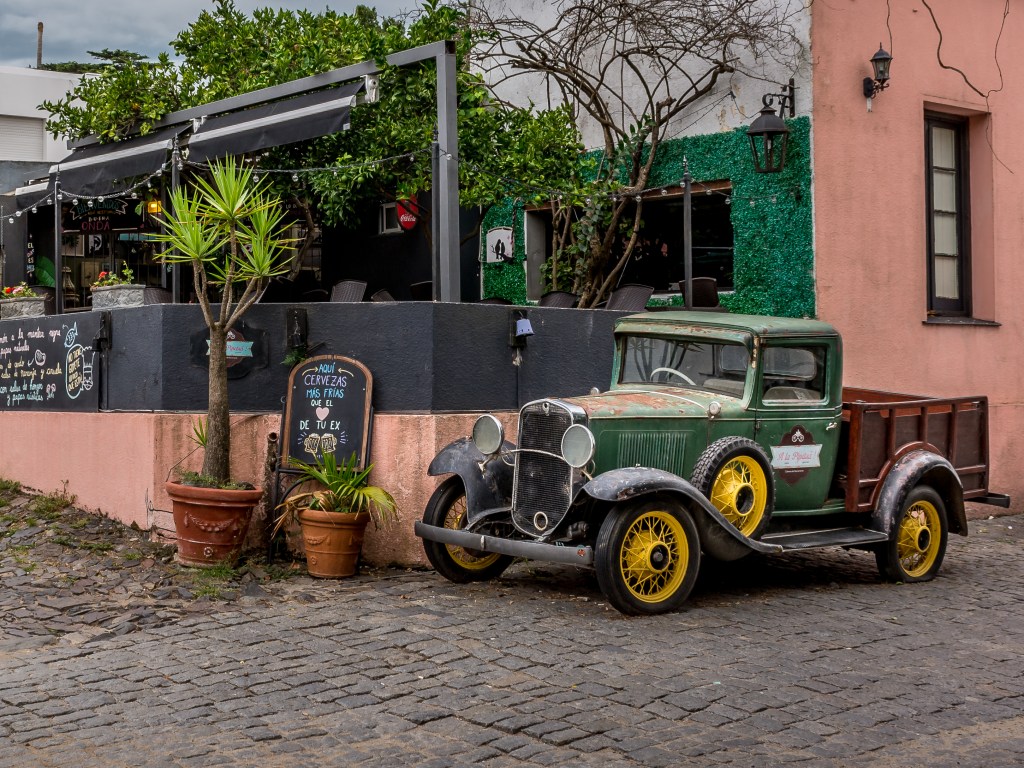
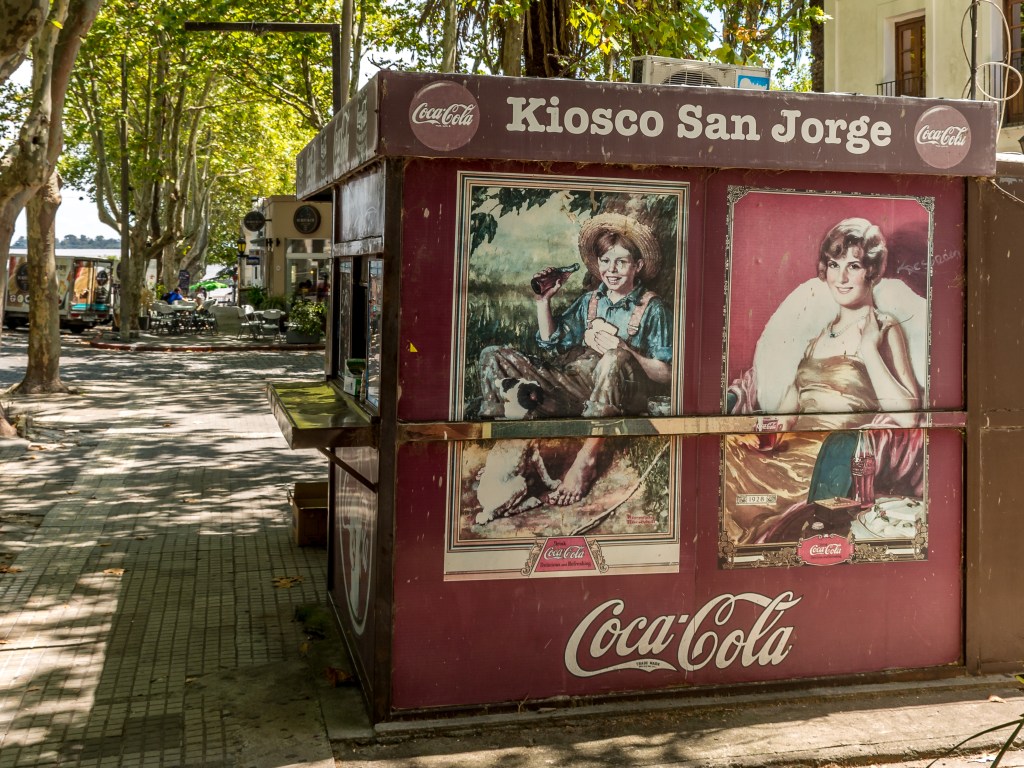
On Sunday February 16th, after a fun 3 days in Montevideo it was time to leave. Our next stop, Colonia del Sacramento, one of Uruguay’s oldest towns. We would stay in the cobble-stoned Barrio Histórico (historic quarter), a UNESCO World Heritage Site. We got the last two seats (next to the toilet) on the 9:00AM bus to Colonia for the 2.5 hour ride. In our next post we will share the experiences in that historic town.

Bus to Colonia del Sacramento

South America Cruise – Part 6

Mendoza Argentina – Malbec Wine & Andes Mountains

When we first booked our cruise early last year we decided to do an add-on post-cruise extension and the one we chose was called “Vineyards & Vistas of Mendoza”. This was billed as a 4-day excursion that included round-trip air from Buenos Aires to Mendoza as well as 3-nights in a luxury Mendoza hotel. One day of visiting several vineyards for tours and tastings the second day a scenic drive to the high Andes mountains. Our paperwork also stated that breakfasts were included as well as 2-lunches and 1 dinner. To our surprise we were treated to 3 dinners at 3 amazing Mendoza restaurants which we will discuss more below.

What made this trip so amazing was that we had such a small group, only 6 signed up, and we had two wonderful tour guides, Ailin (Eileen) and Estefan, who stayed with us the whole trip as well as a great driver, Horacio, with a very comfortable Mercedes mini-bus.


Our Hotel – The Diplomatic Hotel

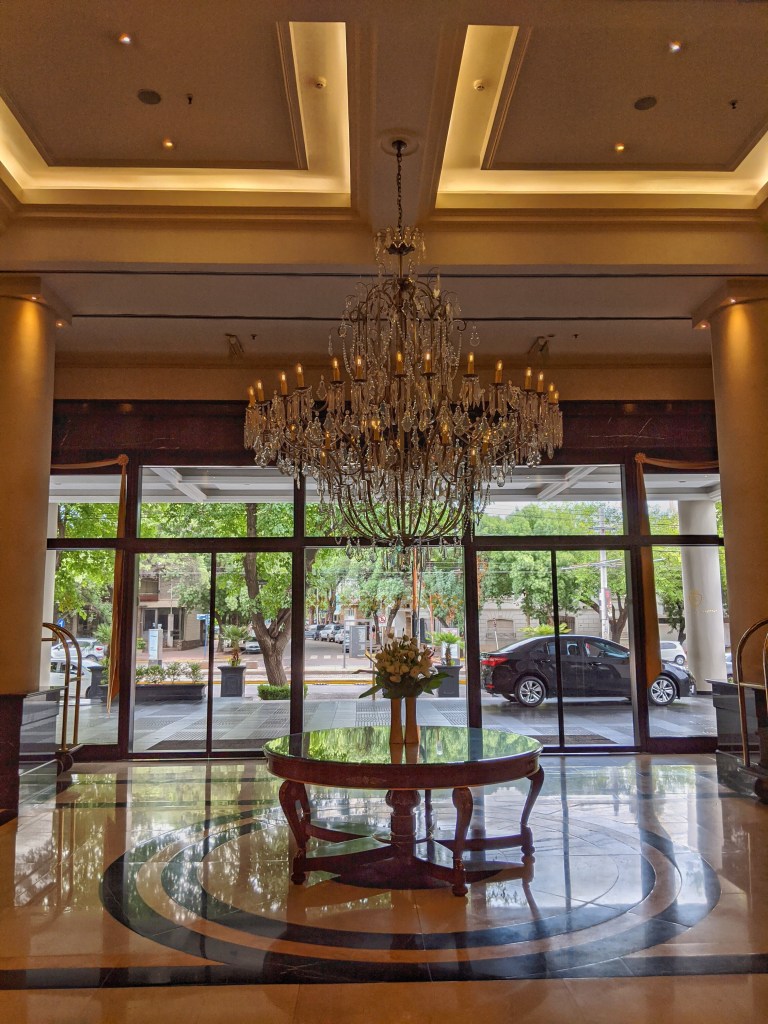
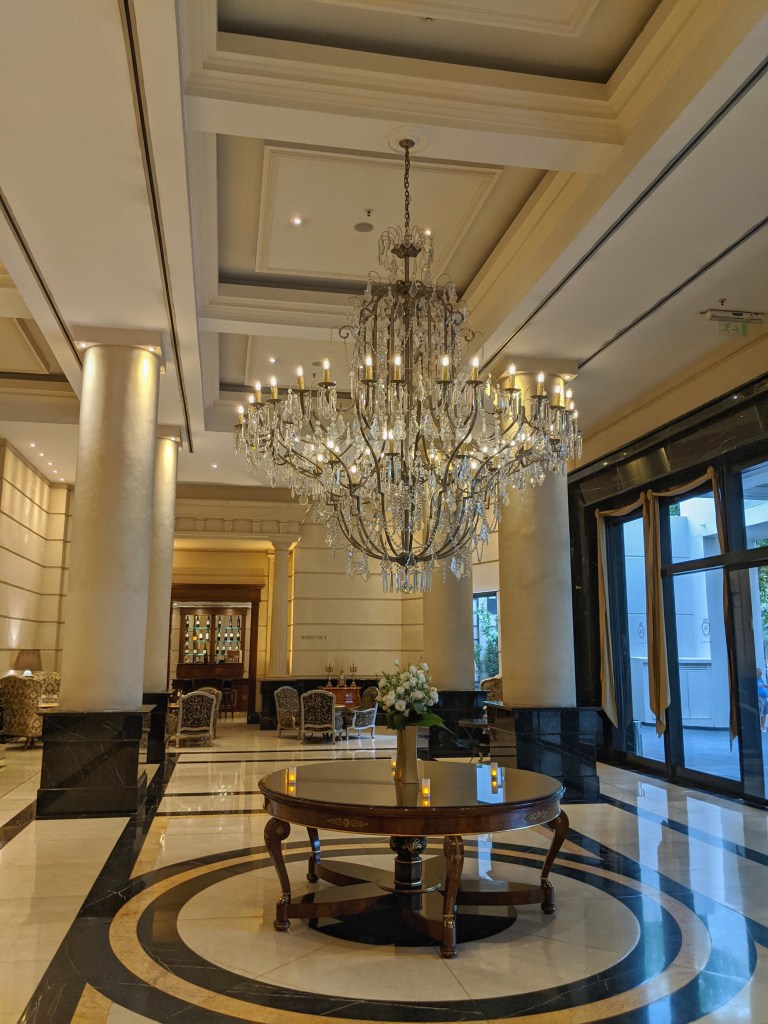
The hotel accommodations were very good. The Diplomatic Hotel is rated as a 5-star hotel located in the downtown area of Mendoza, very convenient to restaurants and shopping. The hotel is nicely appointed with a very elegant lobby area. Our room was large and comfortable and we were on the 15th floor with a great view. Every evening at 7:00 PM the hotel offered free wine tasting in the lobby and each night the wines were from a different, local vineyard.


Winery Visits

Our second day in Mendoza was scheduled for three winery tours along with lunch. We drove about 30-minutes outside town where miles and miles of vineyards line the roads. Both our tour guides Ailin and Estefan told us about the history and make-up of the Mendoza wine industry. Our guides are extremely knowledgeable about wine making and wine culture.

Casarena Bodega & Vineyards

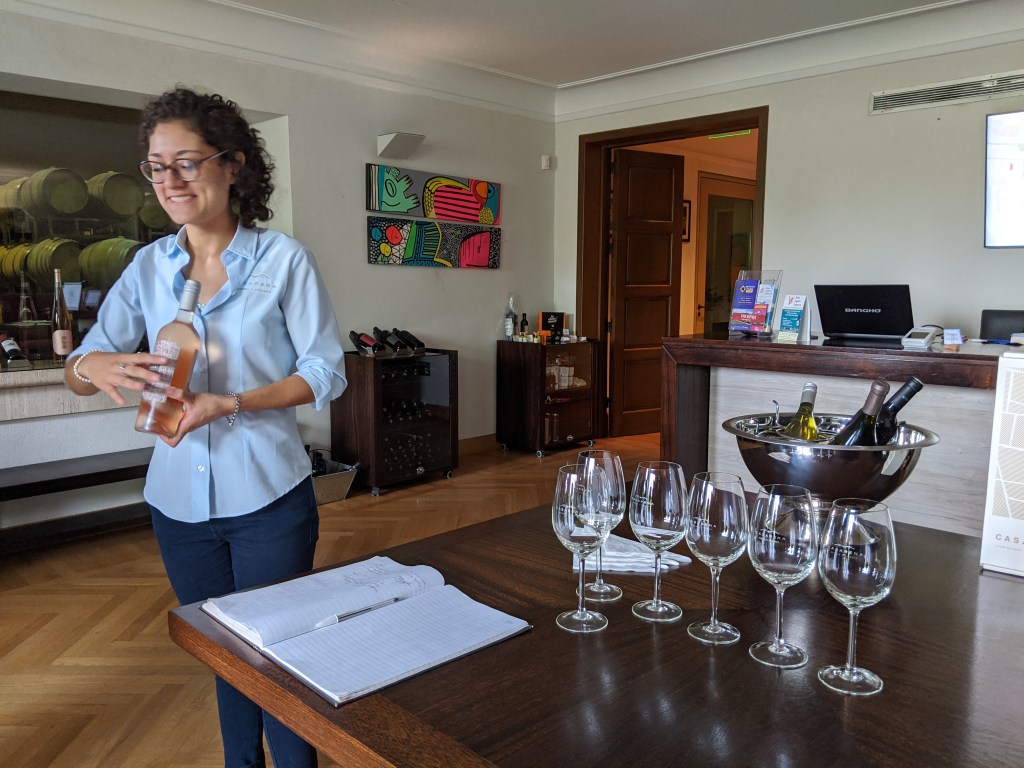
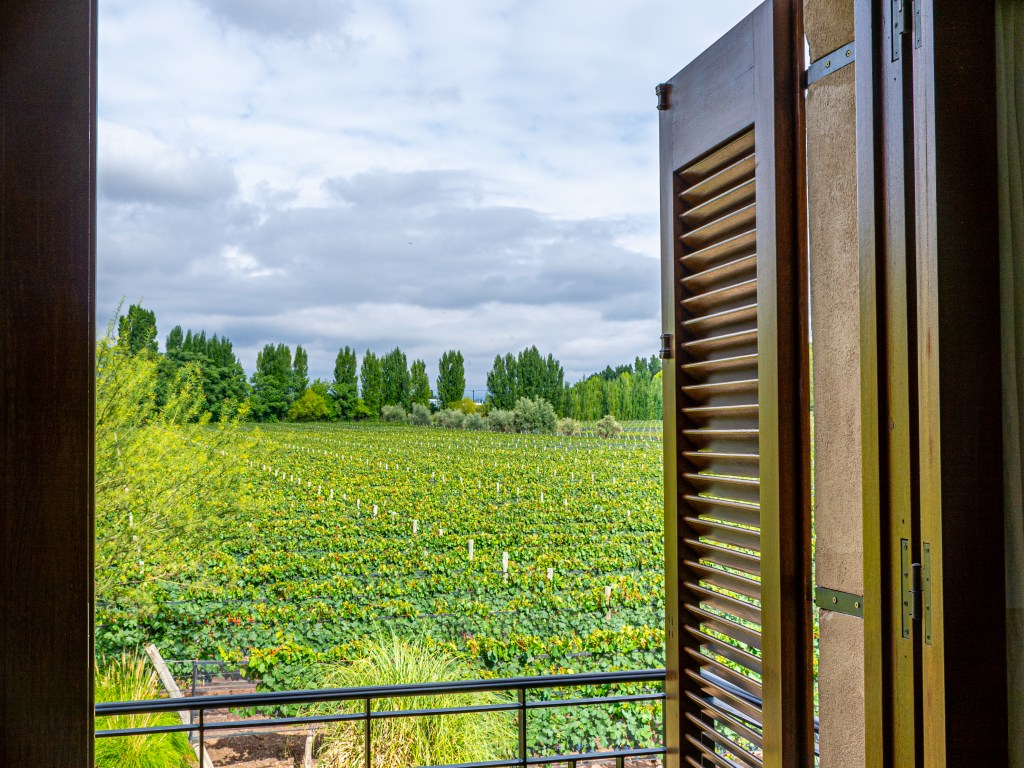
Our first vineyard was the Casarena Bodega y Viñedos located about 26km from downtown Mendoza. This was a picturesque vineyard with the grapes about ready for harvest. We noted that all the vines were covered with wire or plastic mesh. We assumed that this was to prevent birds from getting at the grapes, but it was to protect the grapes and vines from hail, apparently Mendoza gets lots of thunderstorms.

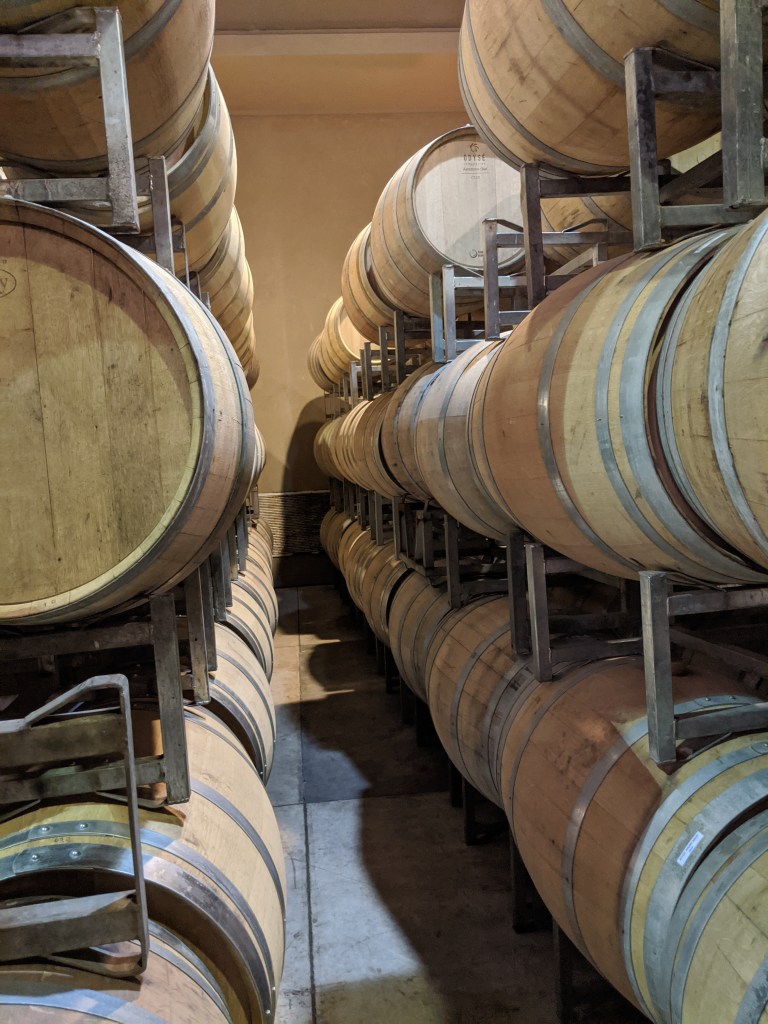
Our tasting included Malbec, which was excellent, we also tried Cabernet Franc, a very good red wine as well. The tour of the underground cellars was interesting, they had racks of different vintages (bottles) that they use for quality control. They will occasionally sample the various aged vintages to make sure they are aging properly.


Caelum Winery

Caelum Winery is s smaller boutique winery in the Mendoza valley, its 145 acres mainly produce the red Malbec and Cabernet Sauvignon varieties, but they also offer a very nice Chardonnay as well as an interesting blush wine. The vineyard also produces pistachios from their small orchard.


Dominio del Plata Winery (Susana Balbo Wines)

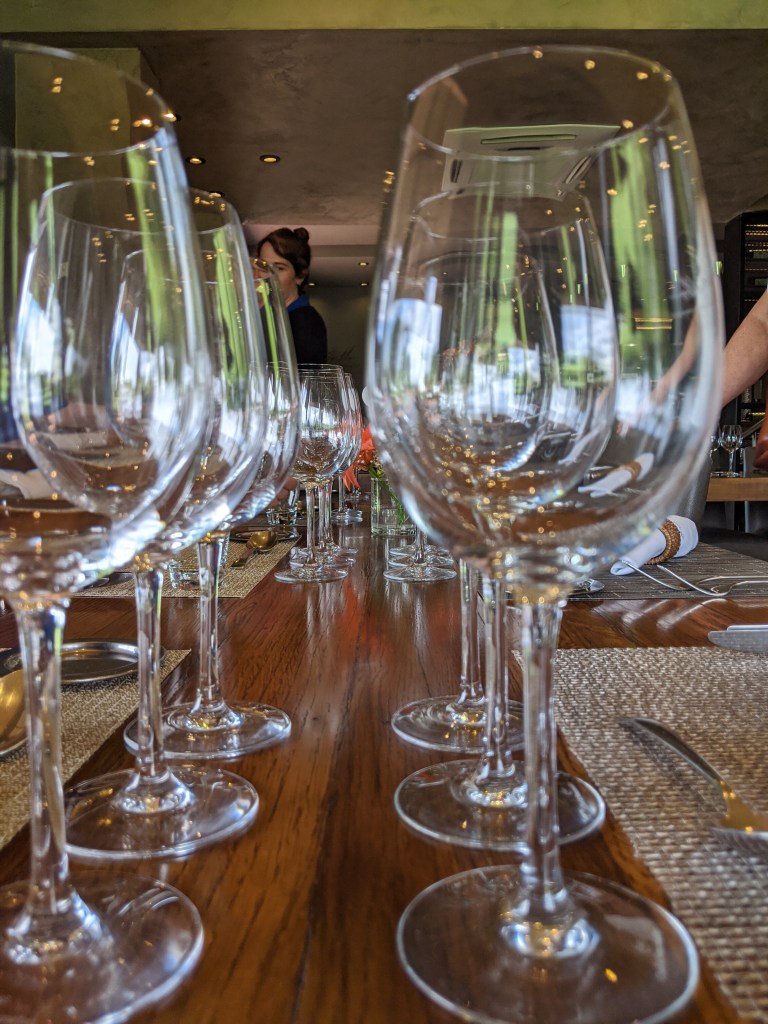
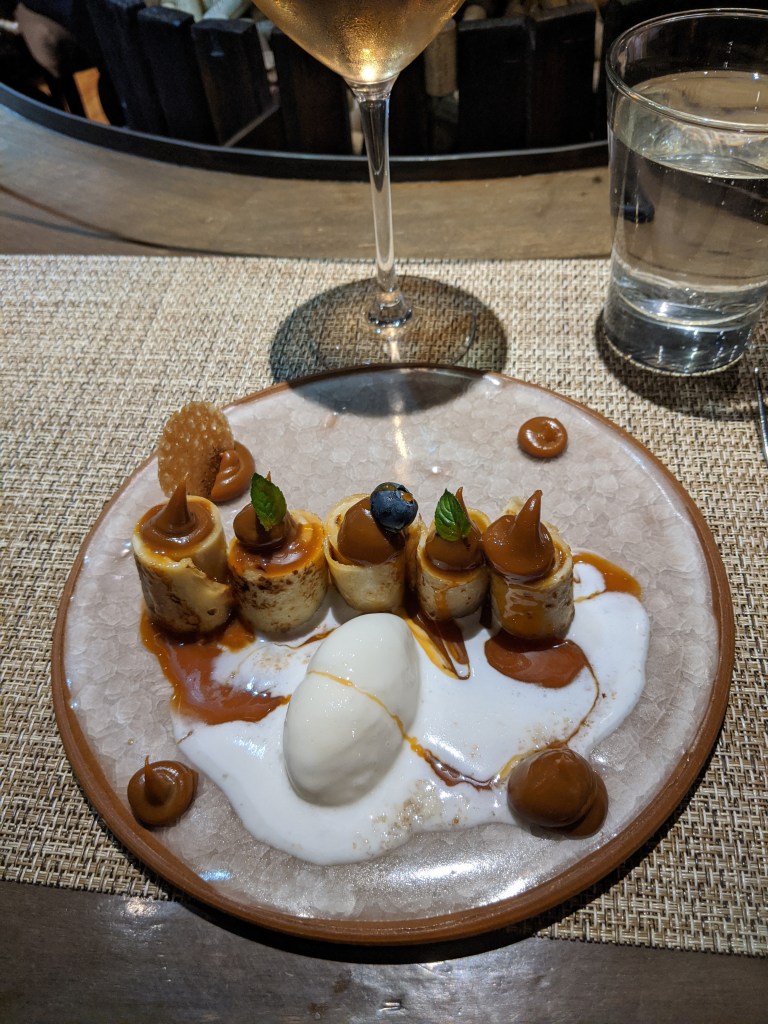
Our third and final winery visit was to the Susana Balbo Winery. The winery has a restaurant called Osadía de Crear where we had a lunch that included wine pairings.

Susana Balbo is Argentina’s first women to receive a degree in enology (science and study of wine and wine-making) and has been a pioneering winemaker in Mendoza.


Andes Day Trip

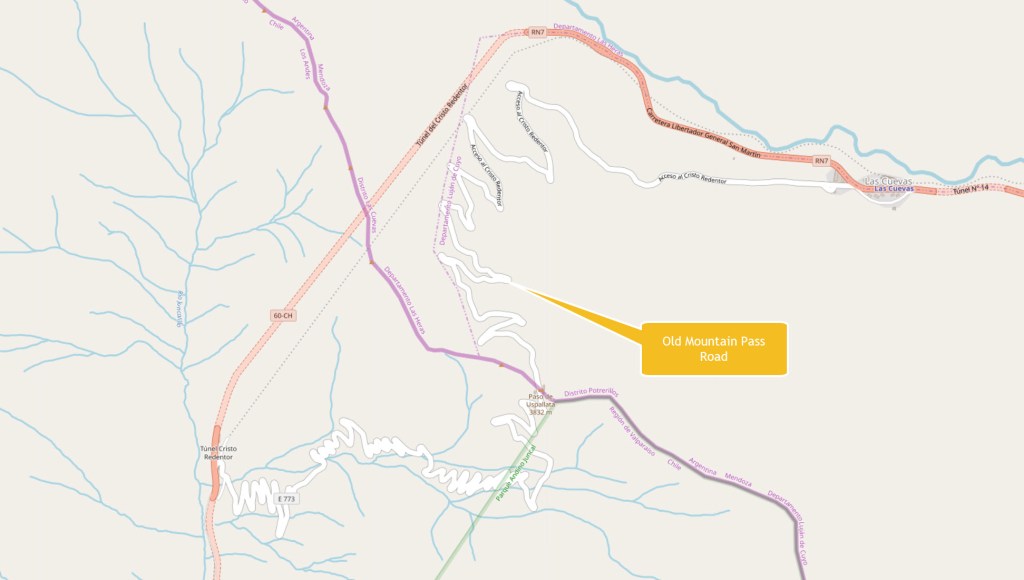
On our second full day in Mendoza we were off at 7:30 AM from the hotel to start the long 3.5 – 4 hour drive. We would travel northwest on Highway 7 (road to Chile) along the Mendoza river valley as it climbed steadily through the foothills of the Andes. Our final destination was to drive up the old Uspallata Pass road to visit the famous Christ the Redeemer of the Andes monument which sits on the Argentine – Chile border at about 12,700-ft above sea level.

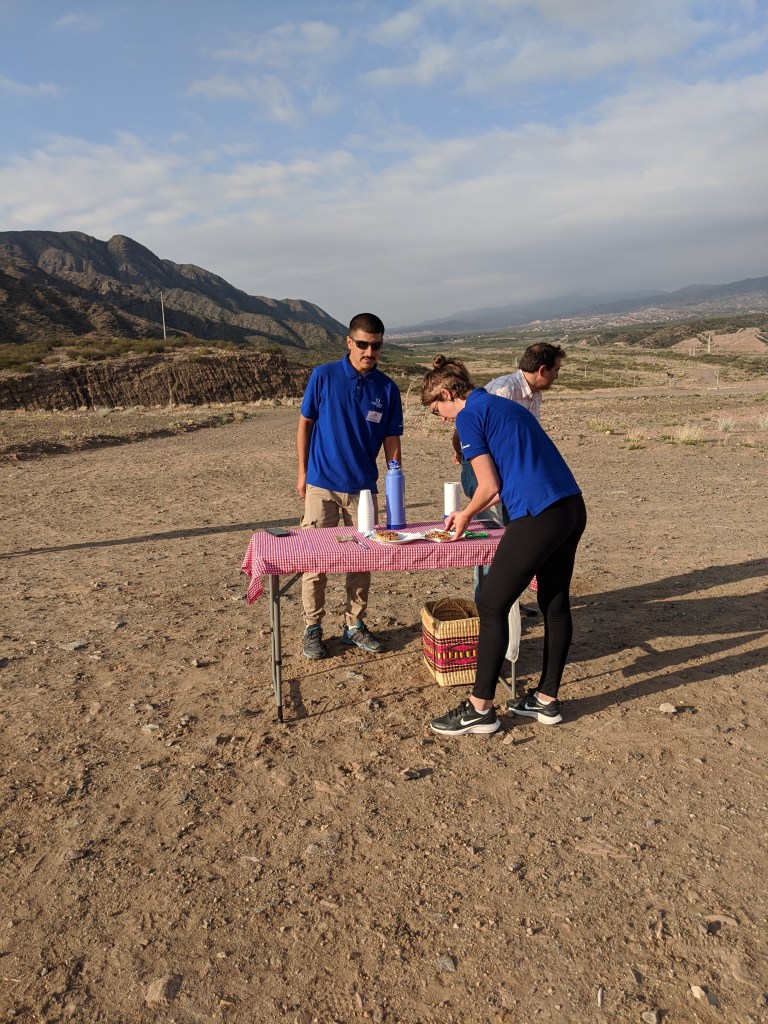
We had several stops along the way, the first stop was at a scenic overlook on Lake Potrerillos (man-made lake above Potrerillos hydro-electric dam). Our guides Ailin, Estefan and driver Horacio setup a small table and served us coffee and pastries with the scenic backdrop of Lake Potrerillos and surrounding mountains to enjoy.

A brief technical or “comfort” stop in the small town of Uspallata which is in a wide valley surrounded by larger, more rugged mountains leading to the high Andes.


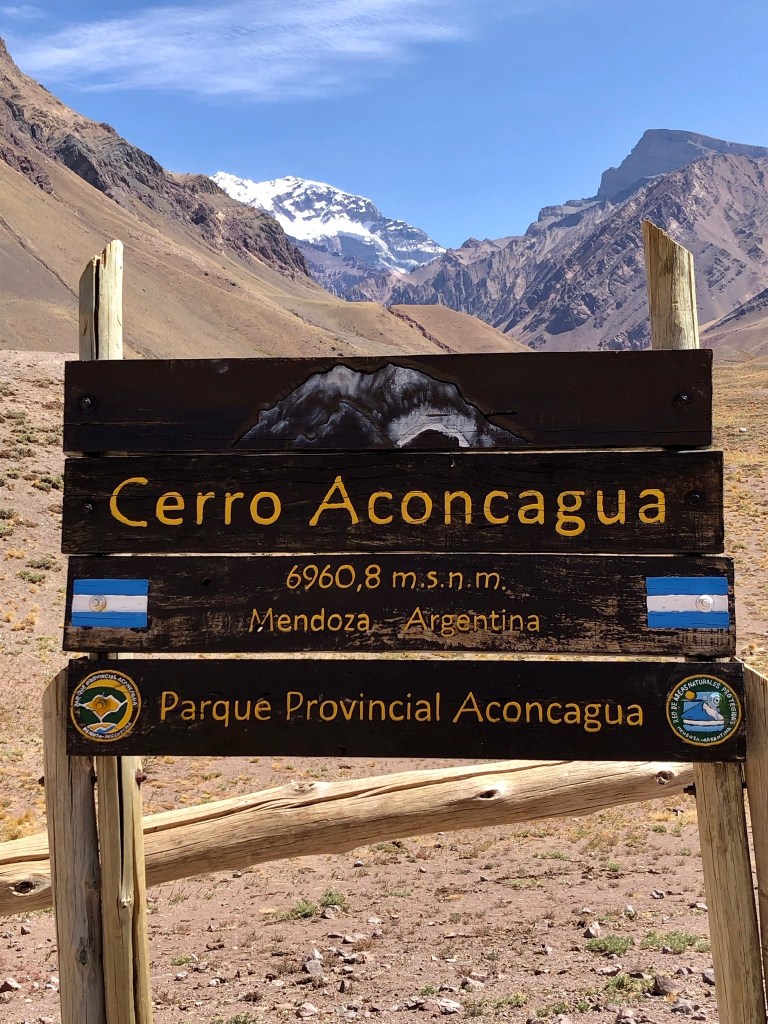
Two additional stops before we reached our final destination. A stop at an observation point where we viewed Mount Aconcagua, at 22,837 ft., the highest mountain in the Americas and actually the highest outside of the Himalayas.

Another stop at Puente del Inca (Inca Bridge), a natural rock formation bridge at a mineral hot spring. The site is a bit touristy with many gift shops. The minerals from the hot springs have created colorful rock formations at the site. There is also an abandoned railroad station as well as ruins of a former hotel at the hot springs (hotel was demolished by an avalanche many years ago). The abandoned railroad station is part of a discontinued rail line that ran from Mendoza to Santiago Chile and much of the rail bed and infrastructure follows the Mendoza river and can be seen from Highway 7.


The drive to the top of Uspallata Pass was quite exciting. The dirt road has many sharp switchback curves as it winds its way up the the top. The road is barely wide enough for two vehicles, so it gets interesting when another car or bus is heading our way.

Our tour guide Estefan narrated the account of Argentina’s patriot, San Martin who led the Army of the Andes up this same pass to defeat Spanish forces in the early 19th Century and establish Argentina’s independence. Estefan is very passionate and knowledgeable about his country’s history and he likened San Martin to George Washington.

At the top we had time to explore, but it was extremely windy and a bit cold, so we huddled into one of the gift shops where Estefan had the vendors give us samples of some local drinks. It seemed both the cold drink and hot drink had some alcohol content, but don’t recall the local name of these drinks.

At this high altitude, we were a bit light headed and uncomfortable, so we didn’t stay too long before we started heading down to the base village where we would have lunch.


Video recap of the drive to the top of Uspallata Pass

We got back down to the valley floor (a mere 7,000 ft above sea level) at the village of Las Cuevas where we had “hiker’s lunch” at Portezuelo del Viento, a hostel for backpackers and mountain climbers. The lunch was home cooked, Kathie had the chicken milanesa  and I had the gnocchi. Of course, Malbec was the wine of choice.

Estefan introduced us to the owner, Juan Pablo Sarjanovich, who is a world class mountain climber, having climbed in the Himalayas and elsewhere. He is a guide who takes climbers up to nearby Mt. Aconcagua.

After this long day, we headed back to Mendoza and in the evening would have our farewell dinner.


Restaurants

Our tour itinerary included a group dinner each of the three nights we were in Mendoza. Our tour guides and Viking set up reservations at three premier restaurants of Mendoza.

Maria Antonieta

On our first night in Mendoza our tour guides brought us to one of Mendoza’s best restaurants, Maria Antonieta for our welcome dinner. The restaurant was right next door to the Diplomatic Hotel, so a very quick walk to our table. This restaurant is owned by Chef Vanina Chimeno the wife and partner of Argentina’s most famous chef and restaurateur Francis Mallmann. Some may recognize Chef Mallmann who was featured on season 1 of the Netflix series Chef’s Table.

This restaurant is a small bistro with an open kitchen and apparently it is difficult to get reservations, but thanks to Viking we were able to get a table for eight for our group.

Sitting at the table next to us was a man and woman who had that “celebrity look”. Later our guides told us that the gentleman was “La Mona” a well known Argentine pop star. He and his wife were staying at the Diplomatic Hotel and we later saw lots of fans outside the hotel hoping for a glimpse or autograph.

We had a great meal at Maria Antonieta, most opting for the signature Rib Eye steak accompanied by an excellent Malbec. A great first night in Mendoza!


Josefina Restó

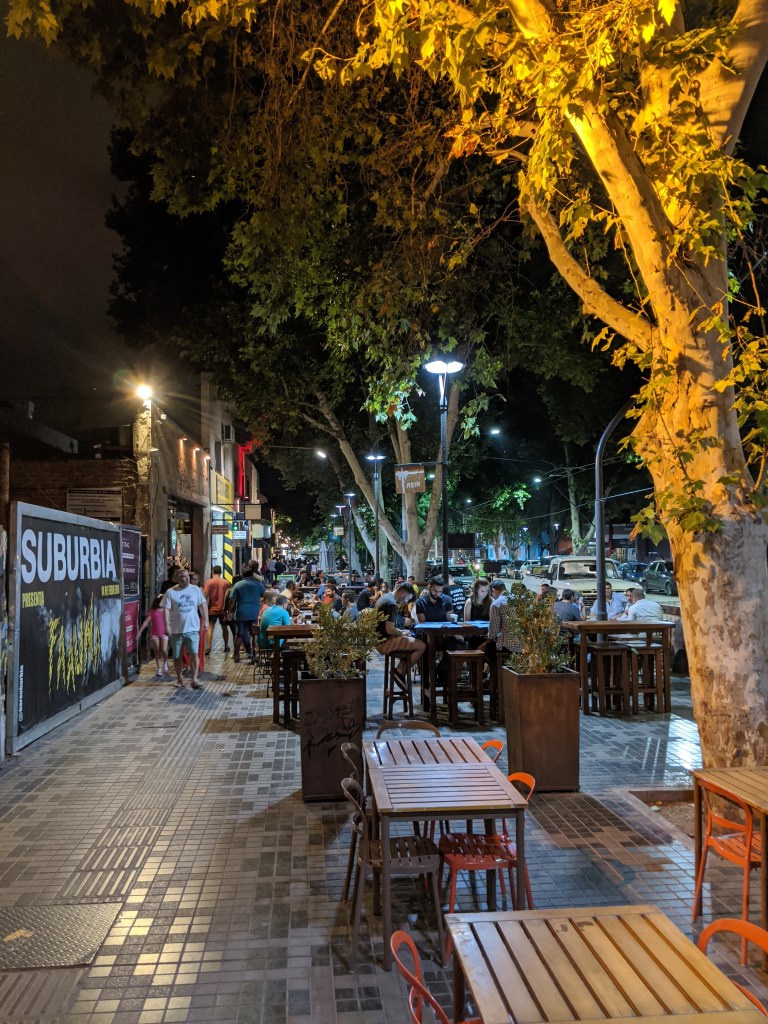
On our second night the group had dinner at Josefina Restó. This restaurant is on Avenue Arístides Villanueva, simply known as Aristides by the locals, and it is Mendoza’s main night life area. Plenty of restaurants and bars make this a lively neighborhood.

Another great choice, this restaurant is a large open space with floor to ceiling windows and we had a window table, taking in all the activity outside. The food was great and again we were served some excellent local wines.


Azafran Restaurant

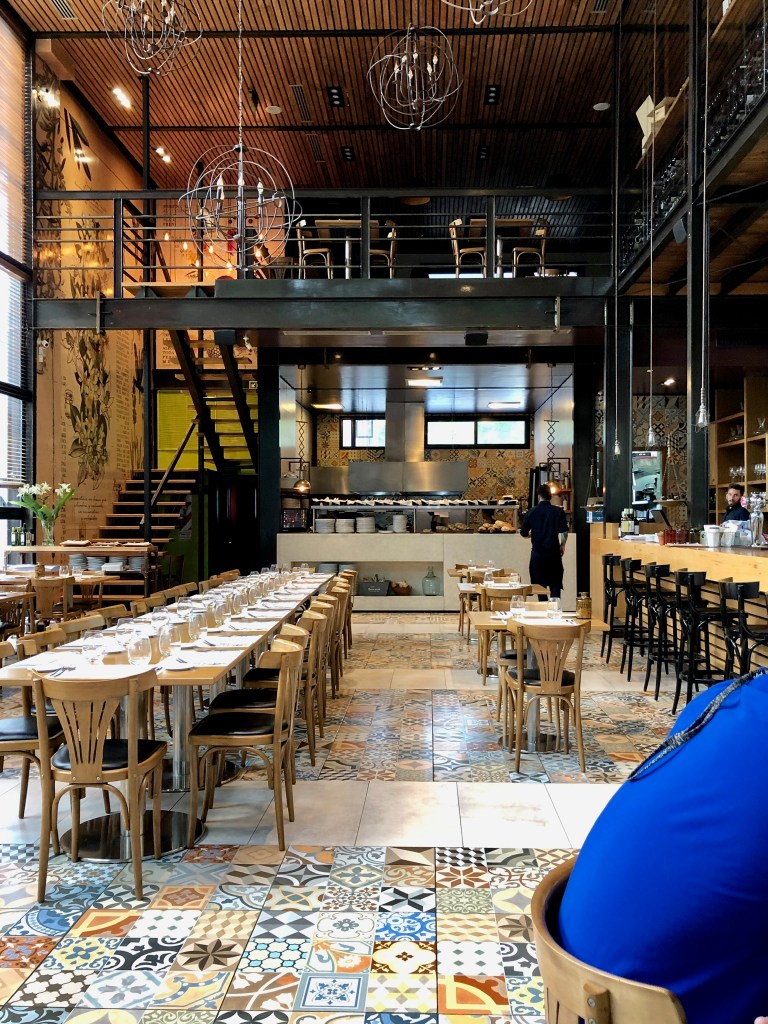
On our last night in Mendoza a special farewell dinner was held at Azafran Restaurant, which was around the corner from our hotel. Our tour guides told us that they wanted this last dinner to be special and they did not disappoint.

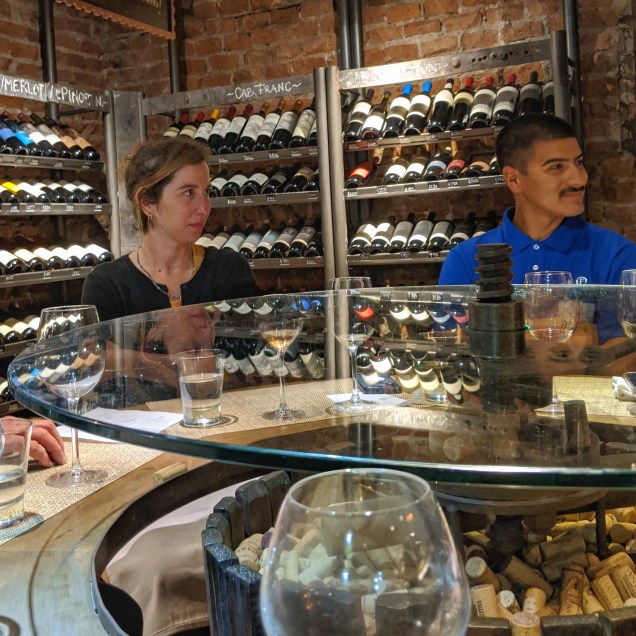
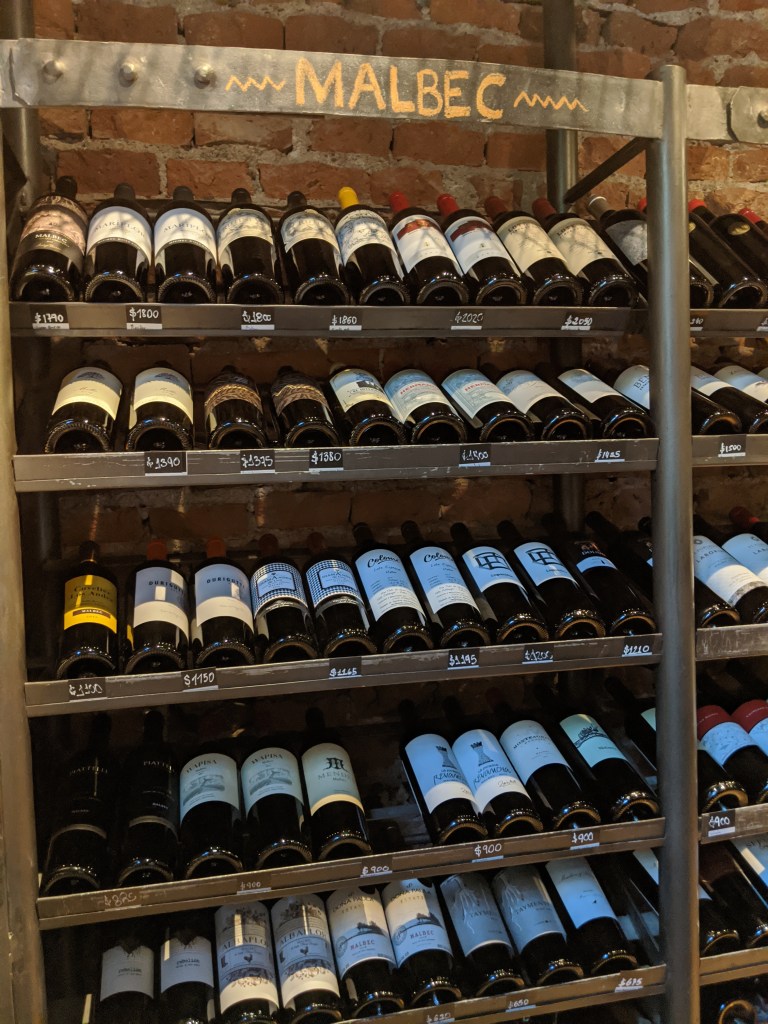
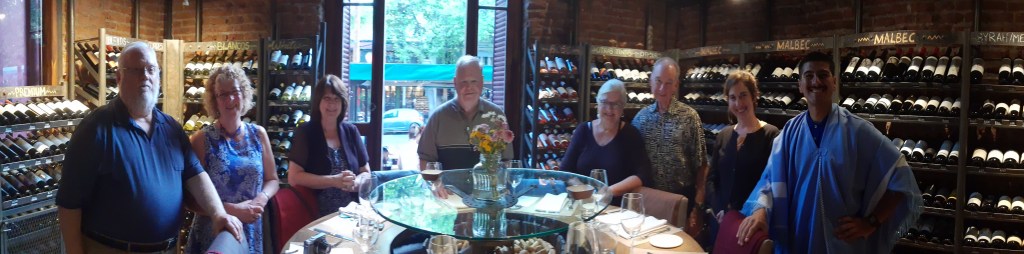
The restaurant had a special wine cellar which was actually a large room in the front of the restaurant with a large window overlooking their side walk cafe area. The “cellar” had floor to ceiling wine racks and in the center of the room was a large round table where we would be seated for dinner. This room was cooled for the wine, so each chair had an alpaca shawl for those who were cold.

This was a great way to end our Viking cruise and tour. Everyone had an enjoyable time and we stayed very late (we had to get up for a 7am car to the airport). It was a bit sad to say goodbye to our travel companions, our waitress was kind to take a group picture to send us on our way.


Goodbye Mendoza

After the farewell dinner we said goodbye to the rest of the group and our guide Estafan. While the others were scheduled to fly back to Buenos Aires Int’l airport at noon the next day for their trip home, we were to continue another week on our own with a visit to Uruguay. Our flight was earlier in the morning, so Ailin arranged a car to pick us up at 7am.

Ailin was waiting in the lobby at 7am to make sure we got off OK and we had a young man accompany us to the airport to help us check-in (part of Viking’s transfer service).

The main part of our trip, the Viking Ocean Cruise and post cruise excursion had ended, we were now heading to Montevideo Uruguay for some free style touring. Our flight to Montevideo was on time and the last phase of our long South American adventure was underway. Our next post will be about our Uruguay experiences.

Connecting at Buenos Aires for our Montevideo flight.

South America Cruise – Part 5

After leaving Puerto Madryn Argentina, we had nearly two full days at sea before docking in Montevideo Uruguay. This would be our last several days of the cruise portion of our trip, where we will end and disembark in Buenos Aires.

One of the sea days on the way to Montevideo was pretty rough, with gale force winds that even peaked to hurricane force. The ride was a bit rough, but the ship’s stabilizing systems helped make it tolerable. The winds were so strong that all outside deck areas were closed.

Impressive Seas off Argentina

Montevideo Uruguay

We arrived in Montevideo on the morning of Feb 8, 2020. The dock is right in the old town section making it convenient for walking to town. We had a winery tour scheduled for the afternoon, so our morning was free which gave us a chance to walk around and explore.

For me this was a bit nostalgic since I spent quite a bit of time in Montevideo and Uruguay back in the 1980’s. At that time I was working for Raytheon and was the lead Project Engineer for a vessel traffic monitoring radar system we installed for the Uruguay Navy. I had spent many months in country and made many trips there back in the day.

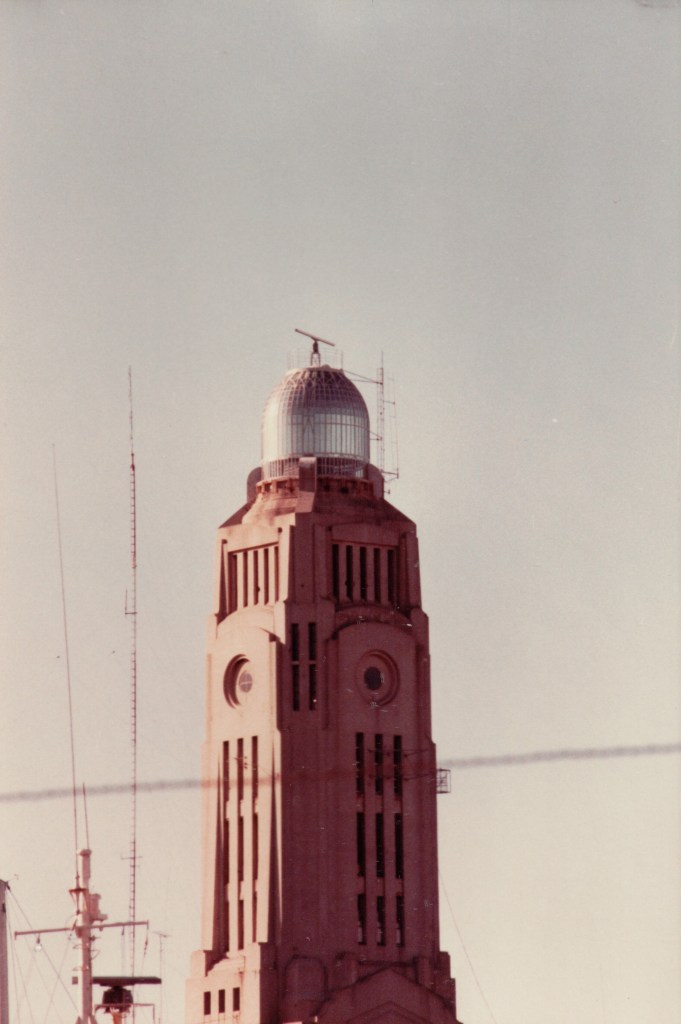
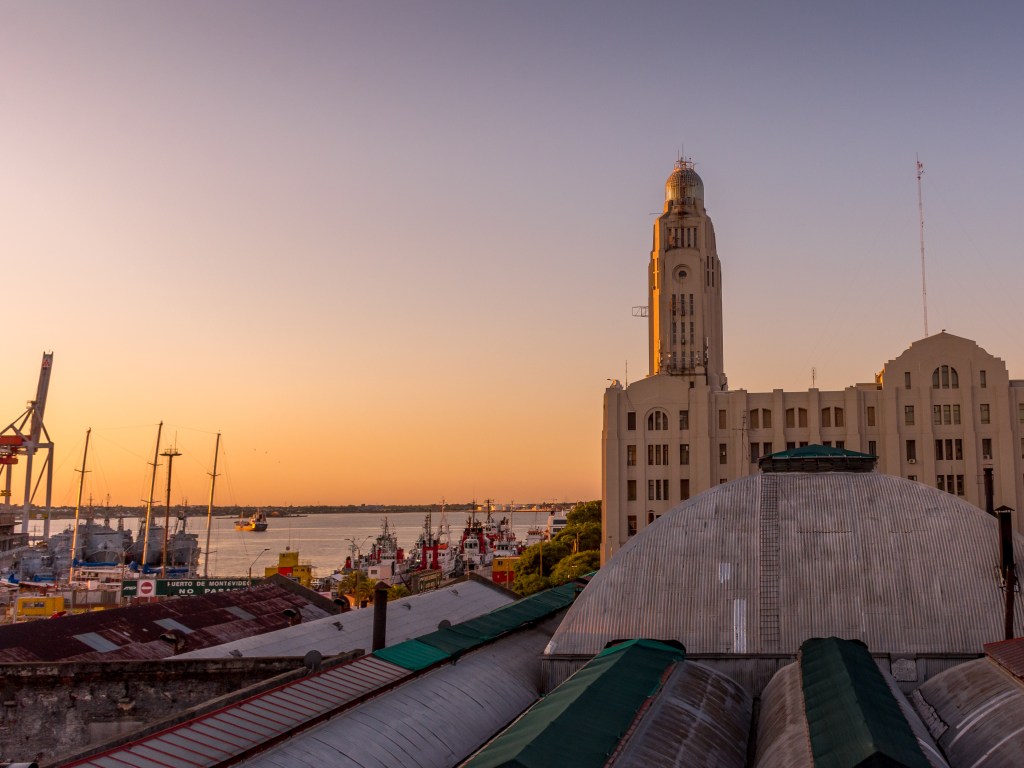
Where we docked was adjacent to the main Navy headquarters building with its large glass dome cupola that still has a harbor surveillance radar spinning on top (not the one we installed years ago). I recall working on the very top of that cupola with its amazing view of the harbor and city.


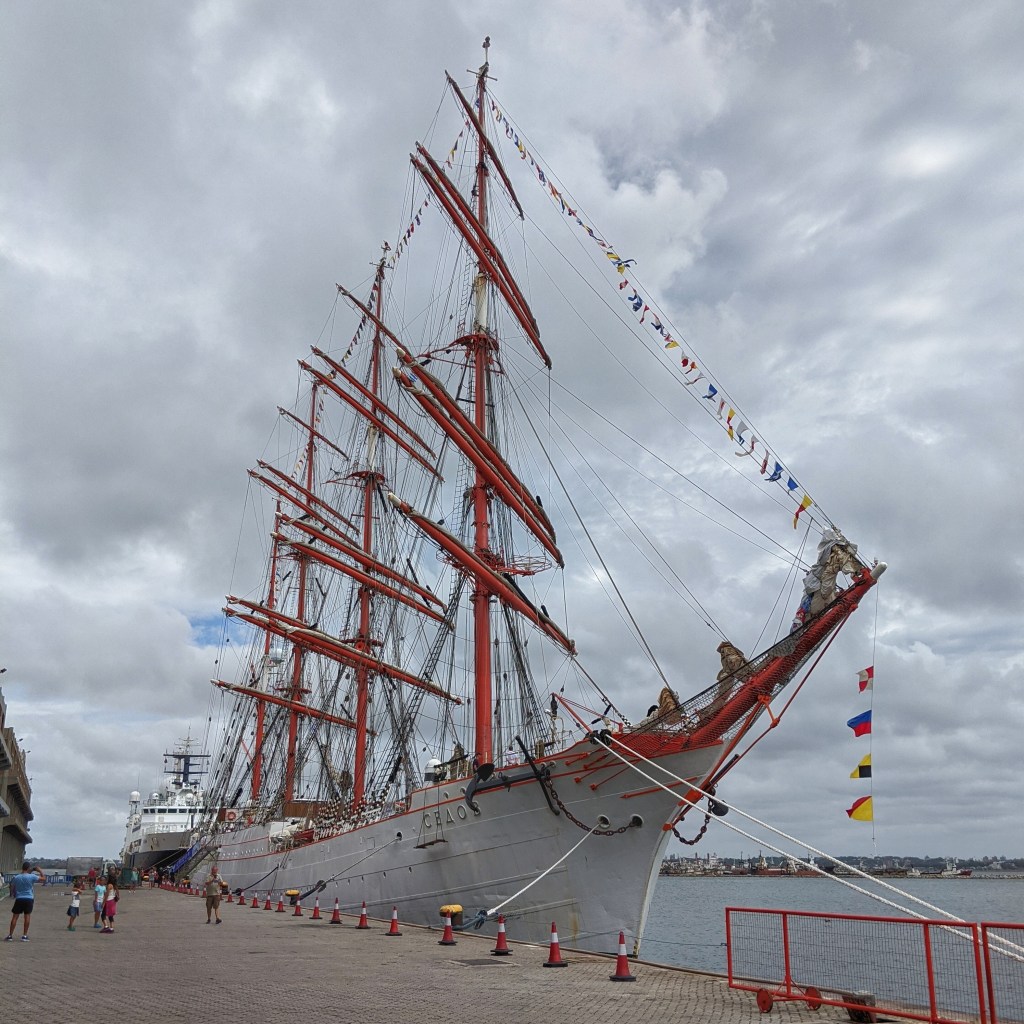
Alongside the dock near our ship was a beautiful tall ship that was visiting Montevideo. The Russian tall ship Sedov is a 4-masted barque operated by Murmansk University and is a training ship.


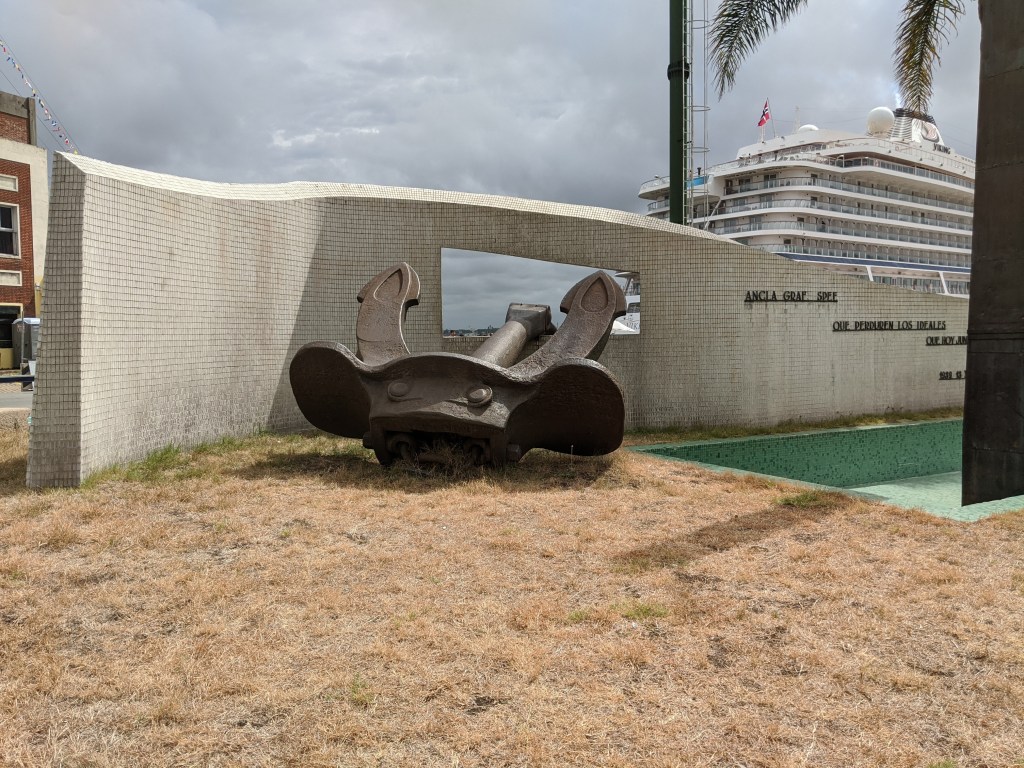
As you leave the gated port facilities there is a monument with one of the anchors and a range-finder from the German pocket Battleship Graf Spee, which was scuttled off Montevideo in 1939. This was one of the first naval battles of World War 2 when Royal Navy warships damaged the Graf Spee in what would be called the Battle of the River Plate. The German Captain sought refuge in neutral Uruguay to do repairs and transfer his wounded for medical care. Under neutrality rules, the Graf Spee could only stay in Uruguay’s neutral waters for 72 hours. The Captain decided to scuttle the ship rather than steam out into the British ambush. Thousands lined the shores of Montevideo to watch the battleship blow up. Many artifacts were recovered over the years and many displayed at the Uruguay Naval museum.


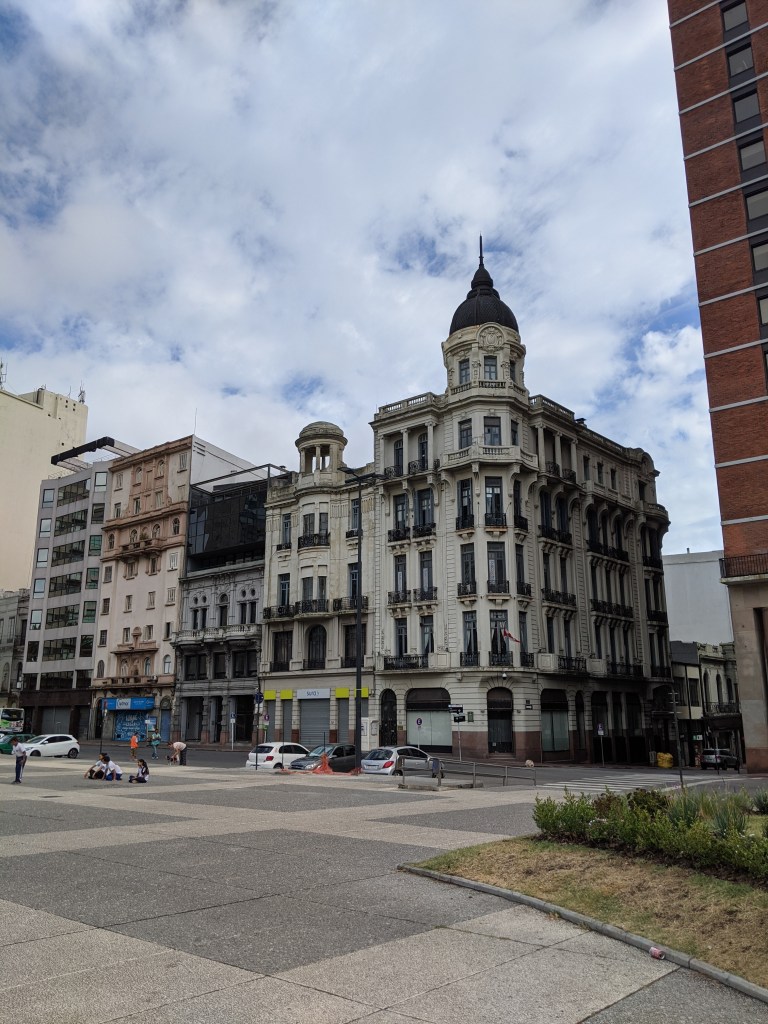
The old town section of Montevideo (Ciudad Vieja) is a maze of narrow streets and old buildings. There are several pedestrian streets with plenty of souvenir shops and restaurants and it takes about 20 minutes to walk up to the main plaza, Plaza Independencia. Along the way are several smaller plazas, the main Cathedral and plenty of people drinking Mate.


Not far from the port entrance is the famous Mercado del Puerto (Port Market), with many Parrilla grills serving up steaks, sausages and other meat delights.

We spent about 2-hours wandering around before returning to the ship for our afternoon winery tour.


Juanico Vineyards & Winery

Our afternoon tour to the Juanico Winery was about a 40 minute coach ride outside Montevideo. We were with a group of about 30 other guests from our ship and a local tour guide (don’t remember his name). Our guide was great, he was very funny, but informative. Told us all about the current situation in Uruguay, the history and talked a lot about the local wines.

We learned that Uruguay is the most progressive country in South America with free education for all, a good healthcare system, very stable and safe society. Oh, and the only country in South America to legalize medicinal and recreational marijuana.

When we arrived at the vineyard a young woman from the vineyard took over the tour and we stopped first out in the vineyard to walk among the vines. Since it’s late summer in the Southern Hemisphere, harvest time is very soon, so the grapes were full and almost ready to pick. The predominant grape variety here is the Tannat grape. This is a very deep blue grape and the Tannat wines we would taste later were amazing.

After walking around the vineyard we were brought to the winery and cellars for a tour and then tasting. The grounds of this winery were very picturesque and the wines we tasted were top notch. We are now Tannat lovers! We still have our Mendoza Argentina cruise extension coming up in several days, so the Malbec is waiting!


We left Montevideo early evening for the overnight trip across the Rio de la Plata to Buenos Aires where we would spend our last two days on Viking Jupiter. As we left Montevideo Harbor we passed many derelict boats, not sure what the story is there.

We will return to Montevideo in several days.


Buenos Aires

We docked in Buenos Aires on Sunday morning, February 9th at a main commercial port facility. We would stay on the ship overnight before disembarking to end the cruise portion of our trip.


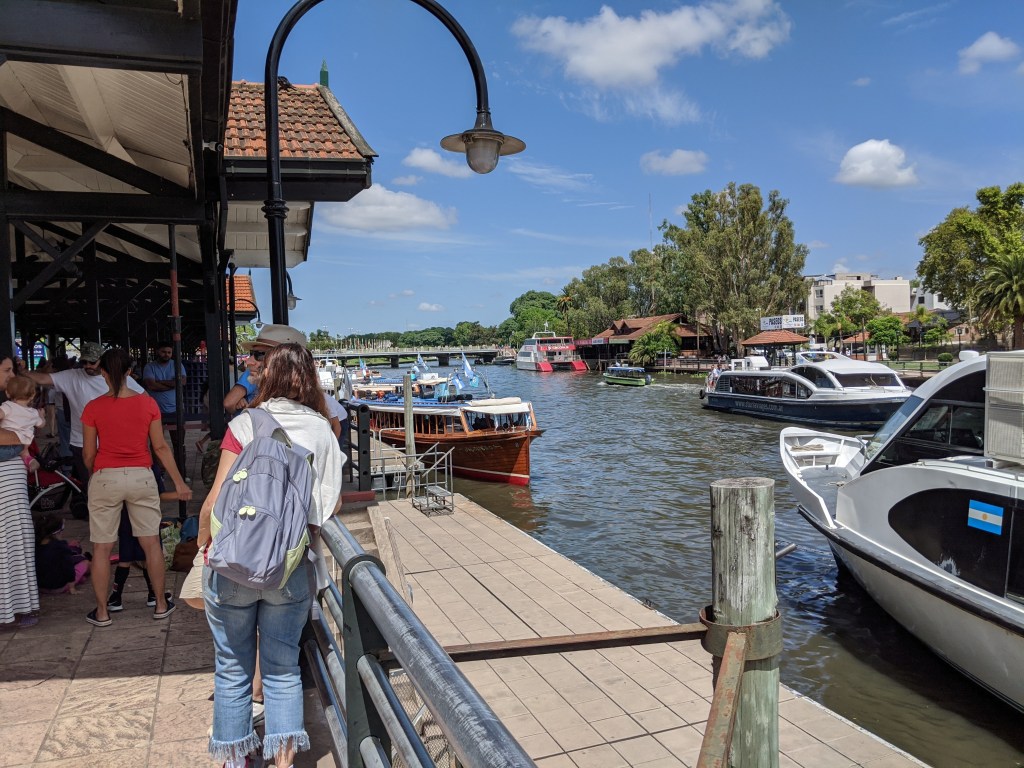
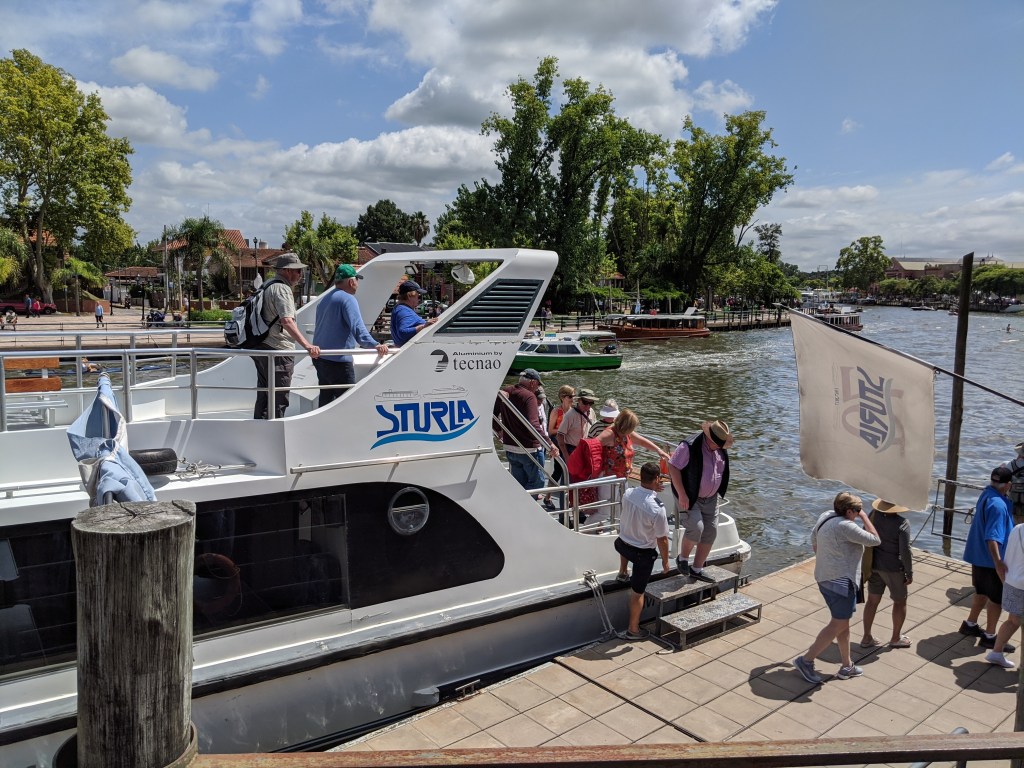
Where we docked was in the middle of a big container terminal, so we had to use shuttle buses to get from the ship to the cruise terminal building. We had a full day excursion tour booked for Sunday which was a boat tour of the Paraná River Delta. It was about a 1 hour coach ride to the suburb called Tigre where we would board the excursion boat.

The Paraná River is the second longest river in South America (of course the Amazon is the longest) at about 3,000 miles long with its source in southern Brazil. The delta is a vast wetland area with endless channels and waterways, looking similar to the Mississippi delta in Louisiana.

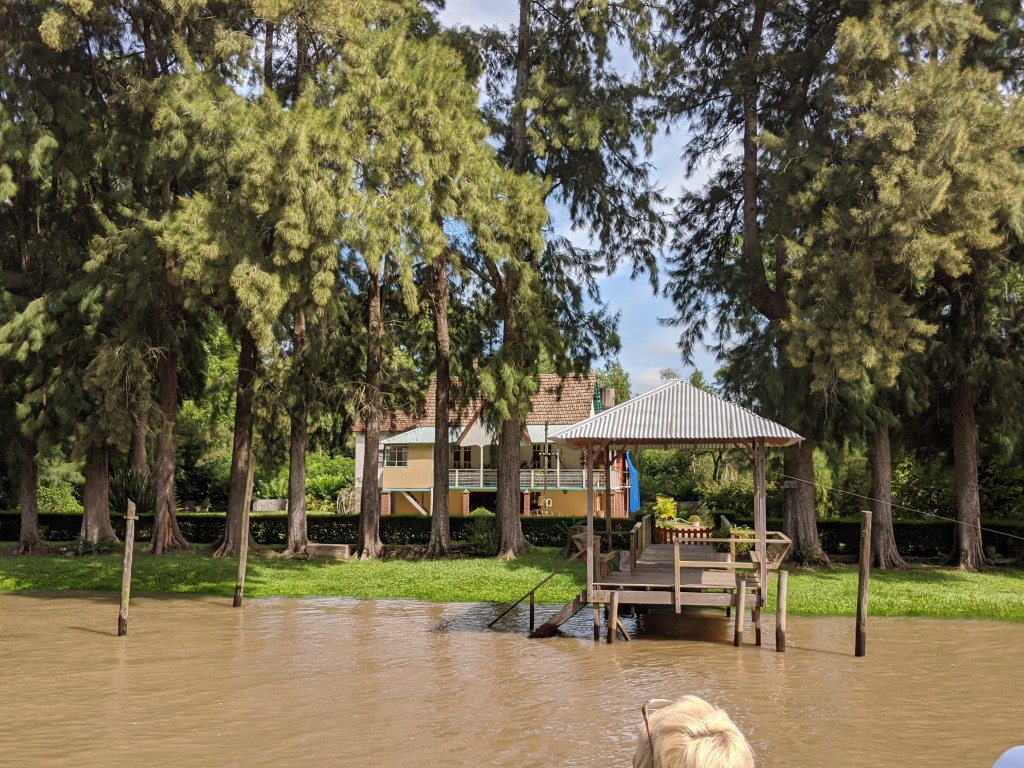
The boat tour, about 1.5 hours, took us through several canals where there were large numbers of weekend cabins, cottages and even some substantial mansions, all built up on stilts because of the annual floods. It seems that every home had their own dock and many of these places can only be accessed by water, so lots of small boats.


On the return trip to the ship, we stopped at the city of San Isidro and visited the Cathedral there, a beautiful late 19th Century neogothic style building. Our tour guide walked us through the cathedral, but we stopped briefly inside because Mass was about to begin. The Plaza de San Isidro in front of the church hosts a long standing artisan market and there were many stalls with hand made apparel and jewelry.


Cruise Ends ☹

We had a nice dinner on our last night on board. Said good bye to our favorite service staff members, put the luggage out by 10pm, then went to bed for the last time in our comfy stateroom.

Overnight, another larger MSC cruise ship docked nearby and when it was our group’s turn to disembark in the morning, the cruise terminal was chaotic with a couple of thousand passengers trying to get their luggage through the security x-ray scanners.

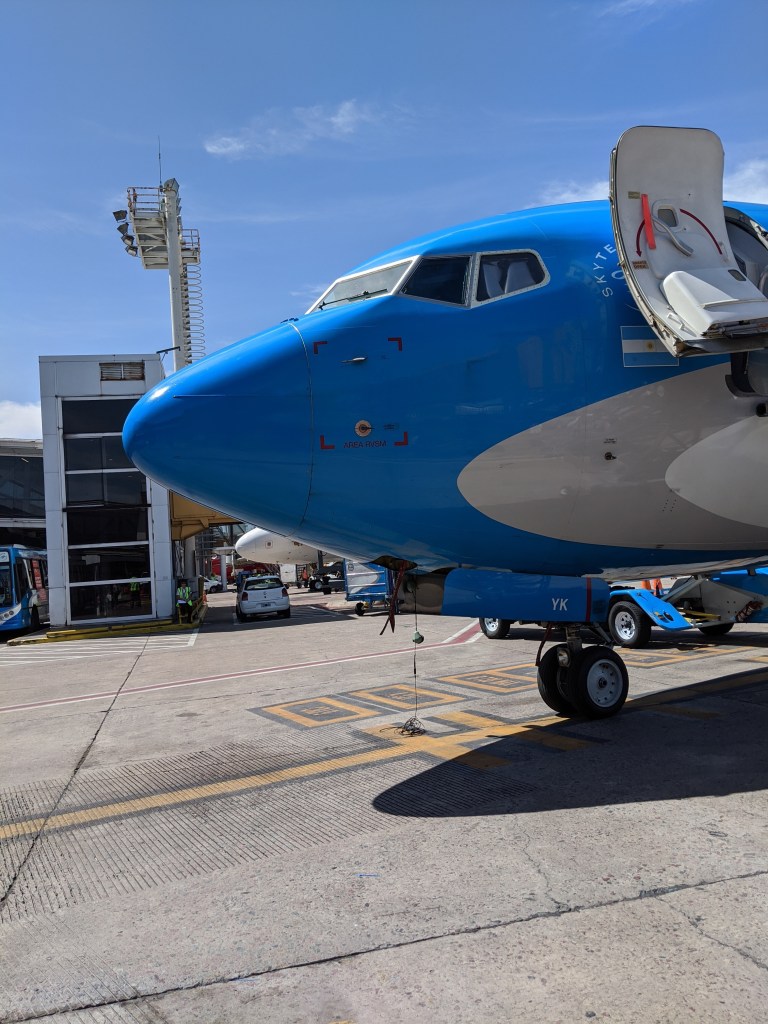
Since we booked a cruise extension for three days in Mendoza, Viking arranged to fly us to Mendoza. Up until now, we didn’t know how many others would be on this excursion. We met up with the others who were going to Mendoza and there were two other couples for a total of six. Very small group! We were met outside the cruise terminal by our guide who took us to the local airport for our flight. Our guide Ailin (Eileen) would stay with us for the whole Mendoza trip and we would be joined by a second guide in Mendoza, Estefan. We will have a separate blog post about our Mendoza excursion which turned out to be one of the best post cruise excursions we have ever taken with several pleasant surprises.

Now it’s off to Mendoza