Our First Christmas Market Journey – Frankfurt, Dresden, Strasbourg, Erfurt, Weimar & Idstein
November-December 2013
Part of the ‘Christmas Markets of Europe’ Series – A Travel Story by Rick Wetmore
The Invitation
It all began with an invitation from our daughter, who was living and working in Frankfurt, Germany. She wanted us to experience the magic of the German Christmas Markets firsthand. We had seen photos and heard the stories, but nothing quite prepared us for the atmosphere of twinkling lights, festive music, and the scent of roasted chestnuts and mulled wine drifting through centuries-old town squares.

Travel Overview
A concise summary of our itinerary and travel logistics:
| Mode | Route | Duration | Highlights |
| ✈️ Flight | Boston → Frankfurt | Overnight | Staying with our daughter |
| 🚗 Road Trip | Frankfurt → Erfurt → Dresden → Weimar → Frankfurt | 3 days | Market visits & scenic countryside |
| 🚄 Train | Frankfurt → Strasbourg (France) | 2 days | Crossing borders for a new tradition |
Frankfurt Christmas Market – The Beginning
Our first taste of the Christmas Market tradition began right in Frankfurt, where our daughter lived. Centered around the Römerberg square and St. Paul’s Church, the Frankfurt market is one of Germany’s oldest, dating back to 1393.
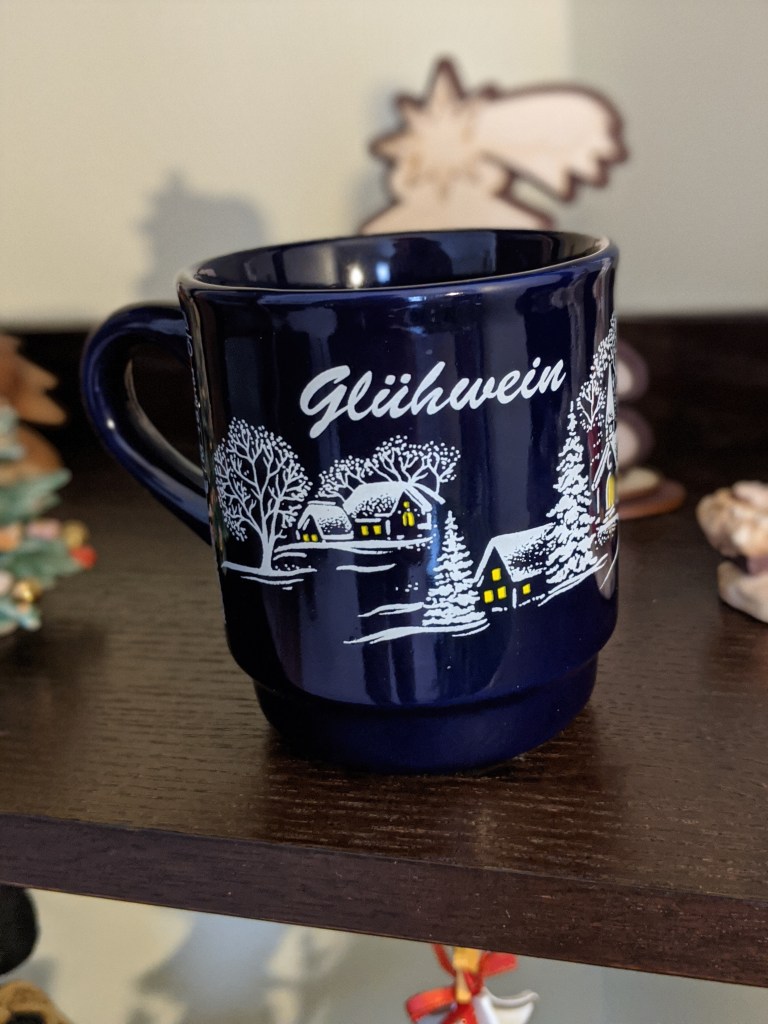
Highlights: the giant Christmas tree, the historic carousel, glühwein (mulled wine), and festive stalls.
Erfurt – Cathedral Square Charm
On our drive from Frankfurt to Dresden, we stopped in Erfurt for lunch and to stretch our legs — and ended up discovering one of the most beautiful Christmas Market settings in all of Germany. Erfurt’s market fills the vast Domplatz (Cathedral Square), framed by the twin spires of St. Mary’s Cathedral and St. Severus Church that rise dramatically above the city. It’s a scene that feels lifted straight from the pages of a Christmas storybook.
The market itself had a wonderful, welcoming atmosphere. Rows of wooden stalls sold everything from hand-carved nativity figures to delicate glass ornaments. The air was filled with the scent of grilled sausages, roasted almonds, and the ever-present aroma of glühwein. A children’s carousel spun slowly in front of the cathedral steps, its music blending with church bells in the distance — a reminder that this was not just a festival, but a celebration of deep-rooted holiday tradition.
What made Erfurt special was its balance of grandeur and intimacy. It was large enough to impress, yet small enough to feel personal. Locals mingled easily with visitors, sharing smiles and warm drinks as the afternoon light faded into evening. Standing there, watching the lights flicker to life beneath the cathedral towers, we realized that each German market had its own personality — and Erfurt’s was peaceful, heartfelt, and steeped in timeless charm.
Dresden – History, Lights, and Tradition
Our next stop was Dresden, home to one of the oldest and most famous Christmas Markets in Germany — the Striezelmarkt, first held in 1434. After a long, cold drive from Frankfurt (and a memorable encounter with sleet and freezing rain along the way), we arrived to find a city glowing with Christmas spirit. Dresden’s market was everything we’d imagined and more — colorful, musical, historic, and alive with the scent of baked stollen and spiced wine.
The Striezelmarkt takes its name from “Striezel,” the original German name for the city’s beloved fruit bread, now known as Dresdner Stollen. In fact, the stollen is so central to the city’s holiday identity that it has its own festival and parade each December. Stalls throughout the square offered slices of the buttery, powdered-sugar-covered treat — along with handmade ornaments, nutcrackers, and the beautiful wooden pyramids for which the Erzgebirge (Ore Mountains) region is famous.
What stood out most was the sheer scale and craftsmanship. A massive Christmas pyramid, more than 45 feet tall, rotated at the center of the square — its tiers filled with carved angels, shepherds, and wise men. Nearby, a children’s market bustled with laughter and the smell of roasted nuts, while choirs sang from a stage near the Church of Our Lady. Every direction we turned was filled with light and life.
That evening, standing in the glow of the market with a mug of glühwein in hand, we both felt as if we had stepped into a classic Christmas card come to life. The combination of Dresden’s historic architecture, festive energy, and old-world charm left a lasting impression — one that would draw us back to Europe’s Christmas Markets again and again.
Weimar – A Peaceful Pause on the Road Home
After several full days exploring the festive splendor of Dresden, we began our return trip toward Frankfurt — but decided to make a stop in Weimar, a city long known for its cultural and artistic heritage. It turned out to be the perfect mid-journey pause, a quieter contrast to the larger markets we’d just experienced.
Weimar’s Christmas Market filled the historic Marktplatz, surrounded by beautifully preserved 18th- and 19th-century buildings that once inspired the likes of Goethe and Schiller. The square glowed softly under strands of golden lights, with a modest wooden Christmas Pyramid turning gently at its center. The air carried the familiar scents of roasted nuts, spiced glühwein, and sizzling Thüringer bratwurst, the regional specialty that’s impossible to resist.
Compared to Dresden’s grandeur or Erfurt’s cathedral backdrop, Weimar felt personal and unhurried. Locals chatted at the stalls, families lingered near small fire pits, and a children’s choir sang near the base of the old town hall. It was the kind of place where you could simply stand still, take in the lights, and feel time slow down.
As evening fell, we sipped our last glühwein of the trip, knowing we’d soon be back in Frankfurt — but also realizing how each stop along the way had its own rhythm and personality. Weimar was our gentle farewell to Germany’s Christmas season that year, and a perfect reminder that sometimes, the smallest markets create the warmest memories.
Strasbourg – The Heart of Christmas
Our final stop on that first Christmas Market adventure was Strasbourg, France — a city that proudly calls itself “The Capital of Christmas.” After traveling through Germany’s markets, crossing into Alsace felt both familiar and new. The half-timbered buildings and twinkling lights carried echoes of Germany, yet the cafés, language, and flavors hinted unmistakably at France. It was the perfect blend of two cultures — and an unforgettable way to end our journey.
We arrived in Strasbourg by train and checked into the Maison Rouge Strasbourg Hotel, ideally located within walking distance of the markets. From the moment we stepped into the old town, we knew this was something special. The entire Grande Île — Strasbourg’s historic city center and a UNESCO World Heritage Site — had been transformed into a glowing wonderland. Streets shimmered with garlands of light, store windows sparkled with decorations, and every corner seemed to lead to another market square filled with music and laughter.
The main market in Place Kléber was breathtaking, anchored by Strasbourg’s towering Christmas tree and surrounded by dozens of wooden chalets selling ornaments, pastries, and local crafts. Each evening, a spectacular light and sound show illuminated the square, washing the surrounding buildings in color while festive music filled the air. It was impossible not to be swept up in the moment — the warmth, the joy, and the feeling that Christmas was truly everywhere.
Beyond the main square, smaller markets spread across the old town: the Christkindelsmärik near the cathedral, the market at Place Broglie, and countless little pockets of festivity tucked between narrow lanes. We wandered for hours, sampling Alsatian specialties — spaetzle, bredele cookies, and mugs of warm vin chaud, France’s version of glühwein. The air was crisp, the lights golden, and the sound of church bells echoing through the narrow streets made it all feel timeless.
Strasbourg was more than just beautiful — it was magical. Standing beneath the great cathedral, its spire reaching high into the winter sky, we both felt that this was the perfect finale to our first Christmas Market trip. It’s no wonder Strasbourg has held the title “Capital of Christmas” for centuries. When we finally boarded the train back to Frankfurt, we carried with us not just souvenirs and photos, but the realization that we’d discovered something special — a new holiday tradition that would keep drawing us back to Europe, year after year.
Idstein – A Local Gem
Our day trip to Idstein was a highlight for its local charm and personal touch. The town, known for its colorful, crooked half-timbered houses, is part of Germany’s Half-Timbered Trail. Our daughter arranged a walking tour through Frankfurt on Foot, a highly rated English-speaking tour company run by an American husband-and-wife team. We joined a group of American civilians and military families, meeting at Frankfurt’s main train station before taking the 45-minute regional train to Idstein.Once there, our guide led us through the picturesque streets and even arranged for us to visit the interior of the historic Union Church, famous for its beautiful 17th-century painted ceilings. After the formal tour, we had time to wander freely, enjoying lunch, chatting with locals, and sipping more of that irresistible Glühwein at the small but lively market. As dusk settled over the town, we caught the evening train back to Frankfurt — tired, content, and already planning our next Christmas Market visit.
Reflections
Experiencing these Christmas Markets together — with our daughter as our guide — made this journey deeply personal. Each city had its own traditions and flavors, but all shared the same spirit of joy, community, and timeless beauty. It was the perfect introduction to what has become one of our favorite ways to celebrate the holiday season. Looking back, what made this trip unforgettable wasn’t just the markets themselves — it was sharing them as a family, discovering local traditions through our daughter’s eyes, and realizing that every city, large or small, celebrates the same sense of warmth and wonder in its own way.
Looking Ahead
This trip was the start of a tradition that inspired us to explore more markets across Europe in the years that followed. Stay tuned for upcoming posts in the ‘Christmas Markets of Europe’ series — including Vienna, Cologne, Brussels, Innsbruck, Prague and others.
 Rick and Kathie's Travel Adventures